
Most beginner running injuries come from one cause: adding distance or speed faster than your tendons and bone can adapt. The fix is boring and works. Start with walk-run intervals, run no more than three days a week with rest or cross-training days between them, raise your weekly running time by no more than about 10%, keep every run at a conversational pace, and add two short strength sessions a week.
Your heart and lungs improve within days of your first session. Your tendons and bones take weeks. That gap is the whole game, and almost everything below is about widening it in your favor.
Table of Contents
- What You Need
- Step-by-Step: How to Start Running Without Getting Injured
- 1. Get a Medical Green Light if Needed
- 2. Choose Comfortable, Supportive Gear
- 3. Start With a Progressive Warmup
- 4. Use Walk-Run Intervals
- 5. Increase Distance Slowly
- 6. Cool Down and Recover
- Common Mistakes
- Frequently Asked Questions
- How long should a beginner run before increasing distance?
- Should beginners run every day?
- Is soreness normal when starting to run?
- Do I need special shoes to avoid running injuries?
- How do I know if running pain is serious?
- Can I start running if I am overweight or have an old injury?
- Conclusion: Begin Slowly and Build Consistency
What You Need
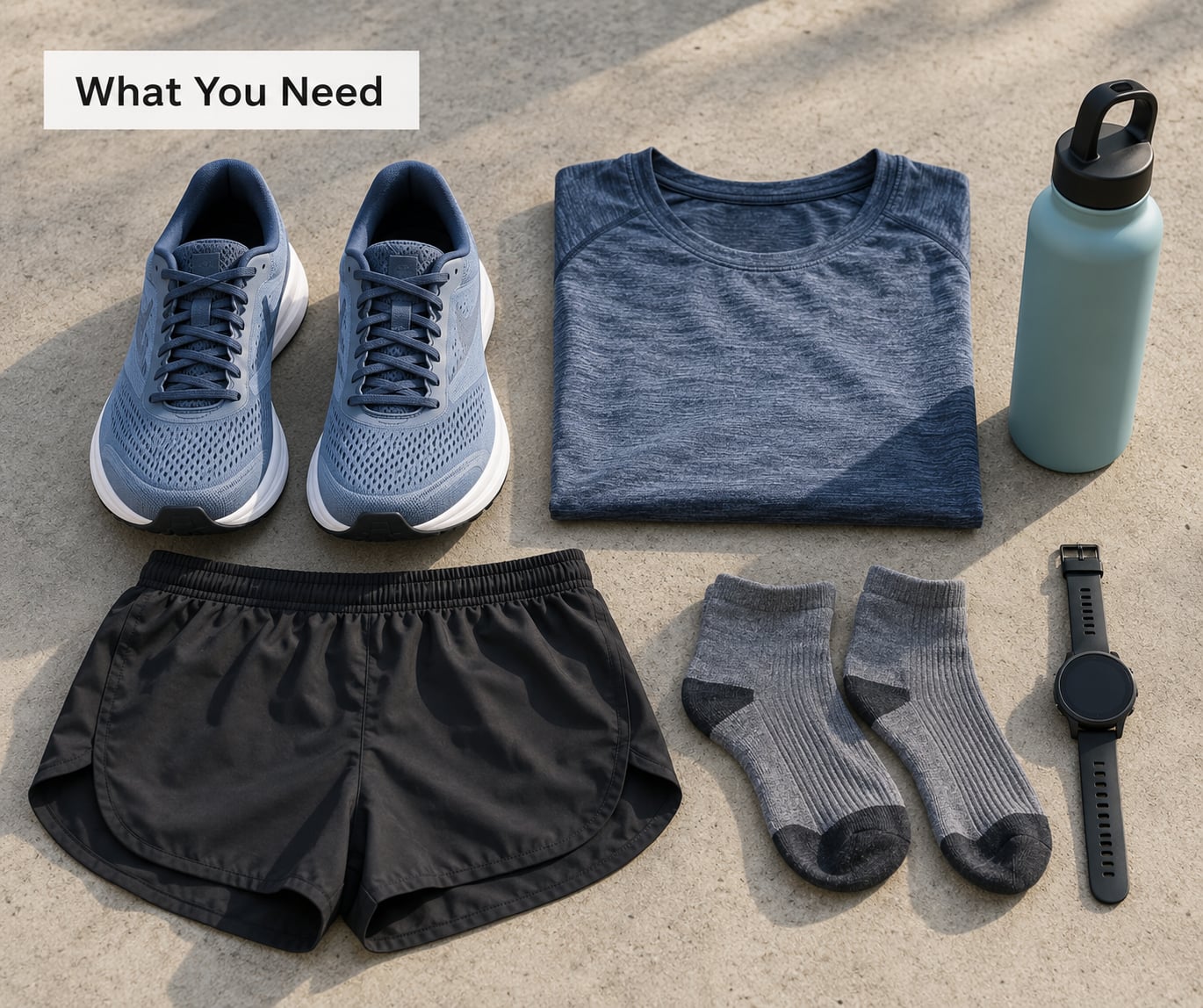
You need surprisingly little. If you can walk briskly for 30 minutes without pain, you have enough fitness to begin.
- Running shoes that fit well. A thumb’s width of space in front of your longest toe, heels that stay put, no rubbing on the first short run. Fit matters more than model.
- A second pair for rotation if you can. Alternating two pairs spreads the load slightly and gives each midsole time to recover its shape. It is a nice-to-have, not a requirement.
- Comfortable clothing you can move in. Nothing technical. Skip anything that binds at the knee or the armpit.
- Water. Carry it or plan a route with water on the route, especially above 20C heat.
- A flat, forgiving surface. A park path, grass, a track, or a treadmill. Skip broken pavement, sharp hills, and long stretches of concrete early on.
- Optionally, a watch or phone. Useful for timing intervals, not for chasing pace numbers.
Replace running shoes every 300 to 500 miles, or sooner when the midsole feels flat and the outsole is worn through. Also replace them if they have been sitting unused for a few years, since the foam compresses even if they never hit the road.
One more honest note about gear. Switching suddenly from a padded walking shoe to a thin racing-style trainer changes your calf and Achilles load overnight. If you want that lighter feel, introduce it over a few weeks of short runs rather than on day one. Walk-to-run and running shoes are not the same thing, and old everyday sneakers do not make a good first pair.
Step-by-Step: How to Start Running Without Getting Injured
1. Get a Medical Green Light if Needed
Talk to a doctor before you start if you have heart or lung disease, diabetes, high blood pressure, a joint or back problem that flares with activity, a current or recent injury, or are pregnant or recently postpartum. Do the same if you feel short of breath, dizzy, or chest discomfort when climbing stairs.
Age and weight on their own are not reasons to be talked out of running. Plenty of people start in their fifties, well above a healthy range, and do fine. What matters is a sensible progression and, where a clinician is warranted, clearance to begin.
2. Choose Comfortable, Supportive Gear
Buy shoes that feel good on foot for five minutes in the store, then confirm them on a short run. Pain signals from new footwear, especially a hot spot on the top of the foot or a blister forming mid-run, mean the fit is wrong and no amount of toughing it out will help.
Wear what you ran in before, if you still own it and it has not been sitting for years. Replacing a perfectly comfortable pair has no upside.
3. Start With a Progressive Warmup
Spend five to ten minutes before the first run walking easily, then add a few dynamic movements: leg swings forward and back, side steps, walking lunges, and a few calf raises. Dynamic movement raises warm muscle temperature and prepares joints. Skip long static toe touches and hamstring holds before running; research shows cold, tight muscles are better addressed with dynamic work first.
You should finish the warmup feeling warmer and looser, not tired.
4. Use Walk-Run Intervals
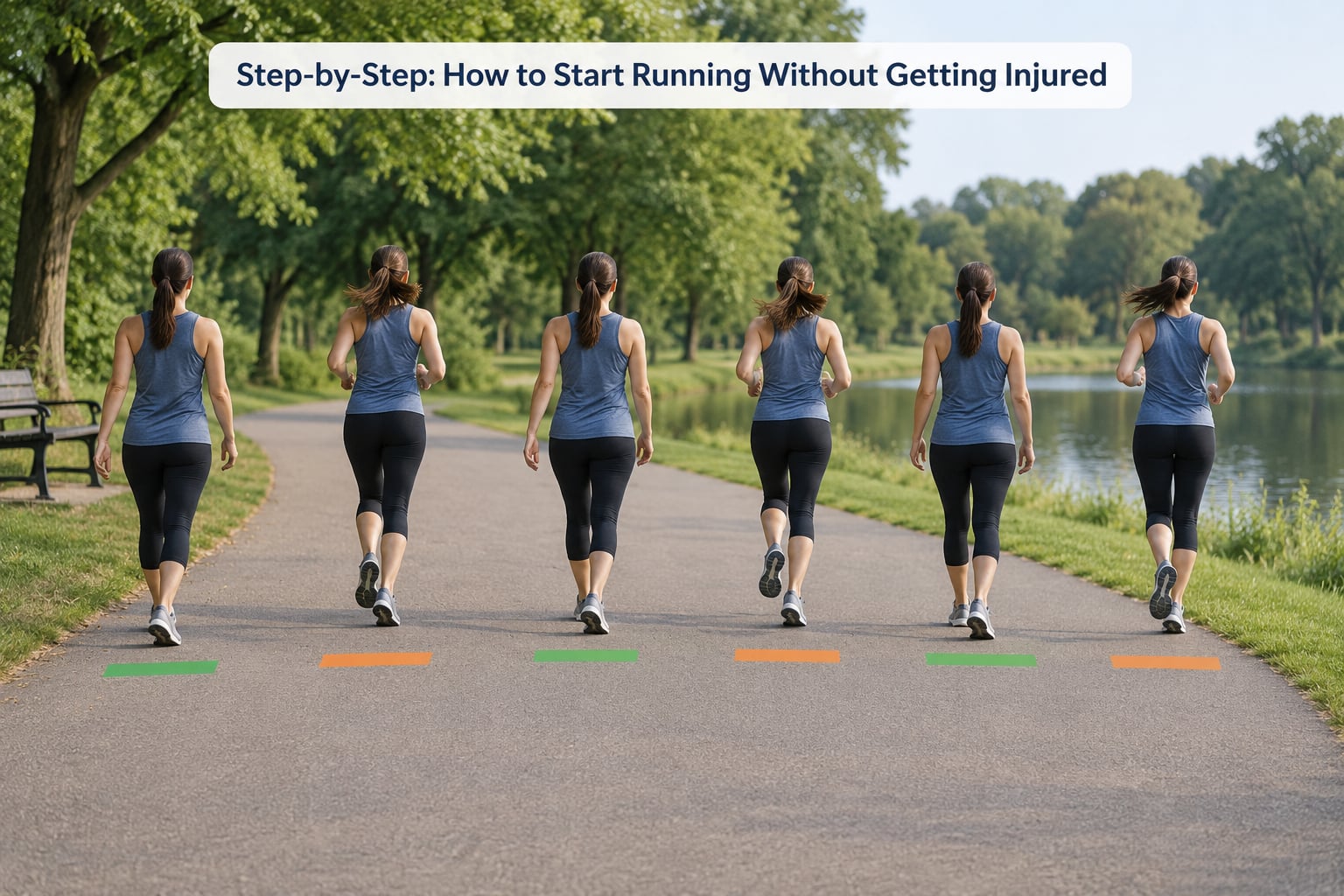
Run one minute, walk two minutes, repeat. That single pattern is the backbone of how to start running without getting injured, because it lets you accumulate running minutes without accumulating the continuous impact your tissues are not ready for.
Do eight to ten cycles, finish with a walk, and call it a day. It is roughly 25 minutes of easy movement, and that is a real workout.
Pace matters more than pattern. You should be able to speak in full sentences. If you cannot, slow down until you can. Running your first sessions slower than feels reasonable is the single most common piece of advice in beginner running communities, and it is correct.
5. Increase Distance Slowly
Add roughly 10% to your weekly running time each week, and change one variable at a time. The most repeated tip in run/walk forums is to add a few more minutes of running to the same workout rather than adding distance or trying to go faster. If week two goes well, make week three’s intervals 90 seconds of running instead of one minute.
Keep at least one non-running day between sessions. Three runs a week on Monday, Wednesday and Friday is plenty at first. Cross-training on the off days, cycling, swimming, walking briskly, or 20 minutes of strength work all count.
If you miss a week through illness or a busy schedule, drop back one step in the plan rather than restarting at your previous level.
6. Cool Down and Recover
Walk for five minutes at the end, breathing normally. Then stretch if you like, holding calves, hamstrings, hip flexors and quads for 30 seconds each. Static stretching after running is fine and feels good, though it is a comfort practice rather than an injury-prevention one.
Recovery is where the adaptation actually happens. Drink water, eat a normal balanced meal with enough protein, and sleep. Most beginner soreness peaks 24 to 48 hours after a run, so judge a session partly by how the previous one felt this morning.
Watch for the four signs you are progressing too fast: soreness that is worse today than yesterday, a resting heart rate that is noticeably up for a few days, sleep that gets worse around training, and declining enthusiasm. Hold your volume steady for an extra week when you see them.
Common Mistakes
Starting with a long first run. Enthusiasm plus a fitness tracker is a bad combination. Twenty-five minutes of intervals beats a 5K every single time. Correct it by cutting the first two weeks back to walk-run work.
Running every day. Daily running leaves no recovery window, and bone and tendon adaptation needs days between loading sessions. Correct it by fixing three run days and treating the others as intentional recovery or cross-training.
Increasing too fast. Doubling week-one volume into week two is the direct cause of most shin, knee and Achilles complaints in beginners. Correct it by adding no more than about 10% weekly and only after a week that felt easy.
Running through pain that changes how you run. If pain makes you limp, shorten your stride or change your footing, stop for the session. Correct it by resting for a few days and re-entering at the previous week’s level.
Choosing hard, uneven terrain on day one. Concrete, cambered roads and hills amplify impact before your legs are ready. Correct it by running on flat grass or a track for the first few weeks.
Ignoring persistent symptoms. Pain that shows up on every run, or that worsens over two weeks, is not adaptation. Correct it by getting it assessed rather than training through it.
A few quick tips from the other end of the beginner journey. Running form matters less than consistency, but light, quick steps with your feet landing under your body instead of out in front reduce braking and knee load. Keep your shoulders down and your arms loose. Strength work twice a week, focusing on glutes and hip stability, calf strength, core work and single-leg balance, gives your legs a reason to handle the load. And if you are returning after a long break of six weeks or more, restart from the beginner plan rather than picking up your old mileage.
One last piece of reassurance, because it stops more beginners than pain does. Walking during your run is not cheating. Nobody watching can tell, and the run-walk method is how most successful returners and a large share of first-timers build up to continuous running without breaking something.
Frequently Asked Questions
How long should a beginner run before increasing distance?
Give each level about a week, and only move up if the sessions felt comfortable and soreness cleared within 48 hours. Add roughly 10% to weekly running time, and change one thing at a time. Most beginners reach continuous running somewhere between 8 and 12 weeks.
Should beginners run every day?
No. Three runs a week with non-running days between them is the usual starting point, because bone and tendon need recovery time between loading sessions. Daily running tends to catch up with you around week three. Use the other days for walking, cycling, swimming or strength work.
Is soreness normal when starting to run?
Yes, some muscle soreness in the first two weeks is normal and typically peaks 24 to 48 hours after a run. Normal soreness is dull, spread across both legs, and settles within a couple of days. Sharp, one-sided pain that changes your stride or lasts more than a week is different and deserves attention.
Do I need special shoes to avoid running injuries?
You need shoes designed for running that fit well, not any specific brand or model. Leave a thumb’s width in front of your longest toe and make sure nothing rubs on a short test run. Replace them every 300 to 500 miles. No shoe on its own prevents injury, and progression still does most of the work.
How do I know if running pain is serious?
Stop and get it assessed if pain is sharp, comes back on every run, wakes you at night, comes with swelling or numbness, or makes you limp or change your stride. Soreness that is symmetrical, mild and gone within 48 hours is normal adaptation. When in doubt, cut back to walking for a few days and see whether it settles.
Can I start running if I am overweight or have an old injury?
Weight on its own does not stop you, and most people who lose or gain weight start walking and building back up rather than jumping straight to their old pace. If you have an old injury, a joint replacement or ongoing pain, ask a sports medicine doctor or physical therapist first and tell them the full history.
Conclusion: Begin Slowly and Build Consistency
Your first action is small: walk for ten minutes, jog for one, walk for two, and repeat that for 25 minutes, three days this week. That is the plan. Nothing else needs deciding today.
From there, add about 10% to your running time each week, keep a non-running day between sessions, and stay easy enough to talk. If a session feels great and you want to do it again tomorrow, walk instead.
Stop exercising and get advice if pain is sharp, worsening, one-sided, or still there after a few rest days. Progress slowly, run easy, and stay consistent. That combination is what a safe start to running actually looks like.