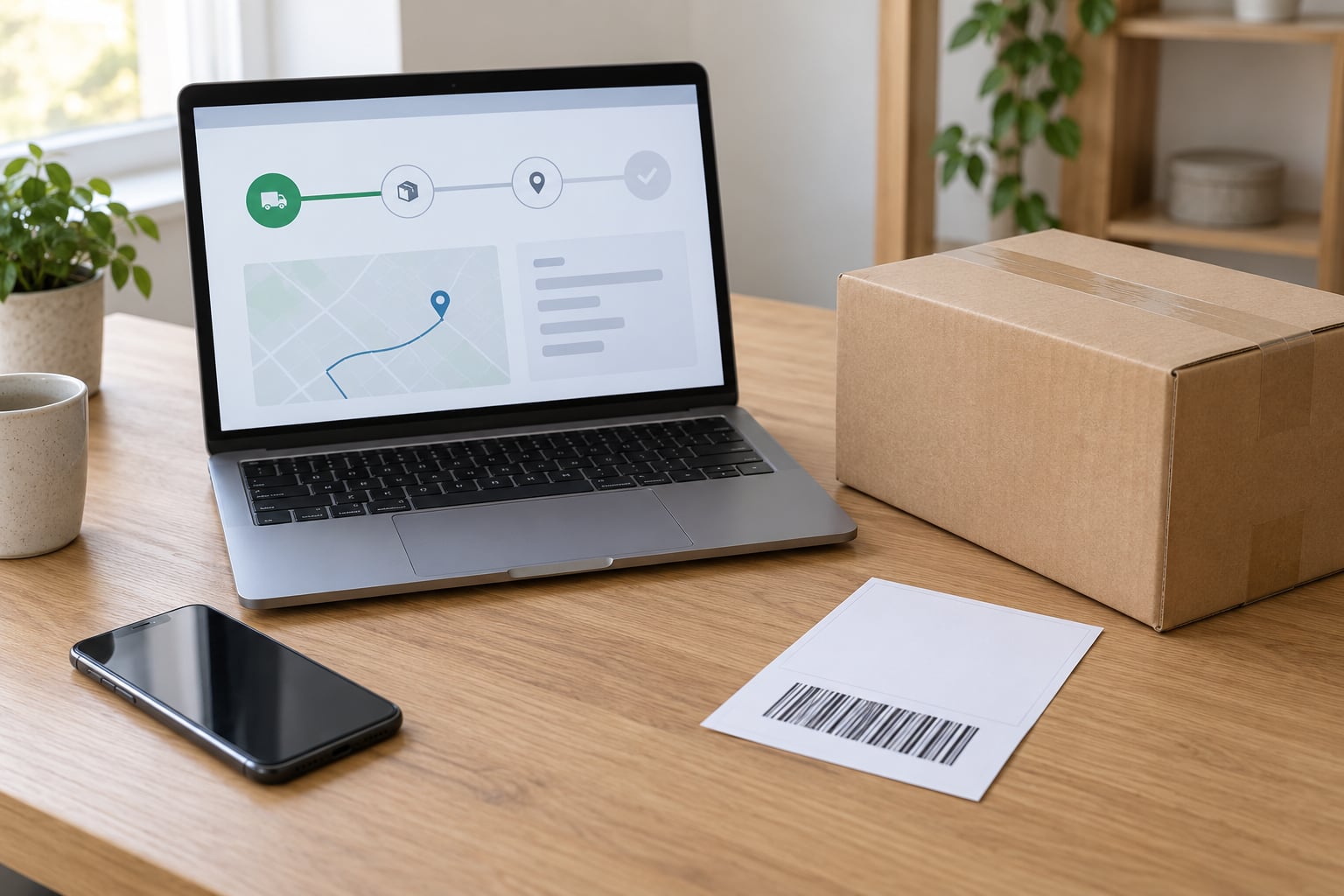
To track a lost package, find the tracking number in your order confirmation or retailer account, open the carrier’s own tracking page, and read the most recent scan event. If the last scan is stale, or the parcel reads delivered but is not on your porch, contact the retailer first and then the carrier with the tracking number in hand, and ask for a formal search or claim. Most cases settle inside a week; the slower ones need paperwork you start gathering today.
The whole process takes about fifteen minutes if you already have the tracking number, and closer to an hour if you have to dig through email, then wait on hold. Nothing here requires special tools beyond your email account and a phone. What matters is working through it in order, because each step gives you the evidence the next one needs.
Table of Contents
- What You Need Before You Start
- How to Track a Lost Package Step by Step
- 1. Find the tracking number
- 2. Open the correct carrier tracking page
- 3. Read the latest delivery scan
- 4. Check whether the package is delayed or misdelivered
- 5. Contact the retailer or carrier
- 6. Report a missing package and request a solution
- Common Mistakes
- Frequently Asked Questions
- How long should I wait before I treat a package as lost?
- What does it mean when tracking has not updated for several days?
- Should I contact the retailer or the carrier first?
- Can I get a refund or a replacement for a package that never arrived?
- Can you track a package without a tracking number?
- What should I do if the carrier denies my claim?
- Conclusion
What You Need Before You Start
Gather these before you open any tracking page. Half of the stalls I see come from people contacting support without a tracking number or an address the carrier can match.
- The order confirmation email, or the order history page in your retailer account
- The tracking number itself, and the name of the carrier that owns it
- The delivery address exactly as it was entered at checkout, including any unit or apartment number
- The purchase date and what you paid, since carriers work in windows measured from the ship date
- Screenshots of every tracking update you have seen, with the dates
- A description of the packaging and the contents, down to colours and box size
- Which payment method you used, since a card dispute is sometimes faster than a carrier claim
Photograph the packaging description somewhere you will still have it in a week. It is the single detail that moves a search request forward.
How to Track a Lost Package Step by Step
1. Find the tracking number
Your tracking number lives in the shipping notification email, the order details page in your retailer account, or the shipping notice in the carrier’s app. If you checked out as a guest, it will only be in the confirmation email, which is worth searching your spam folder for before you assume you have lost it.
Tracking numbers are long strings of digits, often with two letters at the start. A USPS number runs roughly 20 to 22 digits, FedEx and UPS numbers are shorter. The order number the retailer gave you is a different thing entirely, and so is the reference number, which is the seller’s own identifier. Carriers can sometimes search a shipment by the seller’s reference number, but only when the seller typed it into the label at the time of shipping.
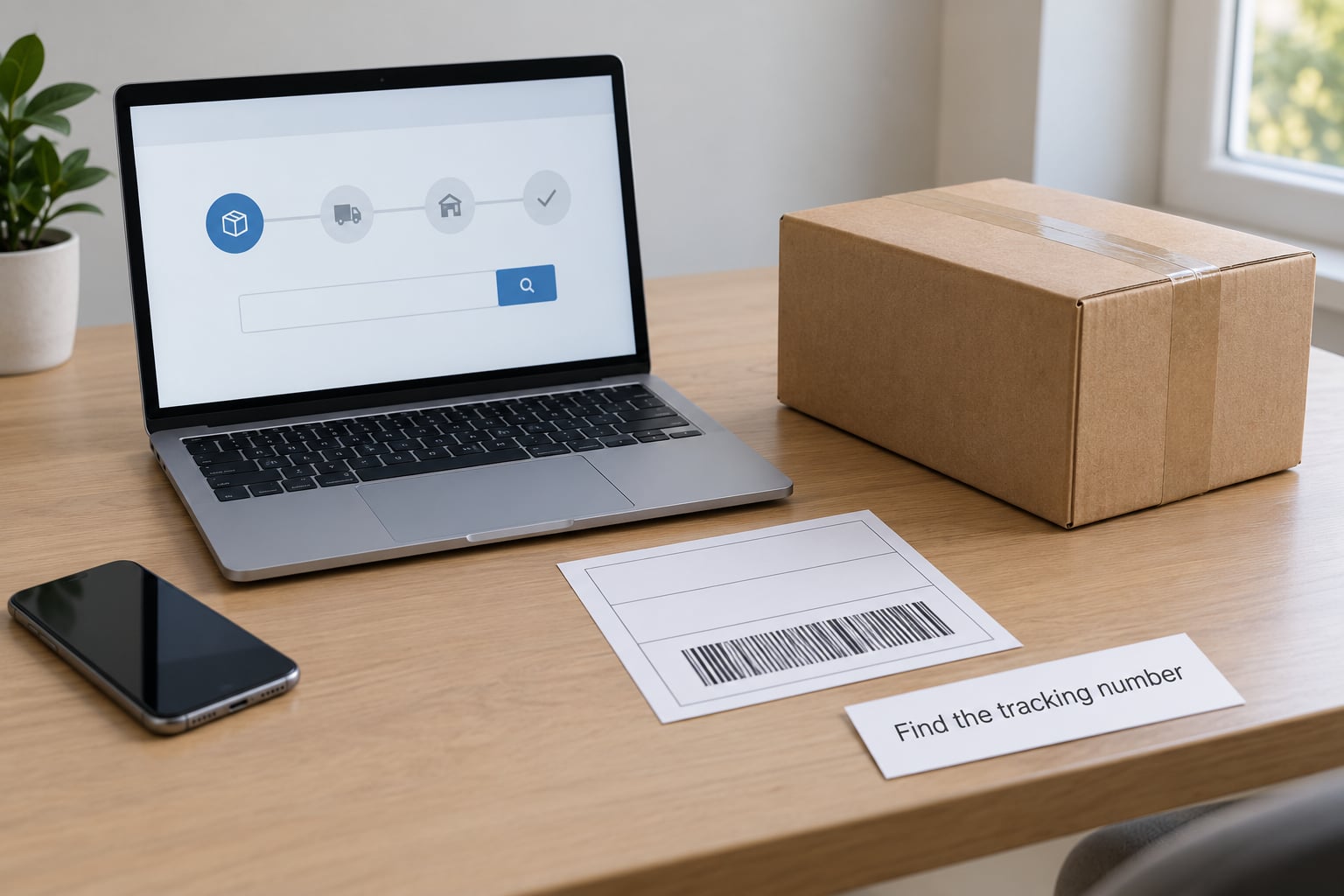
You know you have the right number when the tracking page loads a dated scan history instead of an error message.
2. Open the correct carrier tracking page
The carrier is named on the shipping label and in the retailer notification. USPS parcels go to the postal service’s tracking tool, FedEx and UPS have their own sites, and DHL, OnTrac and regional carriers each run a separate one. Searching a number on the wrong carrier’s site usually returns a generic not-found page.
Before you paste the number, strip out spaces, dashes and any leading label. Copy the number from the email rather than retyping it, and check that you did not grab a digit from the line above it.
If you have lost the number entirely, skip to the carrier dashboards described in step four, which search by address instead.
3. Read the latest delivery scan
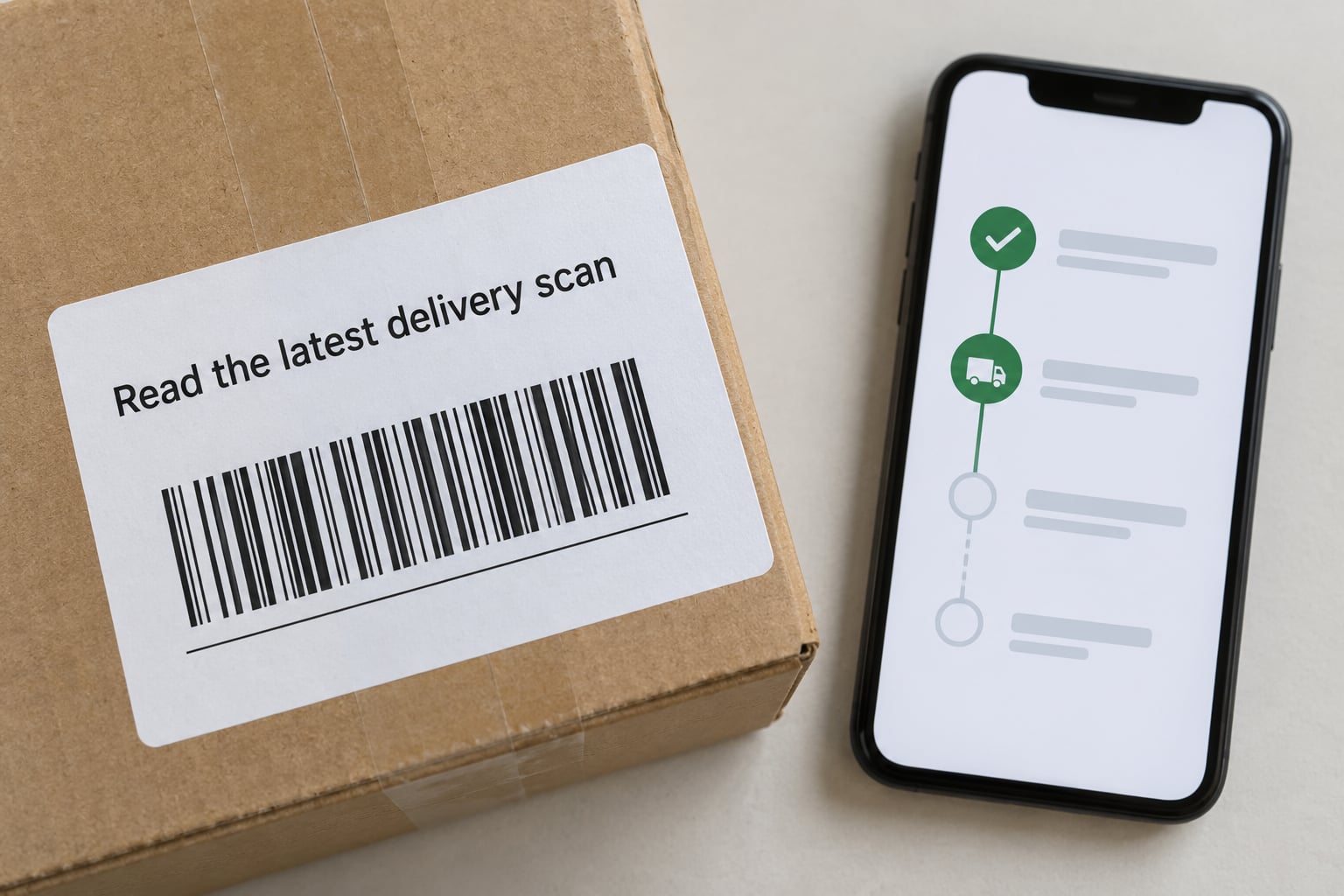
Statuses are shorthand, and each one tells you something different:
- Label created or electronic shipping information received: the seller has paid for postage but the carrier may not have the parcel physically.
- In transit: the parcel is moving through the network, though this scan can sit unchanged for days without meaning anything is wrong.
- Out for delivery: it is on a vehicle for that day. If it never arrives, an exception usually appears the next morning.
- Delivery attempted: nobody was home or the unit could not be accessed. A dated attempt notice usually follows.
- Delivered: a scan was recorded somewhere in the delivery area.
That last one is where people get misled. A delivered scan is recorded at the route level, so it can appear while the parcel is still on the truck, sitting in a neighbouring unit, or in a locker a few doors down. It confirms a scan happened, not that the box is in your hands.
Compare the newest scan date against today. Two or three quiet days mid-route is normal in my experience; a scan older than five days is the point where the record stops being useful and you start making calls.
4. Check whether the package is delayed or misdelivered
Pull up the estimated delivery date the carrier gives you and compare it with the date the retailer promised. A carrier estimate moving later is the clearest sign of a delay rather than a loss, and it tells you when to start worrying.
Then check the address on the tracking record character by character against what you typed at checkout. Then look around the address itself: the side door, a neighbour’s porch, a building mailbox, a parcel locker, the leasing office, and any safe place the carrier may have used.
Three address-linked dashboards will do a lot of that work for you, and they help even when the tracking number is gone:
- Informed Delivery (postal service) shows the mail and packages headed to your address, with a scan of each item before it lands. It is the tool to use when you have no tracking number at all.
- Delivery Manager (FedEx) shows incoming packages, delivery windows and delivery instructions. It is useful when a FedEx parcel is late and you want to reroute it or hold it.
- My Choice (UPS) shows incoming UPS shipments with delivery options. It is useful when a UPS parcel is late and you want to redirect it to a pickup point.
Each of them scans your address rather than following a parcel across the country, so they work on shipments you know nothing about, and they show nothing at all for parcels sent elsewhere or carried by someone else.
Look at the tracking record for wording such as delivered to another address, delivery exception, or held at customs. Each one points somewhere different. A misdelivery needs a phone call. A customs hold needs patience and often paperwork from the recipient. An exception usually resolves on its own within a day or two.
5. Contact the retailer or carrier
If you bought from an online store, contact the retailer first. They are the party you paid, they can see the order record, and they can sometimes re-issue tracking or check the warehouse scan the carrier never received.
Give them the tracking number, the address, the order number and the date of the last scan, all in one message. That single bundle saves a round of questions.
Then contact the carrier with the same details and ask specifically for a delivery investigation or package search rather than a general enquiry. Ask for the case or reference number and write it down. People who post in shipping forums report long phone queues at USPS in particular, and several say that walking into a local post office with the order details got further than the same request by phone.
If the parcel was sent internationally, expect a longer clock. Customs reviews routinely add a week or two with no scans, and the tracking may pass to a foreign post service whose tools are less detailed than the original carrier’s.
6. Report a missing package and request a solution
Once the carrier’s investigation window has passed without an answer, file the formal claim. For postal mail this is a missing mail search request; for FedEx and UPS it is a shipping claim, and both need a written record.
Attach everything you listed earlier: photos or a description of the packaging, the contents and their value, the tracking history, and the delivery attempt notice if one exists. Keep a log of every contact with the date, the time, who you spoke to and the reference number. Without that log, a denied claim is hard to appeal.
Ask for the remedy you actually want: a refund, a replacement sent out, a reroute, or a hold at a pickup location. Package interception is worth trying early when a parcel is genuinely still moving, because it only works before the final delivery scan. Any refund or reshipment depends on the retailer’s and the carrier’s policies, so read what your order confirmation says about lost shipments before you pick your request.
Common Mistakes
Searching the wrong number. Order numbers and reference numbers get pasted into tracking boxes all the time. A tracking number has the carrier’s format, usually with letters, and nothing else does.
Treating every scan as movement. A route scan can repeat without the parcel changing hands. What matters is the age of the newest scan, not how many scans there are.
Ignoring the places a parcel actually goes. Mailrooms, parcel lockers, side doors, building reception and a next-door neighbour solve a surprising share of delivered-but-missing cases before any claim is filed.
Calling support the same afternoon. A parcel that is out for delivery at 8am is not missing at noon. Contact people after the carrier’s own window has passed, because the first version of that call is usually a referral.
Letting the record disappear. Order confirmations get purged from email accounts. Save the confirmation, the tracking history and the delivery notice somewhere permanent the day you notice the delay.
Giving up after a denial without a log. A denied claim can be appealed, and sometimes escalated through your card issuer, but only with dates, names and reference numbers in hand.
Frequently Asked Questions
How long should I wait before I treat a package as lost?
Most carrier investigations assume the parcel has been missing for a set window, commonly seven days after the estimated delivery date. Before that point, a quiet tracking record is usually just a slow route. Wait until the estimated date passes with no new scan, then contact the retailer. If nothing moves after another two or three days, file the carrier claim with your screenshots ready.
What does it mean when tracking has not updated for several days?
It usually means the parcel is moving without being scanned, or it is sitting in a facility between scans. Multi-day gaps are normal during weather events and customs reviews. Judge the gap by age rather than by the number of scans. A record older than five days with no movement at all is worth a call, while a two-day gap on an in-transit parcel is not.
Should I contact the retailer or the carrier first?
Contact the retailer first when you bought from an online store. They can see the order record, re-issue tracking and check whether the parcel was ever handed to the carrier at all. Go straight to the carrier when you already have a valid tracking number, when a scan shows your area, or when the parcel was sent by a seller with no involvement after the handover.
Can I get a refund or a replacement for a package that never arrived?
Usually yes, through one of three routes: a carrier claim for the declared value, a refund or reshipment from the retailer under its lost-shipment policy, or a dispute with your card issuer. Many buyers find the card route fastest because it has its own deadlines. Start the carrier claim anyway, since your bank will often ask for the reference number before it takes the dispute.
Can you track a package without a tracking number?
You can, but only through your address rather than the shipment. Informed Delivery, FedEx Delivery Manager and UPS My Choice all scan the mail and parcels coming to your address and can show a package before it is delivered. They will not show you a parcel that was sent elsewhere or by a different carrier. Search your email for the order confirmation too, since most guest checkouts put the number there.
What should I do if the carrier denies my claim?
Ask for the denial in writing and the specific reason, because the reason decides the next step. A missing scan history, an expired filing window and a proof-of-delivery record all have different remedies. With a dated contact log in hand you can appeal the denial, escalate to a supervisor, raise it with your card issuer, or take the matter to a consumer protection office in your area.
Conclusion
Start with the tracking number, because nothing else works without it. Read the newest scan and check the age of it, look around the delivery address, then contact the retailer before the carrier. Keep every screenshot and every reference number from the first call onward, and when the window passes with no answer, file the formal claim and ask for the remedy you want rather than a vague promise to look into it.