To change your address with the post office, file a USPS Change of Address Order: go to USPS.com/move, or walk into any USPS retail location with photo ID and ask for PS Form 3575. The counter version is free and takes about five minutes. Online, USPS applies a small identity-verification fee when you validate with a card.
Both routes do the same job. USPS matches your name and old address against mail that is already in the system and re-addresses it to the new place for 12 months. That covers bills, bank statements, prescriptions and the rest, which is why most movers file one even when the new resident is not a friend.
What it does not do is update your records with anyone else. The post office only reroutes paper. The DMV, the IRS, your bank and every subscription you forgot about still need a separate phone call or form. Think of the change of address as a safety net while you handle the rest yourself, and file it before you move rather than after.
Someone at the counter once handed me a filled-out form without scanning the barcode at the bottom, and the order never registered. It cost me a month of statements I had to chase down by hand. Watch for that when you go in.
Table of Contents
- What You Need
- Step-by-Step: Change Your Address With USPS
- How to Change Your Address With the Post Office Online
- Use the USPS Online Address Verification Tool
- Complete USPS Identity Verification
- Review the Forwarding Duration, Cost, and Effective Date
- Choose Which Mail USPS Should Forward
- Submit the Change and Save Your Confirmation
- Request an Address Change by Mail Instead
- Common Mistakes to Avoid
- Tips for a Smooth Address Change
- Frequently Asked Questions
- How long does USPS address forwarding take?
- Does USPS forward USPS Priority Mail and Express Mail?
- What is the longest time USPS can forward my mail?
- What happens if mail is sent to my old address after moving?
- Can I change or cancel an address forwarding request after submitting it?
- Conclusion
What You Need
A change of address takes very little, which is why people put it off and then regret it. Gather these five things before you start.
- Your old address, exactly as it appears on your mail, including the apartment or unit number.
- Your new address in full: street number, street name, apartment or unit, city, state and ZIP code.
- Your effective move date, which can be up to three days in the future or an earlier date you are backdating.
- Acceptable photo ID for the counter route, such as a state-issued driver license, state ID card, passport or military ID.
- A payment method only if you file online, where USPS validates your identity with a credit or debit card.
The old address has to match what USPS already has on file. An apartment number you dropped, or a street suffix typed as “St.” instead of “Street,” is the single most common reason a request fails to match your mail.
Mail that arrives between your move and the effective date of the order is not covered. If you are moving on a Friday and file on Saturday, the gap is real. Filing a few days ahead closes it.
A USPS.com account is optional. It lets you manage the order later, which matters more than people expect, but the counter route needs no account at all.
Step-by-Step: Change Your Address With USPS
There are two official methods and one paper alternative. The online route takes about ten minutes from a couch; the counter route takes about five minutes standing in line. Pick one, not both, unless you need to correct an order you already placed.
How to Change Your Address With the Post Office Online
Start at USPS.com/move and work through the request in order.
- Open USPS.com/move and choose to start a new address change. Sign in with a USPS.com account or continue as a guest.
- Enter the old address exactly as USPS knows it, then type the new address in full.
- Enter the effective date. A date three days ahead is the normal choice, because it gives the system time to match your name before the mail arrives.
- Select which types of mail to forward. The default covers most classes; business mail is treated separately.
- Verify your identity by entering a credit or debit card number. USPS charges a small verification fee to that card and does not store it.
- Review the summary, pay the verification fee if prompted, and submit.
- Save the confirmation number and the confirmation email. This is how you prove the order exists later.
How do you know it worked? The order confirmation shows the old address, new address and effective date, and USPS emails a notice that the change has been recorded. If you used a guest checkout rather than an account, the email is the only record, so keep it.
Use the USPS Online Address Verification Tool
Before you commit to forwarding, USPS offers an address verification step that checks whether the destination is a deliverable address. It catches apartment typos and bad unit numbers before they become a string of returned mail.
Verification reduces obvious mistakes. It does not guarantee future delivery, because a deliverable address today can still be rejected later for reasons a lookup cannot see, such as an incomplete move-in, a closed building, or a carrier route that has changed.
Run it whenever the new address is an apartment, a rural route, a PO Box, or a place you have never had mail delivered to. Those four account for most of the bad destinations people file.
Complete USPS Identity Verification
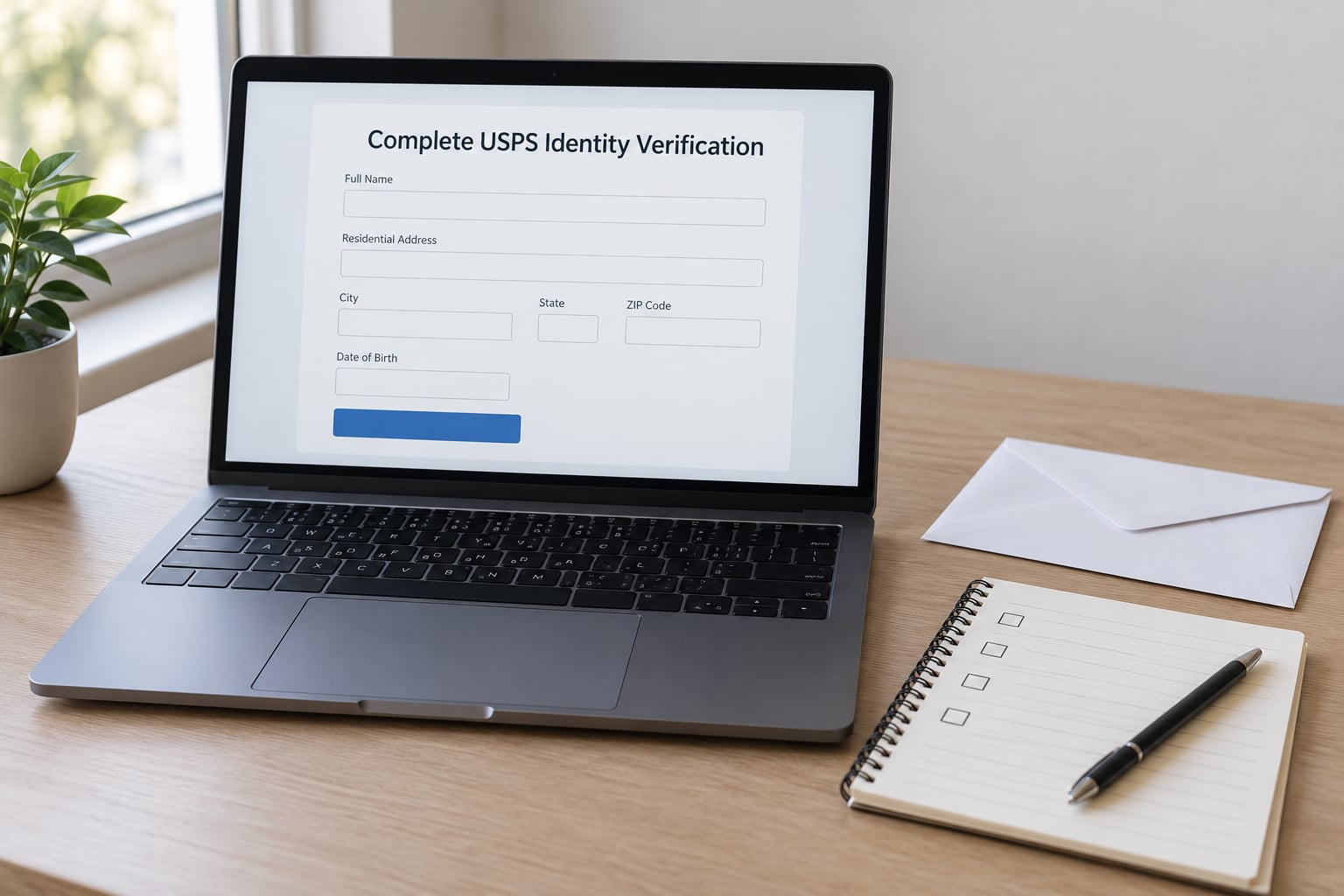
Identity verification is the step that trips people up online. USPS asks for a credit or debit card number and charges a small verification fee to it. That charge validates that you are who you say you are. It is not the price of the change of address, and it does not buy extra forwarding.
If the check fails, the request is not filed. Nothing half-starts and nothing is charged for the forwarding itself. Before you try again, confirm that the card number and expiration date are correct, that the billing address matches what the card issuer has on record, and that the card is one that accepts an online verification hold.
Some readers prefer not to put a card in at all. That is a reasonable choice, and the counter route exists for exactly this situation.
Review the Forwarding Duration, Cost, and Effective Date
Most mail is forwarded for 12 months from your effective date at no charge. Magazines, periodicals and catalogs are forwarded for only 60 days, which surprises people who expect a year of magazines.
Filing in person at a USPS retail counter is free. Filing online carries the small identity-verification fee described above, and the price shown during checkout is the authoritative figure for the day you file. Check it on screen rather than trusting a figure quoted in a forum post.
Government moves get a break. Members of the armed forces and federal civilian employees changing address under official orders qualify for complimentary forwarding for a defined period after the move. If that describes you, choose the government move option during the request rather than paying the fee.
On the date itself, three days ahead is normal. An earlier date backdates the order, which helps if mail is already piling up at the old place.
Choose Which Mail USPS Should Forward
The mail selection screen at checkout is where people expect the most and get the least. Your choices affect which classes of mail get rerouted, not whether individual pieces will follow you.
- Business and bulk mail behaves differently from personal mail and is often not forwarded at all, which is why the “Business” option is a separate checkbox.
- Restricted Delivery items require the signature of the specific addressee and generally do not survive a change of address.
- Collect on Delivery items stay with the original transaction until the original addressee handles them.
- Sender-entered automated mail means anything a company mails using a fully automated address-matching system, not the USPS database, may never reach the forwarding order at all.
Read that last one as the reason banks and utilities still need a direct address update. A forwarding order is a USPS-side lookup, and the sender has to be feeding that lookup for it to work.
Submit the Change and Save Your Confirmation
Submitting is one click online and one signature at the counter, but the confirmation is where diligence pays off.
Record three things: the confirmation number, the effective date, and the exact new address as USPS has it. If a unit number is missing from the USPS record, correct it now rather than discovering it three weeks later when the mail starts coming back.
After submitting, use the USPS online tools to confirm the order is active. An online order appears in your account’s address history, and an email confirmation lists the details. For a counter order, keep the printed confirmation slip the clerk hands you until you see forwarded mail arrive.
Request an Address Change by Mail Instead
If you have no card you are willing to use and no time for a counter visit, PS Form 3575 is a paper option. Complete the form with the old address, new address, effective date, type of move and the name of the person moving.
Sign it. Mail it with the required payment to the address shown on the form, and keep a copy of everything you send. Processing times make this the slowest option by a wide margin, which is why it works best for planned moves rather than moves that already happened.
Retrieving the form from a post office and mailing it back is still free. Using a paid third party to submit a change of address is unnecessary, and the service itself is free at USPS.com and at the counter.
Common Mistakes to Avoid
Most problems with a change of address come from one of seven mistakes, and every one of them is fixable before you file.
- An old address that does not match USPS records. Copy it letter for letter from a recent bill, including the apartment number. A mismatch means the order matches nothing.
- Filing after the move instead of before. Mail that arrives at the old address in the gap is not covered by an order that has not taken effect yet.
- Expecting every mail class to follow. Junk mail, bulk business mail, restricted delivery items and sender-entered automated mail are frequently excluded, and magazines stop at 60 days.
- Failing identity verification online. A failed card check means no order exists. Check the billing address on the card before retrying.
- Forgetting to file a second order after a second move. The first order keeps sending mail to the first new address until it expires.
- Assuming forwarding is permanent. Twelve months is the limit for most classes, and nothing renews itself.
A seventh one deserves its own warning: duplicate orders. When two people file for the same household, sometimes a family member and sometimes the person who bought the house, mail splits between two destinations until the earlier order expires. That is the most common single cause of lost mail, and it usually takes a counter visit or a phone call to resolve.
Tips for a Smooth Address Change
File the order at least three days before you move, then treat it as a temporary bridge rather than a solution. Update senders directly in this order: the IRS and Social Security Administration first, then your employer and insurance, then the DMV, banks and credit cards, then subscriptions and voter registration.
Set a calendar reminder about two weeks before your effective date ends. If you are still at the address, file a fresh order. If you have moved again, file a new order from the address that is currently forwarding, so mail chains correctly instead of bouncing back to the beginning.
Treat the forwarding notice as evidence, not a guarantee. It proves an item was routed through the system. It does not prove the item reached your hand, and a carrier who cannot locate the address can return it anyway.
For identity protection during the transition, consider a USPS Mail Hold of up to 30 days if you are between homes, and redirect mail that carries financial account numbers directly rather than relying on forwarding.
Frequently Asked Questions
How long does USPS address forwarding take?
Allow a few days. The order usually takes effect about three days after your effective date, and the first forwarded pieces can take another week to arrive. If you already moved and mail is still arriving at the old address, file today and backdate the order to your move date. That single step usually resolves the pile-up.
Does USPS forward USPS Priority Mail and Express Mail?
Yes. Most presorted First-Class Mail, Priority Mail, Priority Mail Express, Certified Mail, Registered Mail, Insured Mail and Standard mail is forwarded to your new address. What does not travel is mail entered into an automated system by the sender, restricted delivery items, and many business mailings. Heavy seasonal mailers often stop mailing to the old address long before you finish unpacking.
What is the longest time USPS can forward my mail?
Twelve months for most mail classes, counted from the effective date on the order. Magazines, periodicals and catalogs are forwarded for only 60 days. If you are still at the address when the 12 months run out, file a new order before the window closes and the second order continues from where the first one ended.
What happens if mail is sent to my old address after moving?
While your order is active, USPS reroutes it to the new address, and forwarded pieces usually take a few days longer than direct delivery. Once the order expires, or for excluded mail classes, the piece is either returned to the sender or delivered as addressed to whoever now occupies the old address. That is exactly why updating senders directly still matters.
Can I change or cancel an address forwarding request after submitting it?
An existing order cannot be edited in place. To stop forwarding, file a new Change of Address Order that moves mail back to the address you want and send a PS Form 3546 request to the post office. If only the destination changed, file a fresh order from the old address to the correct new one, and check for duplicate orders that would split your mail.
Conclusion
Start online at USPS.com/move, verify the new address before you commit, choose an effective date about three days out, and save the confirmation number. If you prefer the counter, bring photo ID, ask for PS Form 3575 and confirm the clerk scanned the barcode and handed you a confirmation slip. Either way, file it this week, then update the IRS, your employer, the DMV and your banks directly, because how to change your address with the post office solves mail routing and nothing else. As of 2026, the in-person service remains free and the online route carries only a small identity-verification fee.