Shin splints, medically called medial tibial stress syndrome, are one of the most preventable running injuries there is, and the prevention is mostly arithmetic: add training load in small steps, wear shoes that still absorb shock, and do the calf and foot strength work that keeps the tibia’s surrounding tissue able to handle the miles you put on it. Most cases trace back to one of three things — a sudden jump in volume, worn-out footwear, or weak lower legs and feet. This guide covers the five-step routine that addresses all three, plus what to change when your shins are already complaining. It takes about two minutes a day and fits inside a normal week.
One note before you start: this is general information about training habits, not medical advice. If your shin pain is sharp, worsening, waking you at night, or still there after a couple of weeks of sensible load management, that is a doctor or sports-medicine appointment, not a research project.
Table of Contents
- What You Need
- Step-by-Step: How to Prevent Shin Splints
- 1. Increase training volume and intensity gradually
- 2. Build calf, shin and foot strength to prevent shin splints
- 3. Choose supportive footwear and rotate options
- 4. Vary your route and reduce repetitive impact
- 5. Warm up, cool down, and prioritise recovery
- Common Mistakes
- Frequently Asked Questions
- Can beginners prevent shin splints by running every day?
- How long should I wait before increasing my running distance?
- Do the right shoes alone prevent shin splints?
- Should I keep running if my shins hurt during exercise?
- What exercises help prevent shin splints?
- When should shin pain be checked by a doctor?
- Conclusion
What You Need
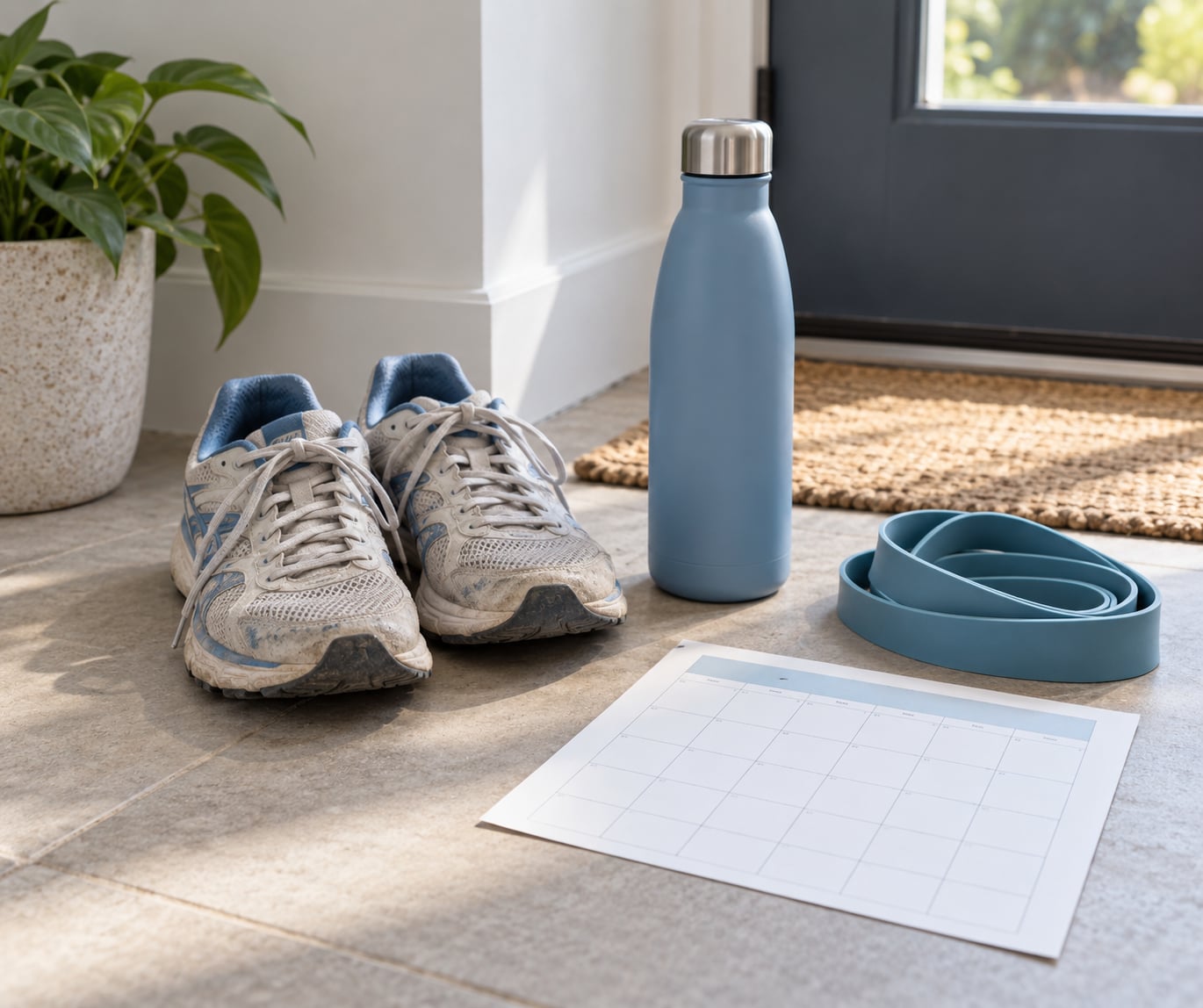
Prevention is cheap, and almost all of it needs gear you either own or can borrow. Here is the honest list of what a workable routine needs.
- Two pairs of comfortable athletic shoes in good shape. Rotating between them is the cheapest form of load management available, and it gives each midsole time to recover its foam. One pair is fine to begin with, two is better by week three.
- A training schedule you actually wrote down. Prevention lives in the plan, not in the moment. A notebook, a phone note or a calendar with your weekly mileage and session type on it is enough.
- Somewhere to walk or run. Grass, a track, a trail, a treadmill or a carpeted hallway all count. Access to one softer surface is genuinely useful, not a nicety.
- Resistance gear, or none at all. A resistance band and a sturdy step work for heel drops and tibialis work. If you have no equipment, every exercise in this guide has a bodyweight version, and bodyweight is enough to prevent shin splints.
- Rest days you treat as part of the training. Adaptation happens between sessions. If your week has no day that is not a workout day, something has to give, and it is usually the shins.
You do not need a massage gun, a bespoke orthotic or a membership at a clinic to get through the next eight weeks. Runners on r/running repeatedly report that the turning point for them was unglamorous — a slower build, a few calf raises, and a pair of shoes replaced earlier than they felt necessary.
Step-by-Step: How to Prevent Shin Splints
The order matters a little, because each step makes the next one easier. Volume first, then strength, then footwear, then variety, then recovery habits.
1. Increase training volume and intensity gradually
This is the single most effective step, and the one runners break most often. The commonly used rule of thumb is to raise your weekly mileage by about 10% a week, and to change only one thing at a time.
That second half is the part people forget. Going from 10 miles a week to 15 while also adding hill repeats and a faster tempo session is a triple jump, and the tissue absorbing that load does not care that each change looked reasonable on its own. New runners on r/beginnerrunning describe the classic version of this: a good week, a burst of enthusiasm, shin pain within a fortnight.
A worked example. If you are starting near zero, run-walking is a legitimate way to build: three sessions a week, starting with 90 seconds of walking and 60 seconds of running, extending the running portion by 30 seconds per week. Volume and speed stay on separate timelines, and your shins get a genuine adaptation stimulus without a shock.
- Add about 10% to weekly distance each week, then hold the new total for a week before increasing again.
- Increase volume, speed, hills and duration one at a time, never together.
- Count strength work, hills and a hard session as load, not as bonus activity.
- After a missed week — illness, travel, life — drop back to the last comfortable volume instead of restarting where you were.
How you know it is working: your shins feel normal or mildly sore during the run and settle within a day. A dull two-out-of-ten ache that lingers into the next morning is your body telling you the last increase was too big.
2. Build calf, shin and foot strength to prevent shin splints
Shin splints show up when the calf-Achilles complex and the tibialis anterior along the front of the shin cannot keep up with the demand. Strengthening them is the second-most-cited fix among runners, and it takes about eight minutes.
Calf raises. Stand on a step, rise slowly onto the balls of your feet, lower under control. Three sets of 15, twice a week. The lowering phase is the useful part — a controlled heel drop loads the calf and Achilles through a longer range than simply standing up.
Tibialis raises. Sit with the heels on the floor and the toes raised, or do heel walks on a flat stretch of floor. Heel walking for a minute or two pre-run gets the muscle switched on without loading it hard. Bands help here: loop one around the foot and pull the toes up against it, 15 slow reps per side.
Toe walks and short-foot work. Walking on your toes in straight lines trains the front of the shin. For the foot itself, sit down and try to shorten the length of your foot without curling the toes — the “short foot” — then hold for 5 seconds, 10 reps each side. It looks odd and it works on the arch muscles that support the load path up the leg.
Heel drops off a step. For people already comfortable with calf raises, stand on the edge of a step with the heels hanging, lower slowly, then press back up. Slow is the instruction that matters here. Fast bouncing reps are a different exercise with a different risk.
Weak hips and glutes show up in the shins too, because they change how much work the lower leg absorbs per stride. Two sets of 15 hip bridges or squats alongside the calf work fills that gap. Strength on the off-season is what lets you return to a heavier week without shin pain in week two.
How you know it is working: heel walks and calf raises feel no harder or less stable in week six, and soreness after a run settles faster. You are not looking for a visible muscle change in six weeks — you are looking for the lower leg to complain less.
3. Choose supportive footwear and rotate options
Comfortable athletic shoes with a secure fit, a thumb’s width of space in front of your longest toe, and cushioning that has not flattened out. That is the whole recommendation, and it is deliberately unspecific, because no brand or model prevents shin splints on its own.
Shoes lose their shock absorption long before the upper looks ruined. The widely used replacement marker is 350 to 400 miles for a road running shoe. Track spikes, court shoes and hard-surface trainers fail sooner; if your running surfaces are abrasive, replace earlier. A quick at-home check: press your thumb into the midsole. If it feels hard and flat rather than springy, that shoe has done its job.
Foot shape matters too. Flat feet or high arches both change how the arch and calf manage load, and prefabricated arch supports or insoles help some people. If your shin pain tracks with one specific shoe or shows up on hard surfaces only, a physical therapist or podiatrist can assess your gait properly. Buy one pair, test it on a short run, and never introduce new shoes and a big mileage week in the same seven days.
Runners on r/runninglifestyle report the same thing in different words: nobody ever felt a new pair “click” and never get shin pain. What helped was replacing a tired pair, not hunting for a magic one.
How you know it is working: your shins are quiet on the same run that used to bother you, and your shoes still feel springy rather than dead by the end of the session.
4. Vary your route and reduce repetitive impact
The same bone, the same muscles and the same surface, week after week, is how repetition turns load into an injury. Breaking the repetition costs nothing.
Swap pavement for a dirt trail, grass or a track with a synthetic surface when you can. Change direction on a loop so you are not always hitting the same side of the path. Split a weekly schedule into an easy run, a harder session and one low-impact day — swimming, cycling, an elliptical or a long brisk walk all build fitness without the bone-bending impact.
Cross-training matters for another reason: complete rest deconditions you, and most runners find that demoralising. Low-impact work keeps the engine turning while the shin settles. Walking, in particular, is the middle ground runners on r/PHRunners describe as the tolerable option during a flare, because it keeps fitness without the impact load.
If you lift weights, keep upper-body and core work as normal, avoid deep calf-and-shin loading through heavy loaded squats and lunges for a few days after a painful shin, and expect your legs to feel different under a bar than they do on a run. That is normal adaptation, not damage. A weekly schedule that alternates run, cross-train and strength days is easier to hold than six consecutive running days.
How you know it is working: you have at least two surfaces in a typical week and at least one day with no bone impact. Nothing about your fitness should feel like it dropped.
5. Warm up, cool down, and prioritise recovery
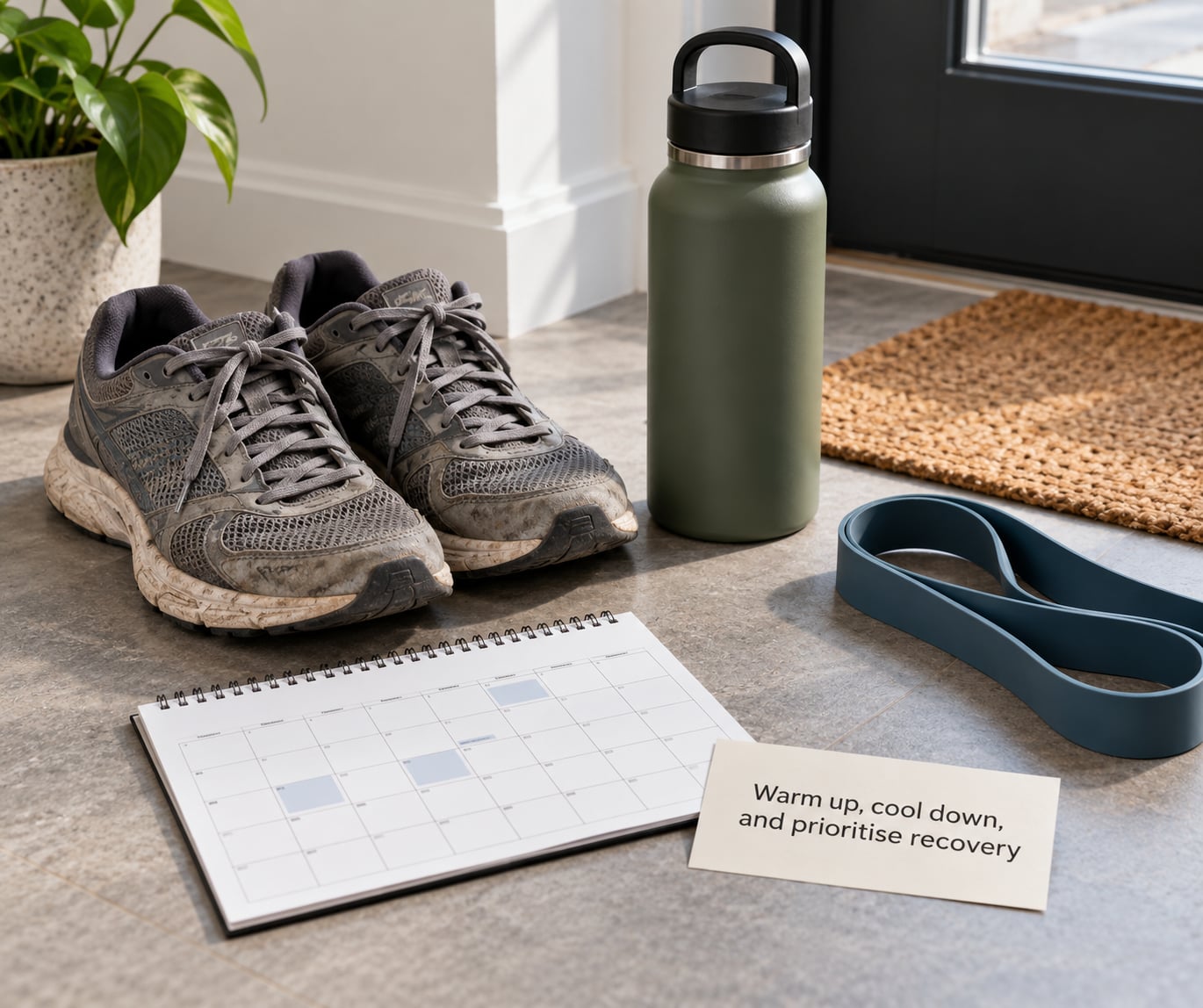
Five minutes of marching, ankle circles, a minute of heel walking and a few toe walks raises tissue temperature and gets the tibialis anterior firing before you load it. A dynamic warm-up beats a long static one before running, and both beat nothing.
Afterwards, hold the calf and the front of the shin for 15 to 30 seconds a side, twice, while breathing normally rather than bouncing. Two moves cover most of it: a wall-assisted Achilles stretch with the back heel down, and a kneeling lean or a toe-drag stretch for the tibialis anterior. Tension you can breathe through is useful. Pain you have to hold your breath through is not a stretch, it is an injury, and you should back off it.
Between sessions, the unglamorous variables do more work than any gadget: sleep, water, and food with enough calcium, vitamin D and protein to support bone. A runner on r/workout asked whether a vitamin deficiency causes shin pain, and the honest answer is that deficiencies can affect bone health broadly, but shin splints are primarily a load problem. If you suspect a nutritional gap or have osteoporosis, ask a doctor or registered dietitian about your intake rather than self-supplementing.
Finally, listen to tenderness as a signal rather than an obstacle. Shins that feel unusually sore, or tight in the morning, are asking for a lighter week. Cut volume in half, swap the session for a walk or a cycle, and hold there for a week. Holding a reduced week is a legitimate training decision, not a failure.
How you know it is working: the post-run stretch feels like it goes deeper than it used to, and the morning-after tenderness that used to last three days is gone after one.
Common Mistakes
Nearly every shin-splint case traces back to one of five errors. Each has a straightforward fix.
- Increasing mileage too quickly. The most common one by a distance, especially in the first six weeks of running. Fix it by cutting back to a volume that produced no next-day symptoms and rebuilding from there at about 10% a week.
- Running through worsening pain. Mild soreness that settles by morning is normal training stress. Pain that gets worse during the run, changes your stride, or persists for days is different, and pushing through it is how shin splints become stress fractures. Fix it by stopping and resting properly, not by easing off slightly.
- Keeping heavily worn shoes. The foam dies long before the shoe looks ruined. Fix it by tracking mileage per pair, or testing the midsole with your thumb, and replacing at 350 to 400 miles for road running shoes.
- Skipping lower-leg strength work. People warm up carefully and then do no calf raises, tibialis work or foot training all week. Fix it with eight minutes twice a week — three sets of 15 on each exercise is plenty to maintain.
- Assuming more shoes alone will solve it. A brand-new premium trainer does not compensate for a 40% mileage jump. Fix it by treating footwear as one of the five steps, not the whole plan.
One more that runners argue about endlessly: stretching. Whether static calf stretches before a run prevent shin splints is genuinely debated, because research on pre-run static stretching shows no reduction in running injuries. What is not debated is that the tissue should be warm before you run and that daily calf mobility helps across a training week. Warm up dynamically, stretch after, and do not turn a 15-second hold into a test of pain tolerance.
Frequently Asked Questions
Can beginners prevent shin splints by running every day?
No. Running every day from the start is one of the fastest routes to shin pain, because bone and soft tissue need recovery days to adapt to impact. Most beginners do better with three runs and two or three non-impact days a week, building run-walking sessions first and adding about 10% to weekly distance once symptoms settle.
How long should I wait before increasing my running distance?
Wait until the current volume is comfortable, not merely survived. If your shins feel normal the next morning and you can run the same distance at a similar effort a week later, you are ready to add about 10%. If tenderness is still there after 48 hours, hold that distance for another week instead of pushing on.
Do the right shoes alone prevent shin splints?
They help, but they cannot do it alone. Supportive, well-cushioned shoes in good condition reduce the load reaching the shin, yet a training jump of 30% can still cause pain in perfect footwear. Shoes are one of five steps: the load has to increase gradually, and the calf and foot muscles have to be strong enough for the miles you are already running.
Should I keep running if my shins hurt during exercise?
If the ache is mild, equal on both sides and settles by the next morning, cutting the session short is usually reasonable. If the pain sharpens as you run, makes you limp, changes your stride, or is present at rest, stop and rest it, and get it assessed. Continuing through worsening pain is the main route from shin splints to a tibial stress fracture.
What exercises help prevent shin splints?
Calf raises, controlled heel drops, tibialis raises, heel walks, toe walks and short-foot drills are the core set, plus hip and glute work to reduce per-stride load. Do three sets of 15 reps, twice a week, with slow controlled form and a full range. Warming up dynamically and stretching the calf and tibialis anterior for 15 to 30 seconds after training rounds out the routine.
When should shin pain be checked by a doctor?
Book an appointment if the pain is sharp or localised to one spot, wakes you at night, is present at rest, follows a fall, or has not improved after two or three weeks of reduced activity. A doctor or sports-medicine physician can tell shin splints apart from a tibial stress fracture, which usually needs imaging and a longer return to running.
Conclusion
Start with the arithmetic: hold your weekly mileage increase near 10%, change one variable at a time, and treat your calf, tibialis and foot strength sessions as part of the plan rather than an optional extra. Keep two pairs of shoes in rotation and replace road running shoes around 350 to 400 miles. Vary surfaces, keep a low-impact day in the week, and treat a tender morning as a reason to cut the week in half.
If shin pain is sharp, one-sided, present at rest or still there after a few weeks of doing all of this properly, stop guessing and see a doctor or sports-medicine professional. That is the one part of this plan worth not improvising.