Your foot type is really three things at once: how high your arch sits, which way your foot rolls when it lands, and how much room your toes need. Getting how to pick running shoes for your foot type right takes about twenty minutes at home plus one careful try-on later in the day, and it is the difference between a shoe you forget about and one you notice on every single step.
I have gone through this process more times than I care to admit, and the pattern is consistent. People spend hours reading reviews and ten seconds on fit. Reverse that order and the whole search gets easier.
This is general information about shoe fitting, not a diagnosis. If you have current foot, shin or knee pain, get it looked at by a doctor or physical therapist before changing anything about how you run.
Table of Contents
- What You Need
- Step-by-Step: How to Pick Running Shoes for Your Foot Type
- 1. Identify Your Foot Shape and Arch
- 2. Notice Your Gait and Where You Feel Discomfort
- 3. Match Shoe Category to Your Foot Type and Running Pattern
- 4. Try on Shoes in the Afternoon or Evening
- 5. Check Comfort From Heel to Toe
- 6. Make a Gradual Test Run
- Common Mistakes
- Frequently Asked Questions
- How do I know my pronation type?
- Why do podiatrists like Hoka?
- Is the wet test accurate enough to choose a shoe?
- How often should I replace running shoes?
- Does a wide toe box really matter?
- Do I need a professional gait analysis before buying shoes?
- Conclusion
What You Need
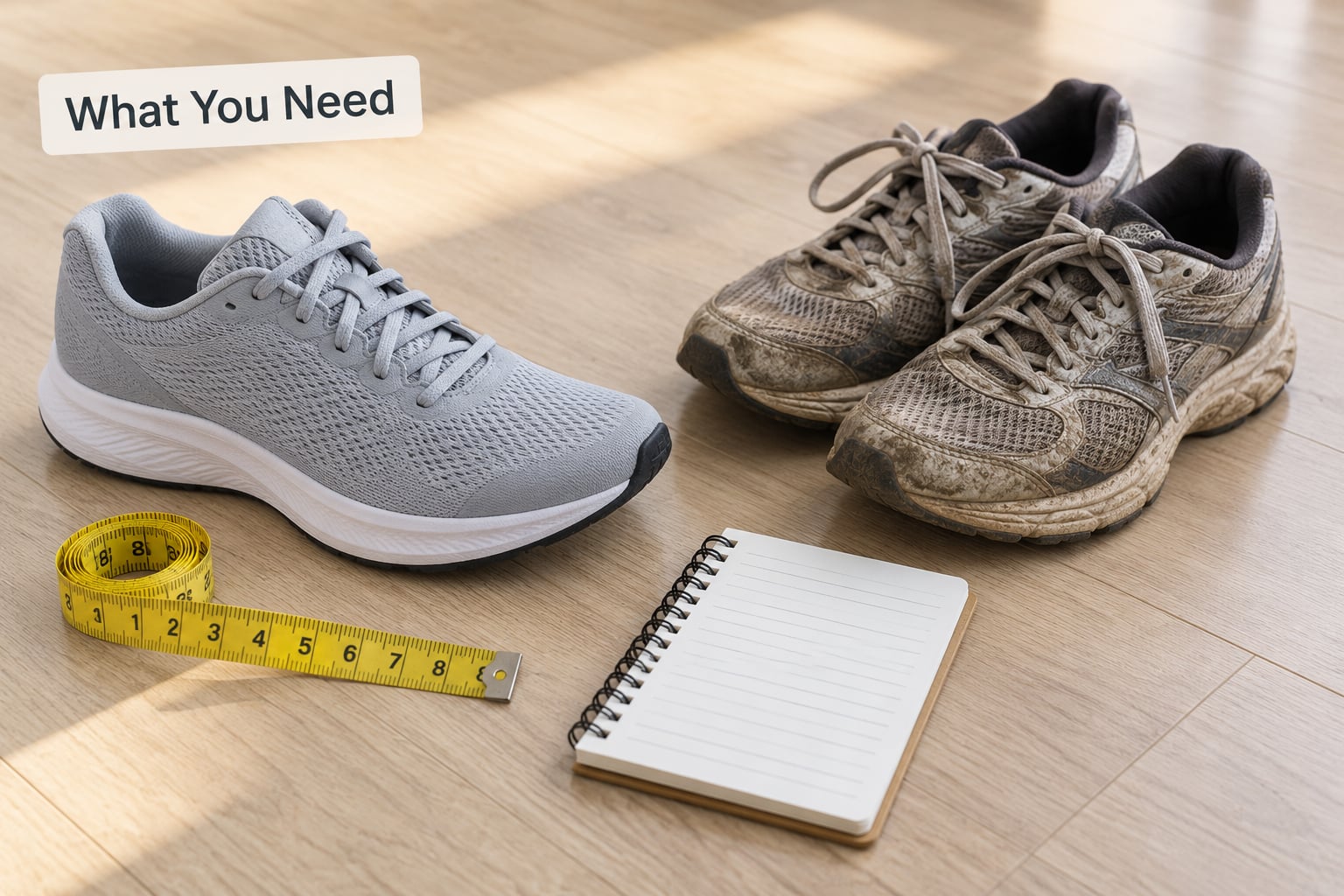
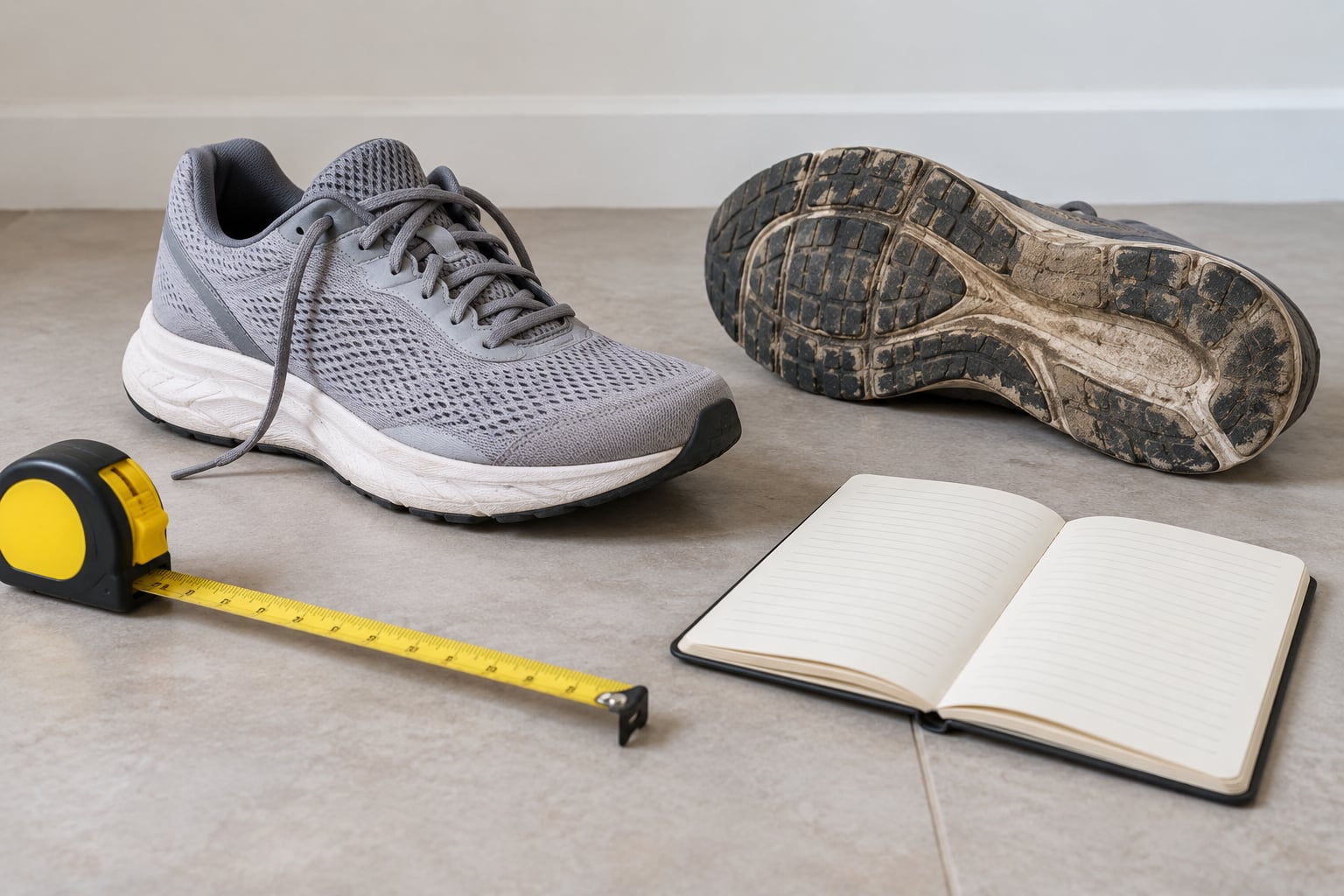
You need a tape measure or a sheet of paper and a pen, a pair of your current running shoes, the socks you actually run in, and ten minutes. Your phone helps too, if you want to film a calf raise.
The worn pair is the most useful item on that list and the one most people leave at home. Twenty to forty miles of wear tells you more about your gait than anything you can learn from a mirror.
Feet swell slightly through the day, which is why the try-on step later in this guide matters. Buy in the afternoon or evening, not at nine in the morning.
Step-by-Step: How to Pick Running Shoes for Your Foot Type
1. Identify Your Foot Shape and Arch
Get a rough read on your arch in sixty seconds with the wet test. Wet your foot, stand on a piece of dark paper, step off, and look at the print.
A print showing a thin band with a clear waist points to a high arch. A broad, solid print that barely curves suggests a low arch or flatfoot. Something in between, with a visible but moderate waist, is the common neutral shape. Compare both feet, because they rarely match exactly.
Here is the honest limit of that test: a wet print tells you about static arch shape while standing, and pronation happens dynamically while you run. Runners on running forums describe it plainly, one after another: you cannot read your pronation from a footprint alone. Treat the print as a clue about shape, then move on.
Toe width is the second measurement and it is independent of arch height. Stand on a hard floor and spread your toes. You should be able to fan them out without any of them pinching against each other or rolling under.
2. Notice Your Gait and Where You Feel Discomfort
Overpronation means the foot rolls inward past neutral at mid-stance, underpronation (also called supination) means it stays rigid and rolls outward, and a neutral gait stays close to straight. You mostly notice these things by where your body complains, not by looking at your feet.
Look at your old outsole. Heavy wear on the inner edge of the forefoot is the pattern runners most often read as overpronation. Wear concentrated along the outer edge often shows up with supination. Even wear across the whole forefoot is a neutral-looking pattern.
Runners debate that read constantly, and their caution is fair. Wear tells you the net result of hundreds of miles, not the cause, and road and trail shoes wear differently on their own. Use it as a first pass, not a verdict.
For a slightly better signal, film yourself doing single-leg calf raises, one second up and two seconds down, on level ground. Watch the ankle line and where the foot lands. Ten seconds of video tells you more than twenty minutes of guessing.
Where do you feel it? Inside of the knee or shin often tracks with inward rolling. Outer ankle or Achilles achiness often tracks with outward rolling. Pain under the ball of the foot with a tight squeeze usually points at toe box width, not gait at all.
3. Match Shoe Category to Your Foot Type and Running Pattern
Once you have a rough idea, you are choosing a category first and a model second. Start in the middle of the range if you are unsure, because neutral shoes suit more runners than any other category.
- Neutral shoes balance cushioning and flexibility with no added support. Best default for neutral gait and for anyone who has never felt a problem with their current shoes.
- Stability shoes add a firmer section on the inner side of the midsole, called a medial post, that resists extra inward roll. Consider them if your wear pattern and your knee history both point the same way.
- Motion control shoes are stiffer and heavier, built for heavier runners or pronounced overpronation. They have a reputation for a clunkier feel, and that matters more than the support if you are running often.
- Maximalist shoes carry a thick platform of foam under the whole foot. Popular with podiatrists for plantar fasciitis because the higher stack softens impact on the heel.
- Minimalist shoes sit close to the ground with a low drop and thin foam. They are a legitimate choice for experienced runners, and a bad first purchase for a beginner.
Two adjustments matter more than most beginners expect. The heel-to-toe drop is the height difference between heel and forefoot; staying near the drop your body is used to avoids stressing your calf and Achilles. The midsole firmness decides how much ground you feel. Bend the shoe gently at the toe: if it folds flat without resistance, it is softer than most feet want for daily mileage.
If a category feels wrong after a few runs, change foam or drop before you change category. Broad, deep toe boxes, which several brands now build into their everyday trainers, fix pressure problems that no amount of medial post will touch.
4. Try on Shoes in the Afternoon or Evening
Try shoes late in the day, with the socks you run in, and with the foot that feels more finicky. Stand, walk, and if the store allows it, jog a short loop indoors.
Take the laces off and look at the shoe afterward. If the upper is stretched noticeably to one side, the forefoot was too wide for that foot even though it felt fine while you were walking.
5. Check Comfort From Heel to Toe
A good fit passes five checks: about a thumb’s width of space ahead of your longest toe, a heel that stays put when you lift the foot, no rubbing or numbness anywhere, a forefoot that bends where your foot bends, and a shoe that feels stable when you stand on one leg.
Heel security matters more than heel tightness. A heel that lifts is an empty shoe; a heel that grips hard across the tendon is doing damage. If you squeeze your heel and feel the Achilles squeeze, size up.
6. Make a Gradual Test Run
Break new shoes in over roughly two weeks. Run the first two or three sessions short and easy, and hold off on anything fast, hilly, or long.
Return them if you get a hot spot, blisters on the same spot twice, numbness, or pain that changes how you run. A shoe that works has to survive a normal week of your actual mileage, not a lap around the block.
Common Mistakes
Buying for the label instead of the fit. An arch category is a starting guess. Toe room and heel security decide whether you can actually run in the shoe.
Treating the wet test as a verdict. It is a standing snapshot. It cannot show you what happens at mid-stance.
Trusting a stability shoe to fix a cramped toe box. Toe box complaints are one of the most common threads in beginner running forums, and adding support on top of pressure rarely helps. Runners describe stability shoes that made their knees worse simply because the toe box was wrong.
Shopping in the morning. Feet swell. You will be disappointed by the size you picked at nine.
Confusing size systems between brands. A US 10 from one brand can be a US 9.5 from another. Measure your foot and compare length in centimeters rather than trusting the label.
Prioritizing cushioning over fit. The softest shoe in the store is not the right one if your foot slides around inside it.
Wearing a brand-new pair for a race or a long run. You found out about the hot spot at mile four instead of mile one.
Skipping the old-shoe check. Your most worn pair is free gait data. Bring it to the shop or take a photo of the outsole.
Frequently Asked Questions
How do I know my pronation type?
Watch a short video of yourself running from behind, or film single-leg calf raises on level ground. Look at how much your ankle rolls inward or stays rigid at mid-stance. Cross-check it against your old outsole wear and where you feel soreness afterward. No single home method is definitive, so if the answer decides between a neutral and a stability shoe, get a gait analysis.
Why do podiatrists like Hoka?
Podiatrists often recommend thick, high-stack shoes for plantar fasciitis because the deep foam softens the impact that reaches the heel, and the wide platform suits bunion and wide-foot cases. That does not mean Hoka is a magic brand. The same two properties, a tall stack and a roomy toe box, exist across many brands, and comfort still decides.
Is the wet test accurate enough to choose a shoe?
It is accurate enough to give you a starting point and a rough read on static arch shape. It cannot tell you how your foot behaves at mid-stance, which is the number that actually matters when picking between neutral and stability. Use it alongside foot width, wear patterns and a short video rather than on its own.
How often should I replace running shoes?
Runners commonly get roughly 300 to 500 miles from a pair, which is about three to six months for many people running three times a week. Faster runners and wet trail shoes wear out sooner. Cushioning also loses shape with age, so a pair that has sat in a closet for three years is likely past its best.
Does a wide toe box really matter?
It is one of the few features you can test in ten seconds and feel the difference on the first run. Your toes should be able to splay freely and stay spread through a push-off. A narrow toe box pushes the big toe sideways, which is a common route to bunions, nerve irritation under the ball of the foot, and black toenails.
Do I need a professional gait analysis before buying shoes?
Not if you have no pain and no history of injury, since comfort over a few runs is a reliable filter. It is worth it if your knees or shins hurt repeatedly, your shoes wear out unevenly, your foot shape has changed, or you have already bought two pairs that did not work. Bring the report to a specialist who will explain it, not just print it.
Conclusion
Start with the part most people skip: measure your feet, spread your toes, and look at the sole of the shoe you have already beaten a path in. Then watch your gait for thirty seconds of video, pick a category that fits, and try two or three models in the late afternoon.
When a shoe passes the fit checklist and survives two weeks of easy running, that is your answer. Everything after that is preference.
Last reviewed in 2026. This article is informational and does not replace advice from a doctor or physical therapist. If you have persistent foot, shin or knee pain, get assessed before you buy.