Finding a veterinarian for the first time comes down to three things: confirming the practice is licensed and treats your pet’s species, finding out how they handle emergencies and written estimates, and then booking a baseline wellness visit. Most people can do it in a weekend by calling three clinics and comparing the answers. The goal is a clinic your pet can stay with, not the closest one on a map.
Table of Contents
- What You Need
- Step-by-Step
- How to Search for a Veterinarian for the First Time Online
- How to Check a Veterinarian’s Credentials and Services
- How to Prepare for the First Appointment
- Common Mistakes
- Frequently Asked Questions
- How much does a basic vet visit usually cost?
- What should I do if I can’t afford the vet?
- How do I know if a veterinarian is licensed?
- How old should puppies be for their first vet appointment?
- What to expect at your cat’s first vet visit?
- Can I switch vets after my first visit?
- Conclusion
What You Need
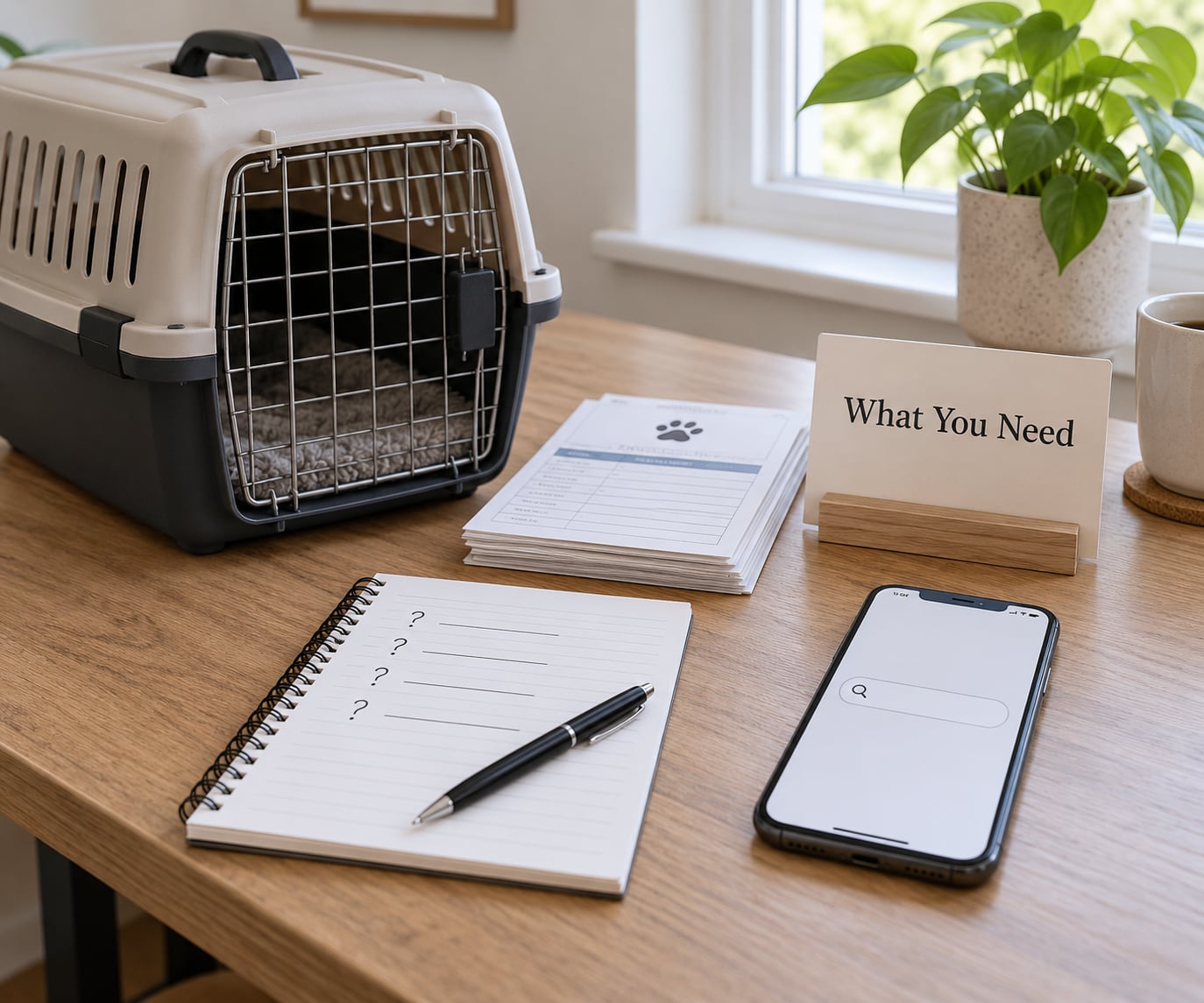
Gather these before you start searching. Searching with half the information leads to a clinic that treats dogs when you own a parrot, or one that is booked solid for six weeks.
- Pet basics. Species, breed, age, weight, sex, and whether the pet is neutered or spayed.
- Where the pet came from. Shelter, rescue, breeder, or a friend, plus any paperwork they handed over.
- Records, if any exist. Vaccination dates, prior treatments, current medications, and the name of the last clinic. Shelters and rescues often hand over partial records, and a gap is common rather than unusual.
- A written symptom timeline. Start date, what changed, what makes it better or worse, and anything your pet stopped eating or doing.
- A way to get there. A secure carrier or leash, and a plan for a second car if two pets need to go.
- Your questions, written down. People forget half of what they meant to ask once the vet is in the room with an animal who is scared.
- A way to pay. A card, a savings figure, or a plan, so cost is a question you ask calmly rather than a crisis you hit at the counter.
Step-by-Step
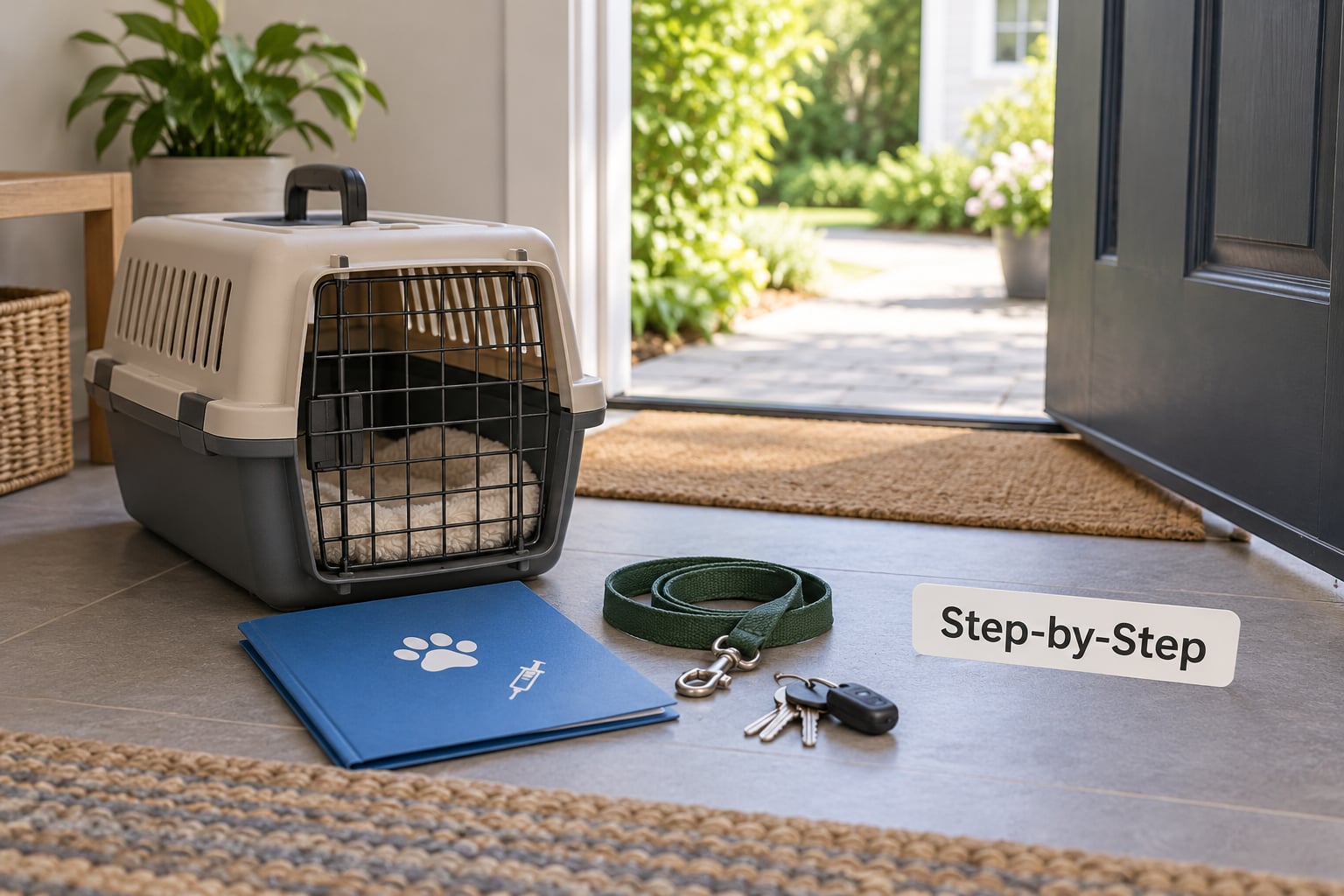
Work through it in this order and you will not waste a weekend. Learning how to find a veterinarian for the first time is mostly about asking the right questions early, before you are emotionally invested in one answer.
- Decide what kind of care you need. Routine preventive care, an urgent problem that needs to be seen today, or an emergency that needs a hospital with overnight staffing.
- Build a shortlist of three to five clinics. Combine a directory search with two personal recommendations.
- Call each one and ask the same questions. Use the checklist below so you are comparing answers rather than impressions.
- Check that the veterinarian is licensed. This takes five minutes and rules out most bad surprises.
- Visit one clinic before you need it. Walk in, ask for a tour, and see how the animals in the waiting room are handled.
- Book the baseline wellness exam. This is where the records start, and records are what make every later visit faster.
- Save the nearest 24-hour emergency hospital to your phone. Do this the same week, not the week you need it.
How to Search for a Veterinarian for the First Time Online
Search your exact keyword plus your city or neighbourhood, then filter by species. If your pet is a rabbit, a reptile, or a bird, add that word to the search, because most general practices see a dog or cat walk through the door ten times a day and an exotic animal twice a year.
Use three kinds of sources together. A professional directory gives you a broad list. Your state veterinary medical board gives you the licensing record. Local community groups give you the thing directories cannot: how a clinic behaves when your pet is frightened and you are late paying.
Owners in local city forums tend to cross-check rather than pick a single favourite. A comment that names the clinic and says the owner has been going there for ten years carries more weight than a five-star review with no detail, because it tells you the practice has kept its staff and its prices steady.
Watch for the clinics with no emergency arrangement listed anywhere on their site. Not every practice runs overnight care, and that is fine, as long as you know which hospital they send patients to at 2 a.m.
How to Check a Veterinarian’s Credentials and Services
Look up the practice and the veterinarian in your state or provincial veterinary medical board’s online lookup. You get the license status, the disciplinary history if there is one, and sometimes the original school and date. Outside the US, the equivalent is the national veterinary register or the licensing body for your region.
Then check the things a license does not tell you. AAHA accreditation means the practice met standards around anesthesia, surgery, dentistry and record-keeping. Fear-Free certification means staff are trained in low-stress handling, which matters more than owners expect for a cat that has never been around other animals.
Ask whether the clinic runs an in-house laboratory and takes radiographs on site. It is not a quality measure on its own, but it changes how fast you get answers and how much a follow-up costs.
Ask about species experience directly. A clinic that sees exotics, large breeds, or brachycephalic dogs regularly will tell you so. If the person on the phone hesitates, keep looking.
One more practical question: who actually sees the animals, and is there a veterinary technician on staff. Technicians do a lot of the hands-on work, and knowing their role helps you understand who to ask for what.
How to Prepare for the First Appointment
Transport matters more than people expect. A cat that rides unsecured in a car arrives already panicked, and a panicked cat is harder to examine. Use a secure carrier and secure it with a seatbelt so it cannot slide. For dogs, a well-fitted harness and leash beats a collar that slips.
Bring every document you have, even the partial ones. A shelter intake sheet with two vaccine dates on it is genuinely useful, because the vet can build a schedule around what is known and start from scratch on what is not. Say plainly what is missing instead of hoping nobody notices.
Write your timeline before the appointment: when it started, whether it has changed, what your pet eats, and how much they drink. Vets ask these questions in a fixed order, and having the answers ready speeds everything up.
Bring any medication, including the flea and tick product, and a photo of the label. Note the last meal and whether your pet is on a raw or elimination diet, because food changes can explain symptoms that look alarming.
Ask whether you should withhold food. For most routine wellness exams it does not matter, but a sick pet or one headed for a blood test may need to fast. Ask rather than assume.
Keep your questions on paper and hand the list to the vet at the start. It signals that you want the appointment used properly, and you will not forget the second question while remembering the first.
Common Mistakes
Choosing on distance alone. The closest clinic is convenient, but the nearest 24-hour hospital matters more than the nearest exam room. Check both before you commit.
Leaving symptoms out to seem like a calm owner. A small detail that felt unimportant decides the diagnosis more often than people expect. Mention the cough that happened twice last month and the food your pet stopped eating on Tuesday.
Arriving with no records and no timeline. Without either, the first visit turns into a long conversation about history instead of treatment. Ten minutes of writing at home saves twenty minutes in the room.
Letting cost decide it silently. Owners who feel embarrassed about money often skip care entirely or leave halfway through the conversation. Ask for a written estimate before anything starts, and say what you can manage. Clinics deal with this conversation daily and a clear answer beats a guess.
Giving human medication. Ibuprofen, acetaminophen, and many cold and allergy products are toxic to dogs and cats and can cause liver or kidney failure. Nothing from the human medicine cabinet goes in a pet without a veterinarian telling you to give it.
Waiting to find an emergency vet. Searching for an overnight hospital while your pet is seizing wastes time. Save the number now.
Frequently Asked Questions
How much does a basic vet visit usually cost?
A standard wellness exam covers a weight check, physical exam, and a short conversation about food, behavior, and prevention. Diagnostics, vaccines, and any prescription are billed separately, so ask what the visit includes before you book. Two things move the number most: your location and whether the clinic has in-house labs and imaging. Ask for the exam fee and the likely add-ons as separate line items, in writing, before anything is done.
What should I do if I can’t afford the vet?
Tell the clinic before the visit, not after. Ask about payment plans, wellness plans that spread preventive care over the year, and whether they hold a low-cost clinic day. Humane societies and municipal shelters often run subsidized clinics, though you may need to call ahead to check eligibility. Regional mobile vaccination and wellness clinics are cheaper for routine work. Do not delay a painful or urgent problem while saving, because it usually costs more later.
How do I know if a veterinarian is licensed?
Search the veterinarian’s name in your state or provincial veterinary medical board’s online lookup. It shows license status, discipline history where applicable, and original school and date. You can also check professional association directories, and confirm that AAHA accreditation or Fear-Free certification appears on the clinic’s own site rather than in a paid claim. Outside the US, use the national veterinary register for your country.
How old should puppies be for their first vet appointment?
Most breeders and shelters arrange a first visit at six to eight weeks, and that is a sensible age because maternal antibodies start fading around then. Earlier visits still happen when there is a concern. Book before you collect the puppy if you can, because slots in high-demand cities fill quickly. At that first appointment the vet will set the vaccination schedule, check for parasites, and start the conversation about feeding and socialization.
What to expect at your cat’s first vet visit?
Expect a weigh-in, a temperature check, and a hands-on exam of the mouth, ears, heart, and abdomen, then a discussion of vaccines, parasite prevention, litter box habits, and diet. The whole thing usually takes 20 to 30 minutes. Transport your cat in a secure carrier and leave it closed in the car until you are in the exam room, where the noise is smaller. Ask about a Fear-Free or cat-only practice if your cat is anxious.
Can I switch vets after my first visit?
Yes, and you can switch at any point. Ask the new clinic to request your records directly from the old one, which keeps the history intact and avoids repeating tests. When you are choosing again, weigh how you were treated: dismissiveness, unexplained cost, or pressure toward procedures you did not ask about are all reasonable reasons to look elsewhere. The emergency hospital nearest you is usually still a good place to go regardless of who your regular vet is.
Conclusion
Start this week: shortlist three nearby licensed veterinarians, call them with the same ten questions, compare the answers, and book one wellness visit. Then write down your pet’s history and concerns, and save the closest 24-hour hospital to your phone.
Most first visits go better than owners expect, because the work that matters is dull. Your vet learns your pet’s normal weight, heart rate and temperament while everything is still healthy, and those baseline numbers are what make a later problem obvious. Set that baseline before you need it, not during.