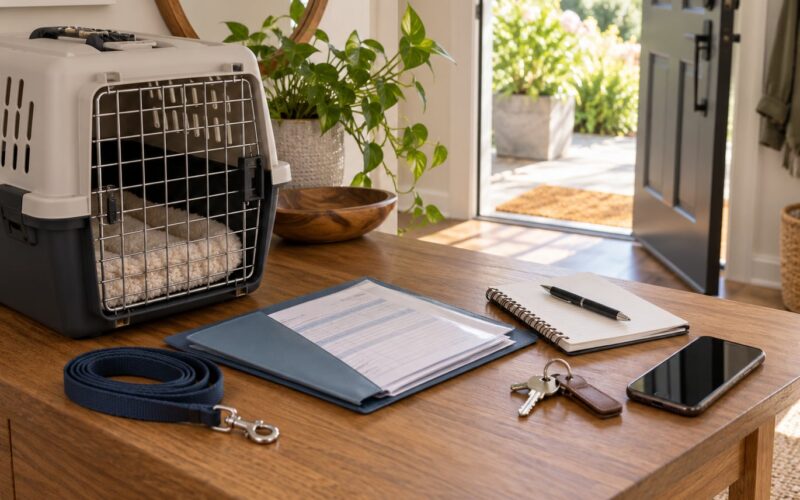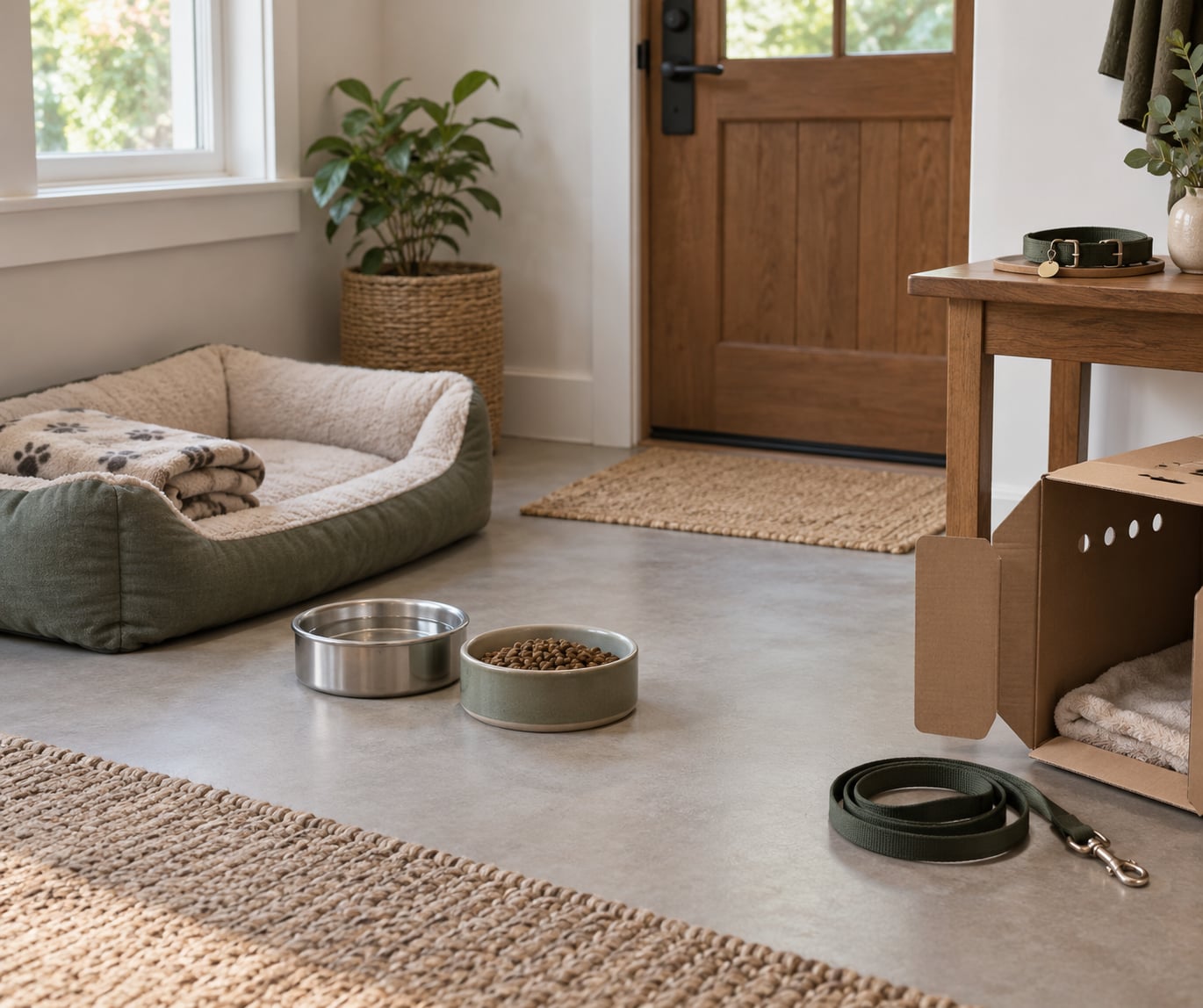
To adopt a dog from a shelter, you research and contact an organisation, submit an adoption application, meet the dog in person, pass a home check if one is required, then pay the adoption fee, sign the contract and bring your dog home. The whole thing takes from a single afternoon at a municipal shelter to one or two weeks with a volunteer-network rescue. Most of the anxiety first-timers feel comes from not knowing what each stage involves, so here is exactly what happens at each one.
The fee is only part of the financial picture. Once food, supplies and a first veterinary visit are counted, the first year usually runs far higher than most people expect, and that is where a lot of returns quietly start.
Table of Contents
- What You Need to Adopt a Dog From a Shelter
- Step-by-Step
- How to Adopt a Dog From a Shelter: Compare Shelters Carefully
- Prepare Your Household and Budget
- Review Dog Profiles Honestly
- Contact the Shelter or Rescue
- Complete the Adoption Application
- Schedule a Meet-and-Greet
- Assess the Match Beyond First Impressions
- Sign the Adoption Agreement and Gather Records
- Bring the Dog Home Safely
- Common Mistakes
- Tips for a Strong Adoption Transition
- Frequently Asked Questions
- How long does it take to adopt a dog from a shelter?
- Is it better for a first-time owner to adopt from a shelter?
- How can I tell which shelter or rescue is reputable?
- What should I do when bringing a shelter dog home with another pet?
- Can a shelter dog still have medical or behavioral needs?
- Conclusion
What You Need to Adopt a Dog From a Shelter
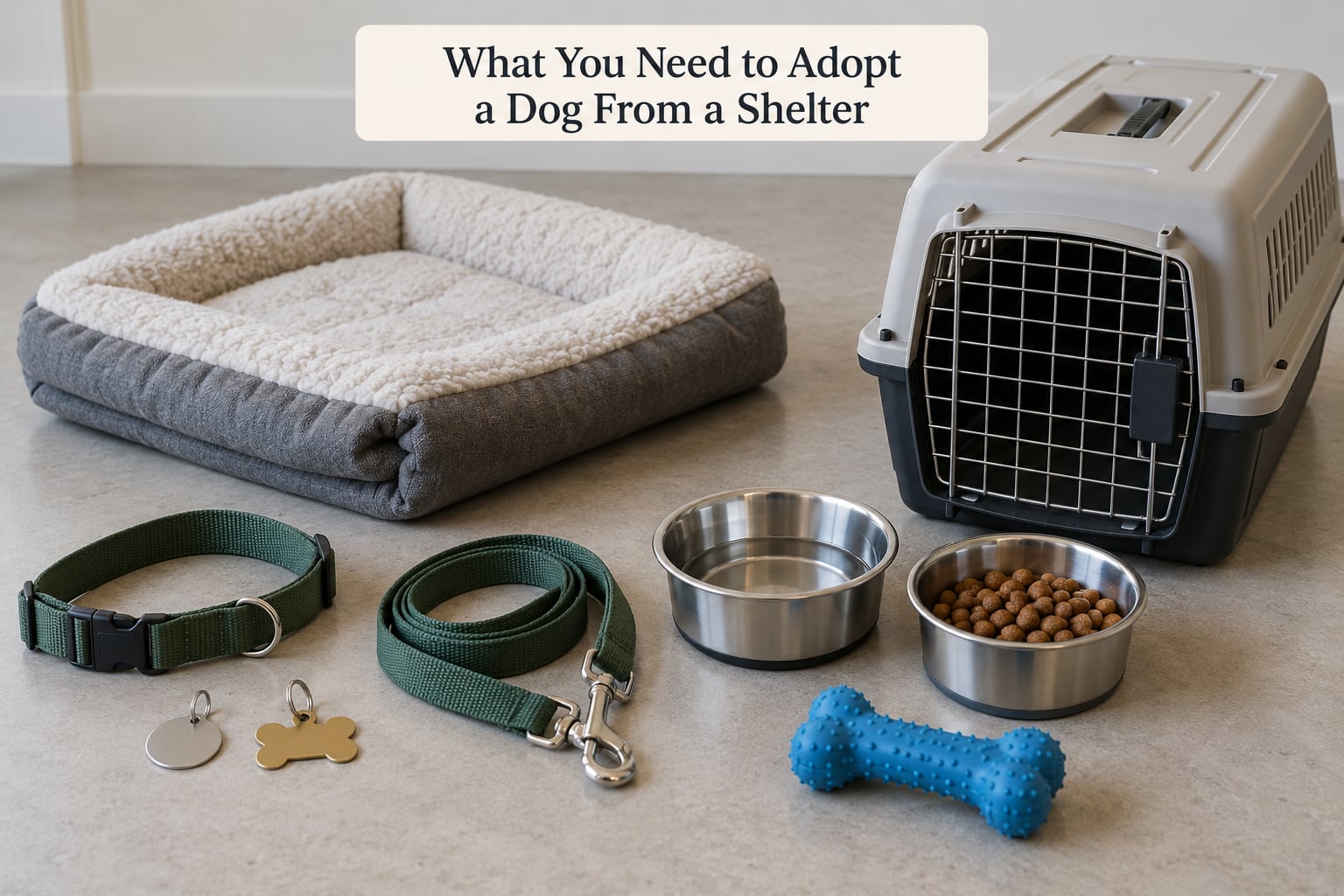
You need a stable place to live, permission from your landlord if you rent, identification, a vet relationship, basic supplies and a realistic budget. Shelters will ask for most of this in writing before they will hand over a dog.
- Housing and permission. Own your home, or have written landlord approval and a copy of your lease showing there is no weight or breed restriction. Many shelters require the landlord letter before the home check, not after.
- Identification and references. A government ID for every adult in the household, plus a veterinarian’s name and a reference who can confirm you have or have had animals before.
- A budget you have actually calculated. Food, routine vet visits, vaccinations, parasite prevention, grooming, licensing and a contingency for unexpected medical needs.
- Transport. A secured crate or harness and leash. Many shelters will lend you a crate, but do not assume it.
- A safe room. Somewhere quiet with a bed, water and no other pets for the first days.
- Basic supplies. Collar and identification tags, bowls, bedding, a leash, a crate if you plan to use one, and food that matches what the shelter has been feeding.
- A veterinarian. Book a new-patient appointment in advance. Shelters can recommend a clinic that is used to newly adopted animals.
One useful split: the shelter usually provides spay or neuter surgery, core vaccinations, a microchip and the medical paperwork. You buy the collar, tags, bowls, bed, food and any training equipment. Ask before you buy anything, because many organisations will supply or sell some of these items.
Step-by-Step
The process below runs in nine stages. Each one has a clear finish line, and you do not move on until the previous stage is complete.
How to Adopt a Dog From a Shelter: Compare Shelters Carefully
Four kinds of organisation run the same basic process with different levels of hand-holding. Municipal shelters and animal control facilities hold the largest numbers of animals, post accurate listings and move fast, sometimes same day. Humane societies and SPCAs are nonprofit organisations that usually vet animals more thoroughly before listing them and often run their own clinics.
Breed-specific rescues concentrate on one breed or type, so they are worth checking if you have a strong preference. Volunteer-network rescues place dogs in temporary homes rather than kennels, which means you often meet a dog in a house instead of a concrete run, and you may be able to do a trial period before committing.
How do you tell a real organisation from a listing scam? A legitimate group has a physical address, a working phone number, tax-exempt status you can verify, and no pressure to pay quickly. A useful community heuristic is that established rescues usually charge a meaningful fee, often in the low hundreds of dollars. A listing with no fee, no medical records, no address and a request to send money or a deposit by wire is a red flag, not a bargain. Walk into a shelter you can reach in person whenever you are unsure.
Prepare Your Household and Budget
Agree on responsibilities before you apply. Who does the morning walk, who handles the dog after work, and who is the backup when the schedule falls apart? A disagreement here surfaces in month three, not week one.
Map out the alone hours honestly. An adult dog generally does better with a predictable gap and genuine rest than with a person in the house constantly. If your workday is nine hours with no midday break, factor that into the dog you choose rather than the one you hope for.
| Cost category | Typical US range | Timing |
|---|---|---|
| Adoption fee | About 100 to 500 dollars | One time, at pickup |
| Food | 20 to 90 dollars per month | Ongoing |
| Routine veterinary care and vaccinations | 250 to 1,500 dollars in the first year | Spread over the year |
| Spay or neuter, if not already done | 25 to 600 dollars | Often covered by the fee |
| Supplies, licensing, grooming | 100 to 400 dollars | Mostly in the first month |
| Pet insurance, if you buy it | Varies widely by breed, age and location | Monthly |
Add those lines up and you get the real range most adopters are actually planning for: roughly 1,500 to 4,500 dollars in the first year, then about 1,200 to 4,200 dollars a year after that. These are typical US ranges that shift by region and change over time. Breed size drives the biggest single difference, so a large dog on the same food costs noticeably more than a small one.
Review Dog Profiles Honestly
Read every field on the profile, not just the photograph. Age tells you how many years you are signing up for and how energetic the dog will be. Size tells you whether your lease, your car and your dog door will work. Energy level is the field people skip and the one that decides whether the adoption lasts, because a high-energy dog in a sedentary household ends up back at the shelter.
Look at temperament notes, medical history, special needs, compatibility with children and other animals, and how long the dog has been waiting. A dog that has been there eight months tells you something important about matching that is not in the bio.
Do not write a dog off for being older or for being a mixed breed. Senior dogs are usually house-trained, calmer and easier to walk with, and many shelters reduce or waive the fee for them. What you are looking for is an honest fit, not a pedigree.
One thing to keep in mind: foster descriptions sometimes understate anxiety. Adopters on r/rescuedogs describe being told a dog was an easy first-time dog and then meeting a much more nervous animal. Read behaviour notes closely and treat a dog’s real behaviour in the weeks after arrival as the baseline, not the kennel behaviour you saw on day one.
Contact the Shelter or Rescue
Before you submit anything, ask what you would want to know if you were the dog. Confirm whether the dog you are interested in is still available and how long they hold applications open. Ask what the adoption fee covers specifically, whether medical and vaccination records are released at pickup, whether the dog is spayed or neutered, and whether a foster-to-adopt or trial period is available. Ask how long the process takes in their specific case, and whether post-adoption check-ins are part of their policy. Finally, ask what the return process looks like, and read the return clause before you sign anything.
Ask about the application too. Some organisations have moved entirely to online forms, others still want an in-person conversation, and a few do no home check at all. Knowing which one you are dealing with saves you from being caught off guard.
Complete the Adoption Application

Applications stall when answers contradict each other or change between stages, so write once and stay consistent. Expect questions about your housing situation, who is home during the day, hours the dog would be alone, other pets and children, your experience, your exercise plan, and your long-term plan if your circumstances change.
Be truthful about what you do not know. Saying you have never trained a dog is a much better answer than improvising, because a good organisation would rather set you up with training classes than find out in month four.
If an application is delayed or declined, the most common reason is a legitimate welfare concern rather than a judgement of you. Inconsistent answers, an unresolved landlord question, or a plan that leaves the dog alone for fourteen hours a day all fall into that category. Ask directly what the organisation needs to change and whether the decision can be revisited. If the concern makes sense, fix it rather than looking for a more lenient organisation.
Schedule a Meet-and-Greet
Request the appointment rather than arriving, and confirm which dog will be available that day, because kennels move animals around. If you have another dog, ask whether the facility offers a dog-to-dog introduction and what format it uses, since a nose-to-nose meeting through a fence and a fully neutral meeting produce very different signals.
Tell your household what the meeting is. Children especially should be told ahead of time that a shelter dog will be tired, uncertain and possibly not interested in being approached, and that they do not get to pick the dog up off the floor.
Assess the Match Beyond First Impressions
Compare your daily life to the dog’s, concretely, starting with energy rather than intentions. Notice play style, how the dog handles being handled around the ears, feet and mouth, how the dog reacts to noise and to being approached, and how the dog behaves when the handler leaves the room. That last one gives you a small preview of separation behaviour.
If the shelter permits it, ask for a longer session or a foster-to-adopt trial. A trial of a week or two in your own home with an agreed return clause is worth a great deal more than an hour in a visiting room, because it shows you how the dog handles your specific stairs, your specific street noise and your specific schedule.
Sign the Adoption Agreement and Gather Records
Read the adoption contract before you sign anything at the counter. It should state that legal ownership transfers to you, and it usually includes a return clause requiring you to bring the dog back to that organisation rather than rehoming the dog yourself. That clause is there to protect the animal, and it is the single biggest thing that trips people up later. Ask for clarification on anything you do not understand.
Before you leave, gather the medical and vaccination records, the spay or neuter documentation, feeding instructions and quantities, any medication the dog is currently on with the prescription from the veterinarian who prescribed it, and the microchip registration transfer. Confirm the microchip is registered to you within the timeframe your local authority requires, and check your municipality’s dog licensing rules while you are at it. Most cities require registration, and the rules and fees vary by state.
Never give a dog human medication. Not ibuprofen, not acetaminophen, not an over-the-counter pill borrowed from your own cabinet. If the dog needs anything for pain or illness, that conversation belongs with your veterinarian.
Bring the Dog Home Safely
Transport the dog secured in a crate or with a harness clipped into the back seat. For the first ride home, keep the trip short and calm, and skip the stop at the dog park you were planning.
Set up a small, quiet safe room before pickup rather than turning the dog loose into a house full of people. Put the bed, water and food there. Keep household activity to a minimum for the first few hours. Crate training from hour one is what experienced adopters on r/rescuedogs recommend most consistently: a crate gives the dog a den, a predictable place for rest, and a way to be safely left alone without distress.
Offer water first. Keep the first food portions small, then follow the shelter’s instructions rather than switching brands immediately, since a sudden change often upsets a stressed stomach.
Start a simple rhythm right away: toilet breaks on a regular schedule, a walk when the dog is ready and willing rather than forced, and naps built into the day. Give the dog space to decompress and sleep, which is where a lot of settling actually happens.
Book the first veterinary visit within one to two weeks. Bring the records with you and let the vet know the dog came from a shelter with an unknown history, since that changes what they screen for and how carefully. Any new lumps, limping, coughing, not eating or withdrawal are reasons to call sooner. Take any concerns straight to a veterinarian, and treat every warning sign as a prompt for a call rather than a wait.
Keep toxic food out of reach in those first days. Chocolate, grapes and raisins, onions and garlic, alcohol, caffeine, xylitol and macadamia nuts all belong in the bin, not the counter. New dogs inventory the kitchen with their nose.
Common Mistakes
Choosing the dog before you are ready. Adopting to cheer up a rough month is the most common reason dogs go back. The fix is unglamorous: wait until your housing, schedule and budget are stable for at least a few months.
Deciding from a kennel photograph. Every shelter dog looks sad in a kennel. Spend an hour with at least two dogs and watch how each one moves and responds, and remember the real personality appears weeks later.
Failing to ask for records. Ask what the fee covers and what documentation you get before you sign. Get the microchip transferred to you in your name.
Overlooking special needs. A dog with ear issues, anxiety or an old injury can be a wonderful match for the right home, but only if you can afford and plan for it. Decide before you sign, not after.
Preparing too little for the first week. Buy the bed, food and crate beforehand. Turning up with nothing on pickup day is the fastest way to lose a good first impression.
Introducing everyone at once. Visitors, children and the resident dog do not all arrive in week one. One new thing at a time is slower and works far better.
Reading early behaviour as a verdict. A dog that hides under a bed for two days or startles at a closing door is showing stress, not character. Give it time and, if you are unsure, ask a qualified behaviour professional rather than forming a conclusion.
Reaching for a home remedy. No human medication, no leftover antibiotics, no unverified supplements for behaviour. Talk to a veterinarian instead.
Tips for a Strong Adoption Transition
Keep the routine boring and predictable for the first month. Use positive reinforcement for everything, including calm moments, and keep sessions short enough that the dog stays interested. Allow real rest rather than filling the calendar with outings, and progress from house training and basic handling to longer outings and visitors one step at a time.
Track food intake, bathroom habits and sleep for the first two weeks, because a sudden change in any of those is an early signal worth mentioning to the vet. Stay in contact with the shelter, since most organisations offer post-adoption support and training classes, and that support is free even if you did not use it during the process.
Ask for help early. If you see persistent fear, aggression or a change in appetite past the settling period, contact a veterinarian or a qualified behaviour professional while it is still small. Waiting is the expensive option.
Frequently Asked Questions
How long does it take to adopt a dog from a shelter?
It ranges from the same day to several weeks. Many municipal shelters approve a good application and release a dog the same afternoon. Humane societies typically add an interview and a home check, taking a few days. Volunteer-network rescues often take one to two weeks because foster families approve applicants first. Dogs with medical or behavioural needs usually take longer, since the organisation wants the right home rather than the fastest one.
Is it better for a first-time owner to adopt from a shelter?
Yes, and most first-time adopters do it without problems. A first dog is actually often easier from a shelter, because the dog comes spayed or neutered, vaccinated, microchipped and with its medical history in hand. The trade-off is that you cannot predict the exact dog that arrives. Ask for a dog matched to your experience level, take training classes, and pick an organisation that offers post-adoption support.
How can I tell which shelter or rescue is reputable?
Look for a physical address you can visit, a working phone number, verifiable nonprofit or tax-exempt status, and medical records released at pickup. A meaningful adoption fee is also a signal, since established groups usually charge somewhere in the low hundreds of dollars for vetting. Run from any listing with no fee, no records, an urgent request to pay by wire or send a deposit, or pressure to decide the same day.
What should I do when bringing a shelter dog home with another pet?
Keep the dogs completely separated for the first three to seven days, using a crate, a gate or separate rooms, and feed them on either side of a closed door. Once both are eating and toileting normally, swap bedding so they learn each other’s scent, then try a supervised leash walk in a neutral outdoor spot. Ask the shelter for a dog-to-dog introduction first, and go at their pace rather than yours.
Can a shelter dog still have medical or behavioral needs?
Yes. Many dogs have ongoing needs, including chronic ear or skin problems, dental issues, arthritis, heartworm treatment, separation anxiety, fear of men or children, or a recorded bite history. Any medical concern belongs with your veterinarian, and a dog with a bite history should be discussed openly with everyone in the household before adoption. Shelters disclose this in the dog’s file, so read it fully rather than skimming.
Conclusion
Start by comparing two or three reputable organisations near you, and confirm honestly that your housing, budget, schedule and support system can carry a dog for fifteen years rather than fifteen months. Then contact one, ask the awkward questions early, and let a good application take the time it takes.
When you are ready to learn how to adopt a dog from a shelter, reach out to an organisation with a verifiable address, transparent records and post-adoption support. Ask which dog they would pair with your household rather than pushing for a specific one. They see hundreds of applications a month and their match instinct is worth more than yours right now.