
Learning how to start a small business as a sole proprietor takes a few focused decisions, not a mountain of paperwork. You pick a specific offer, check what your city or state requires, open a business bank account, set a price that covers your time and costs, then test the offer on a few real customers before you commit real money. Most of this can be done in a couple of weeks, and the hardest part is choosing what you sell.
One thing to clear up early: a sole proprietorship is not something you file to create. It exists the moment you start earning money on your own, whether you planned to or not. Several people described on Reddit’s r/smallbusiness discovered they had been sole proprietors for years without realising it, because nobody ever told them a form existed.
What follows is the plain version of the setup, in the order most people find useful. Tax and legal rules differ by country and by state and they change, so treat the specifics as a starting point and confirm them with your local agency or a tax professional.
Table of Contents
- What You Need
- Step-by-Step
- How to Start a Small Business as a Sole Proprietor: Define Your Offer
- How to Start a Small Business as a Sole Proprietor: Check Name and Location Rules
- How to Start a Small Business as a Sole Proprietor: Open the Right Accounts
- How to Start a Small Business as a Sole Proprietor: Calculate Your Price
- How to Start a Small Business as a Sole Proprietor: Prepare to Sell
- How to Start a Small Business as a Sole Proprietor: Test Before Launching
- How to Start a Small Business as a Sole Proprietor: Launch and Improve
- Common Mistakes
- Frequently Asked Questions
- Do I need to register a sole proprietorship before I start working?
- Do I need an EIN as a sole proprietor with no employees?
- Can I use a DBA name without registering it anywhere?
- What taxes does a sole proprietor pay, and when?
- Can a sole proprietor hire employees?
- When should I convert a sole proprietorship to an LLC?
- Conclusion
What You Need
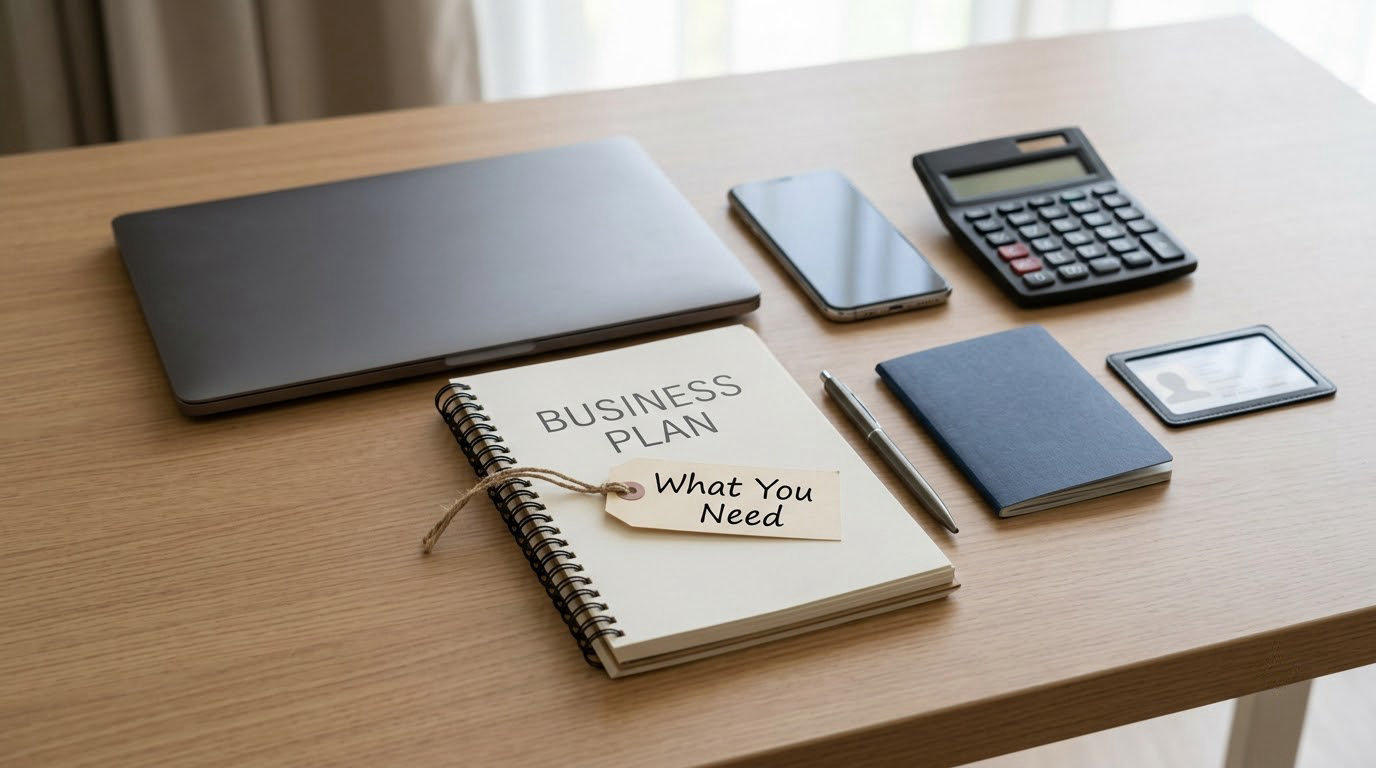
Sole proprietorships ask very little of you legally, but the things you gather yourself decide whether the first six months are calm or chaotic. Here is what most first-time owners end up using.
- Government identification — a driver’s licence or passport, plus your Social Security number or an ITIN. Banks and licensing offices ask for it before anything else.
- A written offer — one sentence naming the customer, the problem and what you deliver. If it takes a paragraph, it is still too broad.
- A name and a domain — the trading name you will invoice under, plus a matching web address and a business email on that domain.
- A business bank account — separate from your personal account, so deposits and spending do not tangle.
- A bookkeeping system — a spreadsheet works at the start. Most sole proprietors migrate to accounting software once they hire or take on loan payments.
- A receipt and invoice template — two documents you will use every single week.
- A local requirements list — city business licence, home occupation permit, professional licence or sales tax permit, depending on what you sell and where you operate.
- Tax money set aside — a separate account or a fixed transfer every time an invoice clears, so the bill never surprises you.
Two optional items sit outside that list: an Employer Identification Number and business insurance. Neither is required by federal law for a solo business with no employees, but both cost little and both solve specific problems. Research suggests many owners get an EIN without knowing why, then hit friction at the bank when the number on the application does not match the Social Security number on file. Decide deliberately instead of by habit.
Step-by-Step
How to Start a Small Business as a Sole Proprietor: Define Your Offer
Start by naming one customer and one recurring problem, not a service menu. “Marketing help for small dental practices” gives you a buyer, a situation and a scope. “Marketing help” does not.
Write the deliverable in plain terms: how many hours it takes, what the customer receives, when they receive it, and what is explicitly out of scope. A one-page written scope prevents the most common freelance argument, which is a disagreement about what was included.
You can tell the offer is sharp enough when a stranger can repeat it back to you. If they describe something different, rewrite it before you spend another minute on branding.
How to Start a Small Business as a Sole Proprietor: Check Name and Location Rules
Your legal name is your own, and you may trade under another name without any federal filing. Most states, however, require a DBA or fictitious name registration at the county or state level, and some banks will not open a business account under a name that has no registration behind it.
Do three checks in one sitting. Search your state business registry to see whether the name is already taken. Check your city or county licensing office for a general business licence and, if you work from home, a home occupation permit — one r/smallbusiness user opened for weeks before discovering their city required one for any paid work out of a spare room. Then contact your state revenue department if you will sell physical goods, since a sales tax permit is usually separate.
Rules differ by place, so treat this as a conversation with your local offices rather than a checklist you can trust blindly. Professional licences are separate again: if you need one to practise, it comes from the licensing board for your field, not from the city.
How to Start a Small Business as a Sole Proprietor: Open the Right Accounts
A separate business bank account is the single change that makes bookkeeping painless later. Without one, every grocery trip becomes an accounting question, and at tax time you are sorting receipts instead of running a business.
Open the account with the same name you registered, bring your identification and any DBA paperwork, and expect the bank to ask what your business does. Tell them plainly. A business credit card that reports to the business credit bureaus is worth considering once you have a few months of real activity, because it builds a credit file in the business name rather than yours.
For getting paid, choose one payment processor and stick with it. Note the fee before you commit, since card and instant-transfer charges quietly eat small margins. The forum advice on r/smallbusiness that circulates most is blunt about this: people lose hours to refund handling when they spread payments across four platforms.
How to Start a Small Business as a Sole Proprietor: Calculate Your Price
Most beginners price by copying a competitor and subtracting a little, which guarantees you earn less than the person you copied. Build the price from the bottom up instead.
Add these together: the hourly value of your time multiplied by the real hours the job takes, plus materials, plus a share of overhead such as software, insurance and your home office, plus the processor fee, plus the tax you will owe, plus a contingency for the revision you did not plan for.
An example makes it concrete. A job that takes six hours of your time, at fifty an hour, plus forty in materials, plus about twelve in overhead, plus four in processor fees and a set-aside for tax, needs roughly a hundred and six before any profit. Quote it, then hold the price for two or three jobs before adjusting. If nobody says no at that number, you were too low.
How to Start a Small Business as a Sole Proprietor: Prepare to Sell
A working sales process is four things: a way for people to reach you, a document that says what you deliver, an invoice, and a record of who you worked with. Nothing more is needed at this size.
Most first sales arrive through one of four routes: a warm introduction, a local network, a search-driven site with a clear service page, or a marketplace. Pick one primary route and one secondary. A website matters most when customers search for what you do; if your work comes from referrals, a single page with a booking link does the same job for a fraction of the effort.
Your invoice should carry your business name, the customer’s billing details, an invoice number, a payment deadline and the payment terms. Ask for a deposit on projects over a few hundred dollars, and give a written receipt for every payment you take.
How to Start a Small Business as a Sole Proprietor: Test Before Launching
Validation costs almost nothing and saves the most money. Before buying equipment or building a site, describe the offer to five to ten real potential customers and ask what they would pay for it.
Watch for the version of the question that gets you a compliment instead of a commitment. Instead of “would you use this”, ask “what did you pay last time for someone to do this, and was it worth it”. People describe a hypothetical service generously and a purchase narrowly.
Three signals that you are close: someone asks when you can start, someone asks a detailed question about delivery, or someone asks whether you can invoice their company. Silence, polite nodding and “send me some information” all mean the offer or the price is wrong, not that you need a better logo.
How to Start a Small Business as a Sole Proprietor: Launch and Improve
Launch small. One service, one route, a page that explains the offer in under a minute of reading, and an invoice template you can send the same day.
Then run two habits. Ask every satisfied customer for a review or a referral in writing, immediately after the work is delivered. And spend twenty minutes each week on three numbers: what came in, what went out, and what is owed to you.
Improve one thing at a time, driven by those numbers and by what customers actually ask for. One r/smallbusiness poster described replacing a full website with a single page after noticing most enquiries came from referrals, and their close rate went up. Small changes with evidence behind them beat big rebuilds built on a hunch.
Common Mistakes
These eight mistakes show up again and again in discussions on Reddit’s r/smallbusiness, Quora and small business forums. Each one has a straightforward correction.
- Mixing personal and business money. Use one business account and one card for spending. The fix takes a day.
- Pricing by copying competitors. Build your price from your own hours and costs, then test it.
- Keeping no records. Photograph every receipt on the day you get it and categorise it the same day.
- Using an unclear trading name. Pick a name that a stranger can spell after hearing it once, and check the registry before committing.
- Ignoring local permits. Call the city and ask what a home-based, customer-facing business needs.
- Not setting money aside for tax. Move a fixed percentage of every payment into a separate account the day it clears.
- Overbuilding before anyone pays. Delay a logo, a logo maker’s package and a full site until you have paying customers.
- Buying an EIN without a reason. Get one when you plan to hire, open an account that requires it, or want separation from your Social Security number. Skip it otherwise.
Add a ninth, borrowed from people who came here asking for advice: assuming the business is a separate legal being. It is not. A sole proprietor and the business are the same person in the eyes of the law, which is exactly why liability insurance and a realistic paper trail matter more here than in any other structure.
Frequently Asked Questions
Do I need to register a sole proprietorship before I start working?
Usually not at the federal level. You become a sole proprietor automatically once you earn money on your own, and there is no federal formation filing. Your state or city may still require a general business licence, a home occupation permit or a DBA registration, so check with your local licensing office before you start. Even where nothing is required, a licence is often the thing a bank asks for when you open a business account.
Do I need an EIN as a sole proprietor with no employees?
No, you can legally use your Social Security number on invoices and tax forms. Many owners get an EIN anyway, and that can backfire: if the number on your bank application does not match the one the IRS has on file, the bank may freeze the account until it is sorted out. The better reasons to request one are hiring employees, opening an account that requires it, or wanting separation between business filings and your personal number.
Can I use a DBA name without registering it anywhere?
You can, at the federal level. Nothing stops you invoicing under a trading name. The catch is local and practical: many states require a DBA or fictitious name filing, banks often will not open a business account under an unregistered name, and local officials or payment processors may question invoices without a matching registration. If you operate from home or meet customers locally, check your county requirements before you commit to a name.
What taxes does a sole proprietor pay, and when?
Self-employment tax covers Social Security and Medicare on your net earnings, and it sits on top of the income tax you already pay. You report the business on Schedule C of your personal return, pay self-employment tax on Schedule SE, and make quarterly estimated payments using Form 1040-ES. Rates and thresholds change and differ by country, so confirm current figures with the IRS or a tax professional before setting money aside.
Can a sole proprietor hire employees?
Yes. A sole proprietor can hire staff, but the business is still legally you, so you carry the payroll filings, withholding and employment taxes yourself. Employer registration and reporting obligations come with it. Many owners hire a bookkeeper or a part-time assistant before any full-time employee, partly because payroll mistakes carry personal liability in this structure. Check your state employment agency requirements before you make an offer.
When should I convert a sole proprietorship to an LLC?
The usual triggers are risk and money. If you work in a field where a client or member of the public could sue, if you are moving to staff or taking on meaningful contracts, or if you want business credit and contracts in a name that carries its own liability protection, a single-member LLC is usually worth the state filing fee. Owners on Reddit frequently note there is no tax advantage to the LLC itself, since a single-member LLC is still taxed like a sole proprietor.
Conclusion
Do five things this week, in this order. Write the offer in one sentence and name the customer. Check your county and city requirements for a business licence, home occupation permit and any DBA registration your work requires. Open a separate business bank account and one payment processor. Calculate a floor price that covers your hours, materials, fees and tax. Then ask five real potential customers what they would pay for it.
That sequence costs you a few evenings and prevents the two expensive errors most beginners make: building something nobody wants, and underpricing work you already sold. Sole proprietorships form on their own, so nothing on your legal paperwork is holding you back. What is holding you back is usually the offer.