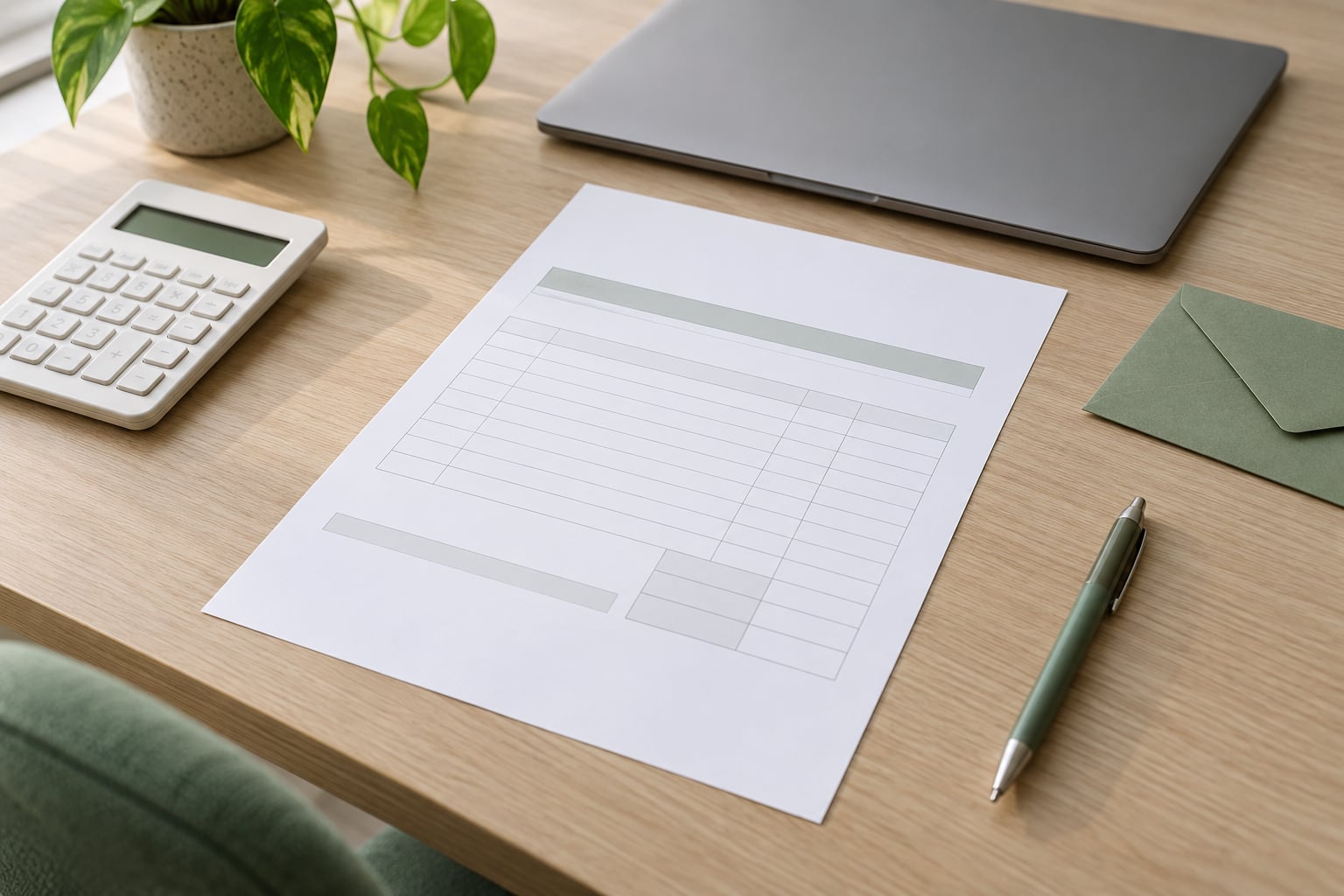
An invoice gets paid when your client can approve it without asking you a single question: what was delivered, what it costs, when it is due, and exactly where the money goes. That is the whole game behind knowing how to write an invoice that gets paid — you remove every reason the accounts payable team has to slow down. Most of the work takes about fifteen minutes once you have a template.
I have sent a few hundred of these and watched the pattern repeat. The invoices that sit unpaid are almost never the ones where someone argued about the fee. They are the ones that were missing a purchase order number, or used vague wording like “as discussed,” or gave a bank account that did not match the contract. Fix those three things and your average payment time drops noticeably.
Tax and legal requirements differ by country and by the type of work you do, so treat the field list below as the practical baseline and check what your own tax authority requires.
Table of Contents
- What You Need
- Step-by-Step
- Step 1: Gather the Correct Client and Business Details
- Step 2: Assign a Unique Invoice Number
- Step 3: List Each Product or Service Clearly
- Step 4: Show the Amount Due and How It Was Calculated
- Step 5: Set Specific Payment Terms and a Due Date
- Step 6: State Accepted Payment Methods and Remittance Instructions
- Step 7: Add Contact Details, Terms, and a Professional Note
- Step 8: Proofread and Send the Invoice Promptly
- Step 9: Track Payment and Follow Up Professionally
- Common Mistakes
- Frequently Asked Questions
- How long should an invoice be paid?
- What details should every invoice include?
- Should invoice numbers be sequential?
- What should I do if a client says an invoice is missing?
- Can a client be required to pay by bank transfer?
- Conclusion: Send the First Invoice Today
What You Need
Gather these ten items before you build the invoice. Anything missing becomes a question in your inbox, and every question is a day of delay.
- A unique invoice number. Sequential, never reused, and matching your accounting records. For example INV-2026-014.
- Your business name and address, plus email and phone. If you invoice as an individual, use the name on your bank account and tax records.
- Your client billing details — legal entity name, billing address, and the exact email that handles invoices.
- Their tax identification or VAT number where the client is a business and your country asks for it on the document.
- The purchase order number whenever the client runs on POs. This is the single most common reason a correct invoice gets parked.
- Itemized work or goods — what was delivered, the dates, quantities, and unit rates, per line.
- Arithmetic — subtotal, any discount or deposit already taken, tax or VAT, and the total amount due.
- The issue date, which starts the payment clock.
- Payment terms and a concrete due date, written as a calendar date rather than a vague phrase.
- Payment instructions — bank details or an online payment link, plus which methods you accept.
Step-by-Step
Step 1: Gather the Correct Client and Business Details
Copy your client’s legal name and billing address from the signed contract or their own accounts payable email, never from a website. Small mismatches — “Ltd” versus “Limited”, a suite number missing, a personal name where a company should be — are enough to bounce the invoice back.
Check the same thing on your side: the business name and address on the invoice must match what your bank and tax records show, or the payment can be held as a mismatch. You can verify the step is done by confirming each field character by character against the contract, and asking yourself whether the client’s finance team could route this without emailing you.
Step 2: Assign a Unique Invoice Number
Use a simple sequential scheme: a prefix for the year and a running number, like INV-2026-014. Consistency matters more than cleverness, because your client and your accountant both reference that number when they match records.
Never reuse a number, even if you void the invoice — issue a new one and mark the old as void in your bookkeeping. If the same number appears twice in your ledger, reconciliation turns into an afternoon of guessing, and the client is left unsure which document to pay.
Step 3: List Each Product or Service Clearly
Describe the work so a person who was not in the room understands it. “Website redesign, phase 2 — five page templates built and delivered 12 October, 14 hours at 95.00 per hour” is approvable. “Website services” is not.
A realistic line looks like this:
- Description: Brand identity package — logo, two colour palettes, typography guide
- Quantity: 1
- Unit rate: 1,450.00
- Line total: 1,450.00
For hourly work, show hours and rate on separate columns and add the period covered. If the client approved a fixed scope, reference the contract line so the approver can connect the two. People on Reddit’s r/Invoice forum describe the same test: if the line items read like something you could hand to a stranger, they will clear it faster.
Step 4: Show the Amount Due and How It Was Calculated
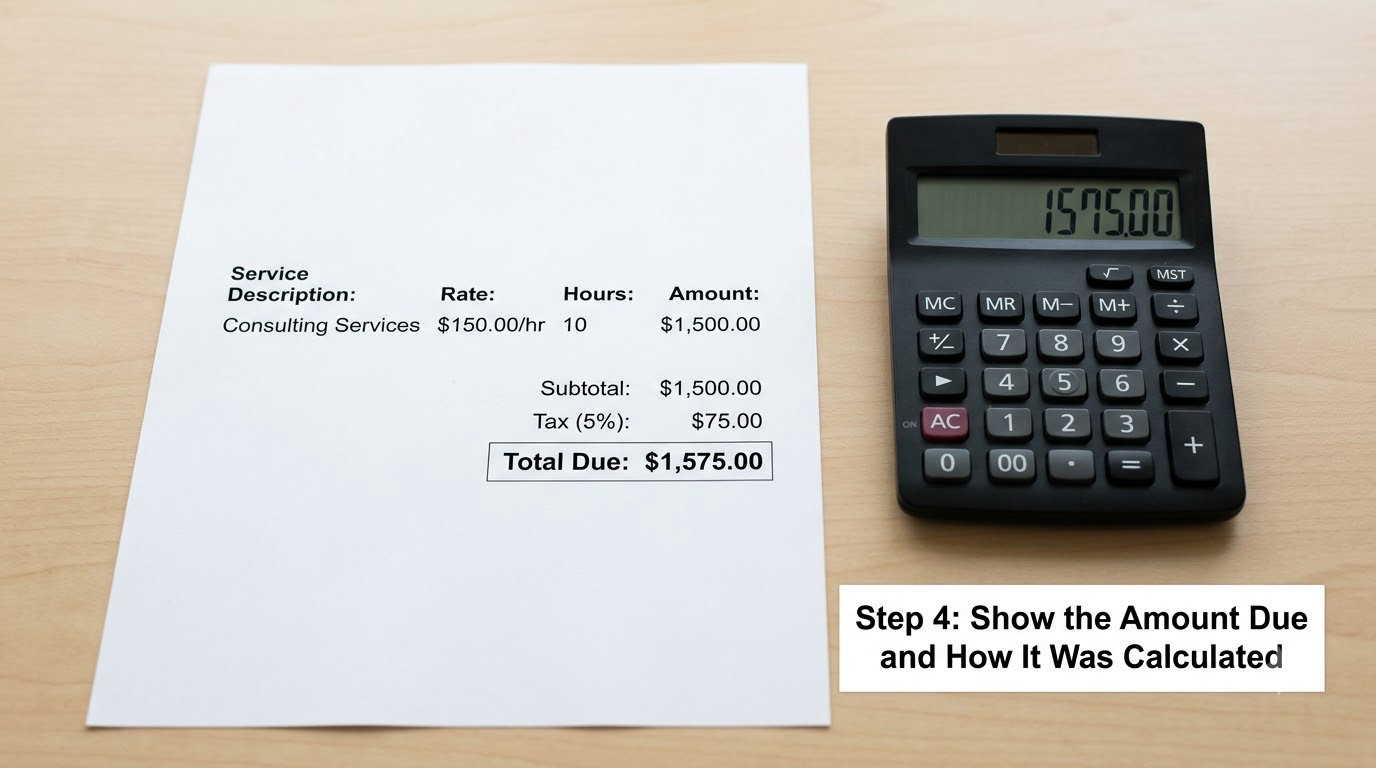
Show your working. A client should be able to look at your invoice and see the arithmetic without a phone call, which means listing subtotal, discounts, tax or VAT, and a bold total amount due.
So the numbers reconcile on the page: services 1,450.00, less the 100.00 deposit already received, subtotal 1,350.00, plus 21% VAT of 283.50, total 1,633.50. Re-read it once against your contract before moving on. Two minutes here saves a fortnight of an accounts payable team checking whether the deposit was already applied.
Step 5: Set Specific Payment Terms and a Due Date
Write the deadline as a date, not a vibe. “Net 30” only means something to people who work in finance every day, so pair it with the calendar date: “Payment due 14 November 2026 (Net 30 from issue date).”
Choose terms that match how your client actually pays. Net 14 suits fast-paying small clients and freelancers chasing larger agencies, Net 30 is the default most businesses expect, and Net 60 only makes sense when you can carry the gap. Agree these terms before the work starts, ideally in the contract, and consider sending a proforma invoice so both sides have the terms in writing from day one.
Step 6: State Accepted Payment Methods and Remittance Instructions
Tell them exactly where to send the money. Bank transfer with the account name, IBAN or account number, and SWIFT or BIC if the payment crosses borders; or an online payment link with the invoice number attached automatically. Then say what to put in the reference field.
Always instruct the client to include your invoice number in the payment reference. Without it, the money arrives unidentified and you spend a week matching bank lines to invoices by amount and guesswork. Verify banking details through a phone number you already trust, never a number in the change-of-details email itself, and confirm new accounts with a known contact before you rely on them.
Step 7: Add Contact Details, Terms, and a Professional Note
Put a short note in your own words at the bottom: who to contact about a question, and what you would like to happen. Something like “Thanks for a good project — questions on any line item go straight to me, and I reply the same day.” It costs a sentence and makes the invoice read like a person sent it.
Then add the boring parts carefully. State a late payment policy and a dispute route in plain language, and include a reference to your standard terms or contract if you have them. Keep it to a short block. Where tax law requires a specific statement, add it exactly as written — that is one area where extra creativity causes problems.
Step 8: Proofread and Send the Invoice Promptly
Run a five-minute checklist before you hit send: names and addresses correct, invoice number right and not reused, issue date and due date as intended, quantities and rates matching the contract, arithmetic adding up, PO number included, attachments and payment link working, correct recipient.
Send it as a PDF so the layout cannot shift, with the invoice number in the file name. Put the same number in the email subject — “Invoice 2026-014 — Brand identity package — due 14 November 2026” — and repeat the amount and due date in the body, because plenty of people read only the email.
Then send it the moment the agreed trigger happens. Two weeks of delay before invoicing, on top of Net 14 terms, means roughly a month before the money lands. Freelancers on r/freelance call this out constantly, and the fix costs nothing but discipline.
Step 9: Track Payment and Follow Up Professionally
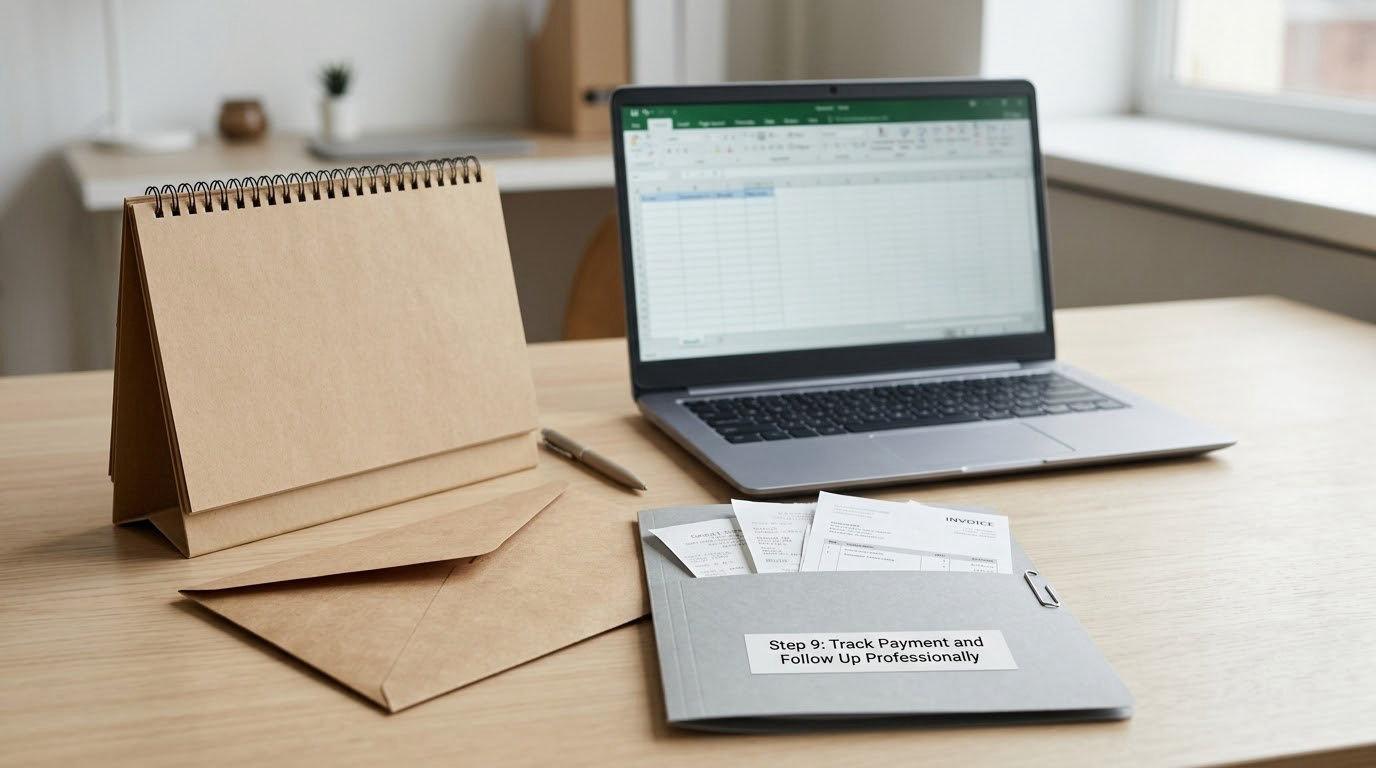
Record the due date the day you send, then set reminders around it rather than waiting to remember. If the money has not arrived by one to two days past the due date, a short friendly note asking whether anything is missing often clears it the same day.
If it is still unpaid, the cadence most freelancers use is a reminder about 14 days after the due date, a firmer written notice around 7 days after that, and then a decision. Pause new work, send a final notice that states the amount, the date, and the late fee you are applying under your stated terms, and keep the tone factual.
Disputes are usually about a missing PO number or an unexpected line item, so resolve those before escalating anything. When a client has genuinely gone quiet, a phone call to the person who signs invoices tends to move things faster than another email. Once payment clears, mark the invoice as settled — write “PAID IN FULL” with the date received and the amount, keep a copy for your records, and issue a receipt if your client asks for one.
Common Mistakes
Most unpaid invoices are not disputes about money. They are documents missing something a payment system needs, or wording that gives an approver a reason to wait.
- No invoice number, or a reused one. Fix: sequential scheme, never repeated, matching your ledger.
- A vague due date like “within 30 days” or “as per agreement.” Fix: a specific calendar date, plus the net terms in brackets.
- Missing purchase order number. Fix: ask the client for their PO format before you invoice, and put it near the top.
- Vague line items like “professional services.” Fix: describe the deliverable, the period, quantity, and rate on every line.
- Payment details buried at the bottom, or mismatched bank information. Fix: a labelled payment block with the invoice number as the payment reference.
- Sending late. Fix: invoice on the agreed date even if some work is still wrapping up.
- Wrong client email, or a plain text invoice with no PDF. Fix: send a PDF to the accounts payable address, CC the project contact once.
- No note and no contact details. Fix: one friendly line and a direct email and phone number.
- Late fees mentioned only verbally. Fix: state the policy on the invoice and in the contract, then apply it calmly from the date written.
- Confusing an invoice with a receipt or a purchase order. Fix: a PO is what the client authorises, an invoice asks for payment, a receipt confirms payment arrived. A proforma invoice comes before delivery and says what the price will be.
Two habits do most of the remaining work. Send the invoice the day the milestone is reached, and agree payment terms in writing before the first hour of work. A tight, consistent invoice gets approved on the first pass, which is when you actually get paid.
Frequently Asked Questions
How long should an invoice be paid?
The due date printed on your invoice is the deadline that matters, so write it as a calendar date rather than relying on net terms alone. Payment processing sits on top of that, usually a few business days once the money is released. Agree your terms with the client in writing before the work begins, and state them on the invoice so nobody is guessing at the end.
What details should every invoice include?
The core fields are: your business name, address and contact details; your client legal name and billing address; a unique invoice number; the issue date and due date; itemized descriptions with quantities, rates and line totals; subtotal, any discount, tax, and the total amount due; the purchase order number if there is one; and clear payment instructions with the invoice number as the reference. Legally required fields vary by country and jurisdiction.
Should invoice numbers be sequential?
Sequential numbering is usually the easiest approach for bookkeeping, since your records and your client’s records reconcile without extra work. What matters more than the format is that every number is unique, that the same scheme is used every time, and that you keep a reliable record of what was issued and when. Never reuse a number, even for an invoice you void, because duplicates make matching painful later.
What should I do if a client says an invoice is missing?
Stay calm and resend it in one message rather than several. Attach the original PDF, then quote the invoice number, the amount, the due date, and the payment link directly in the email body, and ask which address it should go to for future bills. Check your sent folder to confirm the original went out and when. If it was never delivered, that usually points to a bad contact address worth fixing permanently.
Can a client be required to pay by bank transfer?
Bank transfer is a common and perfectly workable option, but you have to state it clearly on the invoice and tell the client what to put in the reference field, ideally your invoice number. Verify banking details through a phone number you already trust rather than an email, particularly when the account changes. Where a client needs speed or sits in another currency, offering a card or automated payment option alongside helps.
Conclusion: Send the First Invoice Today
You have everything you need to know how to write an invoice that gets paid, and none of it needs more than a template and fifteen quiet minutes. Gather the records, do the arithmetic on the page, write the deadline as a real date, proofread the whole thing once, and send it the moment the agreed milestone is reached.
Then diarise the due date and the follow-up dates before you close the laptop. That is the difference between invoices that get chased and invoices that just get paid.