There is no single test that tells you a news story is reliable. What works is a repeatable sequence: confirm who published it, find the original source, inspect the evidence, check the date and context, and look for independent confirmation before you share.
That sequence takes about two minutes on a phone. Most false stories fail at the second or third check, and the whole point is to catch them before they land in a family group chat where correcting them is far harder.
The uncomfortable truth is that you cannot judge a story by how much you trust the outlet. Knowing how to tell if a news story is reliable means judging the story in front of you, every single time.
Table of Contents
- What You Need
- How to Tell If a News Story Is Reliable: Step-by-Step
- 1. Check Who Published the Story
- 2. Find the Original Source
- 3. Look for Evidence and Specific Details
- 4. Check the Date, Location, and Context
- 5. Compare the Story With Other Reliable Sources
- 6. Check Whether the Headline Matches the Evidence
- 7. Look for Warnings, Corrections, and Transparency
- 8. Decide Whether You Can Share It
- Common Mistakes
- Treating a familiar logo as proof
- Sharing the headline without opening the article
- Counting copies as confirmation
- Checking an About page and stopping there
- Confusing bias with falsehood
- Amplifying a story while trying to debunk it
- Frequently Asked Questions
- Is CNN or Fox News more reliable?
- What are the 7 types of misinformation?
- What is lateral reading and why does it work?
- How do I check if a screenshot is real?
- Is Reddit a credible news source?
- What are the most trustworthy news sources?
- Conclusion
What You Need
You need very little. A second browser tab does most of the work.
- The original article, not a screenshot or a cropped quote. Screenshots are where stories go to lose their context.
- The source the article itself cites, opened directly rather than through the article’s summary of it.
- A way to inspect dates and bylines, which on most phones means scrolling to the top and bottom of the page.
- A second source chosen on purpose, ideally one with no stake in the outcome of the story.
- Two minutes of patience, which is the real requirement.
The habit that matters most is lateral reading. Stanford’s Digital Inquiry Group describes it as leaving the story you are reading and investigating it from outside. Instead of asking “does this site look trustworthy”, you open new tabs and ask “who is this, who funds them, and what do independent sources say about this claim”.
Research by the same group found lateral reading works better for students than checking a site’s design, About page, or contact email. Those pages are written by the same people who wrote the false story, so they prove nothing.
How to Tell If a News Story Is Reliable: Step-by-Step
Run these eight checks in order. Each one has an observable result, so you know when it passes.
1. Check Who Published the Story
Start with the domain, not the logo. Read it letter by letter, because impostor sites use names that differ from the real outlet by a single letter or a missing hyphen.
Then open the About page, the byline and the contact page. A real publication names its editors, describes its editorial standards, and publishes a corrections policy. Pass result: you can name the person or desk responsible for the story and find a corrections page without guessing the URL.
Be suspicious of pages with no byline at all, a byline that is just a username, or an About section that describes a mission but never names a human being.
2. Find the Original Source
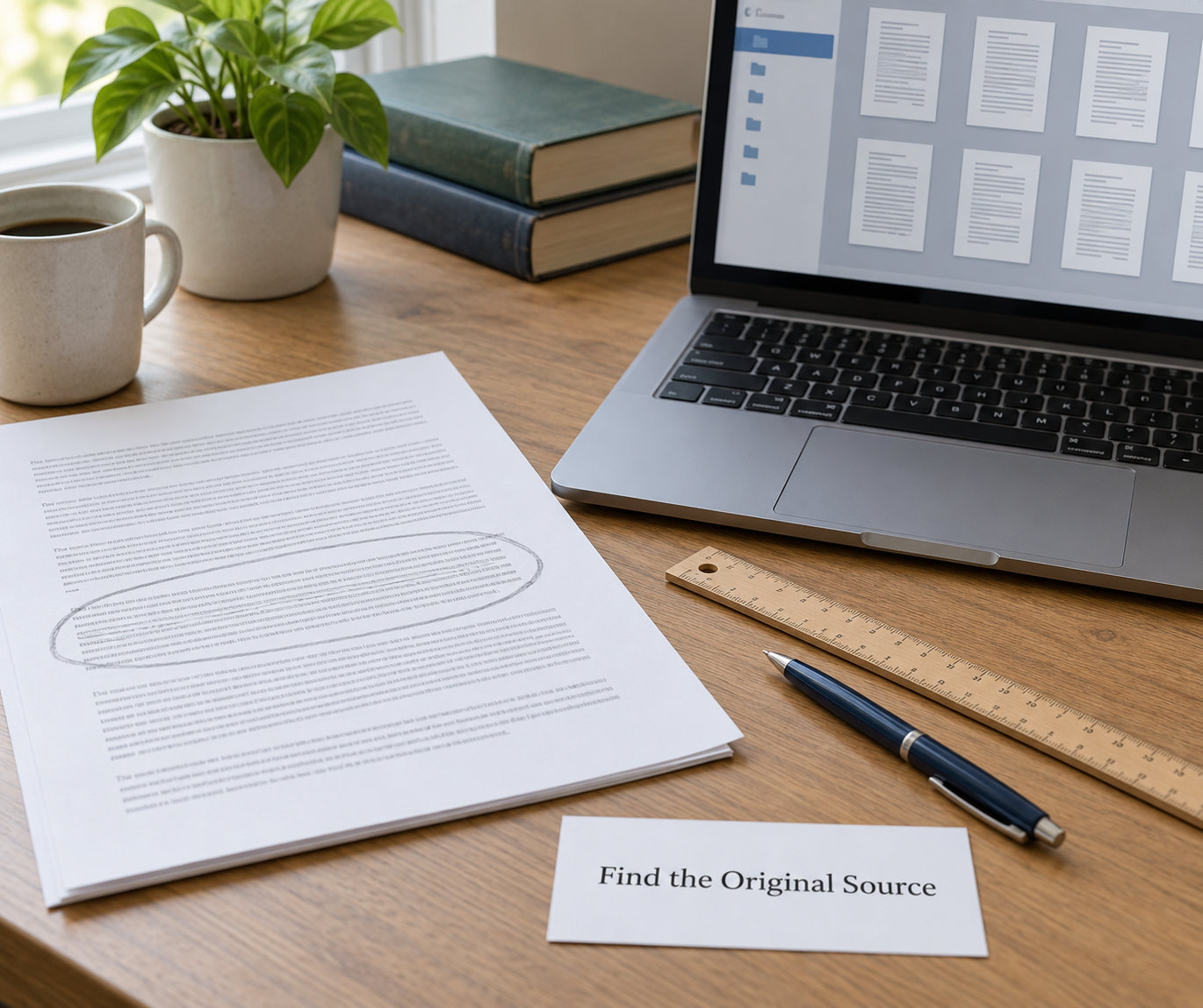
The single most useful move in this whole guide is to stop reading the summary and go read the thing the summary is about. If a story says a study found one thing, open the study. If it says an official confirmed something, find the transcript, the filing, or the full statement.
This is where most failures happen. Reports circulate claiming a paper says something it does not say, because nobody opened the paper. Pass result: you have read the primary source yourself, or you have established that no accessible primary source exists.
If a story quotes a named expert, search that person’s name with the claim. Subject-matter experts are unusually good at denying quotes they never gave, and readers on Reddit note that emailing or tagging the person gets fast answers.
3. Look for Evidence and Specific Details
Real reporting carries specifics that are annoying to fake: a place, a time, a document number, an on-record name, a figure with a stated denominator.
Vague assertions are the warning sign. Watch for unnamed “experts” and “officials”, statistics with no baseline, emotional language that replaces specifics, and claims that cannot be checked by anyone. Pass result: every factual claim in the story points at something a third party could inspect.
Note also what is missing. A story about a drug trial that never names the trial, and a story about a company that never names the company, are both asking you to trust rather than to verify.
4. Check the Date, Location, and Context
Old events get recycled as breaking news every year, often with reused photographs that readers assume are new. Look at the publication date, the update timestamp, and the date of the underlying event. They are three different things.
Then check the caption against the image. A photograph from one city with a caption about another, or a photo of a demonstration in one decade labelled as this week’s, is an out-of-context image and it is the fastest-spreading category of false story on messaging apps.
Pass result: the event date, the publish date and the caption all agree, and the location in the caption matches the visible scene.
5. Compare the Story With Other Reliable Sources
Open a new tab and search the core claim in plain words. You are looking for independent confirmation, which means sources with no connection to each other and no interest in the outcome.
Here is the trap: twenty sites carrying the same wire copy is one source, not twenty. Search the phrasing rather than the topic, because identical sentences reveal the syndication chain. Pass result: at least two unrelated, established outlets carry the claim, and they agree on the facts that matter.
If you cannot find any confirmation, that absence is information. A real event covered by professional reporters is usually covered by someone else too.
6. Check Whether the Headline Matches the Evidence
Read the headline, then read the last two paragraphs. If the body quietly narrows, hedges, or contradicts what the headline promised, you have found a headline that is doing work the evidence does not support.
The patterns worth recognising: questions posed as headlines, “will change everything”, “everyone is furious”, blame assigned before evidence is presented, and numbers that vanish from the article body. Pass result: the article’s own conclusion supports the claim the headline made.
A headline that asks a question is almost never delivering a confirmed fact. Readers in forum discussions use that as a fast smell test and it holds up often enough to save time.
7. Look for Warnings, Corrections, and Transparency
Every serious outlet keeps a corrections log. Open it and search your story. If a correction exists, that is a sign of health rather than weakness. An outlet that has never corrected anything in a decade is not careful, it is not being read carefully.
Also look for disclosures. Sponsored content, paid partnerships and native advertising are usually labelled, and unlabelled advertorial dressed as news is one of the most common forms of malinformation. Pass result: the outlet discloses funding, corrections history, and any conflict that touched the story.
Trust is built from several signals stacked together. One missing signal, like no corrections page, is worth noting but is not proof of anything.
8. Decide Whether You Can Share It
Sort what you have into five buckets before you hit share: verified fact, credible but still developing, personal opinion, satire, and unsupported. Only the first two belong in a post that presents itself as news.
Pass result: you can state, in one sentence, why the story is true. If you cannot, do not share it yet.
Then check the story against your own reactions. Stories that confirm exactly what you already believed, especially at 11pm, deserve a slower read. Bias is not falsity, and leaning a direction does not make an outlet wrong, but surprise at how perfectly something fits your worldview is a signal worth heeding.
Common Mistakes
Treating a familiar logo as proof
The fix is to check the domain and the byline every time, including for outlets you read daily. Impostor sites exist precisely because recognition feels like verification.
Sharing the headline without opening the article
People report flagging stories they never finished reading, then being unable to explain the problem later. Open it first. If the article does not support the headline, that mismatch is the finding, and you have only lost two minutes.
Counting copies as confirmation
The fix is to search the exact sentence in quotes. If ten sites share identical wording, you have found one origin story and nine copies.
Checking an About page and stopping there
The about page is written by the publisher. Lateral reading takes you outside, to independent coverage and third-party descriptions of the outlet.
Confusing bias with falsehood
An outlet with a clear editorial lean can be factually accurate on every claim, and a neutral-sounding one can still be wrong. Bias tells you what to expect. Only evidence tells you what happened.
Amplifying a story while trying to debunk it
Reposting the false claim with a mocking caption still pushes it to people who saw only the image. Correct it in words, in a private reply, or through a fact-checker’s existing coverage, and report it on the platform without resharing the original.
One weak signal does not disprove a story, and one strong signal does not prove it. Reliability is a pattern across all eight checks, not a single test.
Frequently Asked Questions
Is CNN or Fox News more reliable?
Neither outlet is simply more reliable, because both publish plenty of accurate reporting and both make errors. Reliability is a property of a specific story, not a badge you attach to a channel. Check the byline, the sources, the corrections log and independent confirmation for the individual claim. If you find yourself needing a rule that ranks outlets for you, you will end up trusting the wrong things.
What are the 7 types of misinformation?
Claire Wardle’s information ecosystem framework sorts harmful false content by how true it is and why it was made: false or misleading content, false context, misdirected content, false connection, impersonation, satire or parody used as misinformation, and manipulated content. The practical difference matters because the first two need correction, the middle ones need context, and the last one is a deliberate deception.
What is lateral reading and why does it work?
Lateral reading means leaving the page you are evaluating and investigating it from the outside. Instead of judging a site’s polish or About page, you open new tabs and search for who funds the outlet, who the author is, and whether independent sources confirm the claim. Stanford’s Digital Inquiry Group found it outperforms the home-page check, because a fraudulent site writes its own About page too.
How do I check if a screenshot is real?
Ask for the original link first, since a screenshot can be cropped, reordered or taken out of context. If you only have the image, run a reverse image search in Google Images or TinEye and look at the earliest dated matches rather than the most shared ones. Check whether the visible URL bar, timestamp and account name are consistent, and ask the person who sent it to link the full article.
Is Reddit a credible news source?
Reddit is a discussion forum, not a news outlet, and posts there can be accurate, outdated, or invented in equal measure. Individual users sometimes post genuine on-the-ground reporting, which is why Reddit threads appear in careful fact-checking. Treat a Reddit thread as a lead worth checking rather than as confirmation, and always trace the claim back to a named, accountable source.
What are the most trustworthy news sources?
The most trustworthy sources share traits rather than names: named authors with reachable contact details, links to primary evidence, visible corrections policies, clear labelling of opinion and advertising, and transparency about funding. Plenty of outlets meet that bar at the story level even when their politics differ. Look for the traits on the specific story, and prefer a wire service or public record over an unnamed aggregator.
Conclusion
Pause before you share. Then do the same three things every time: open the story, find the original source it rests on, and look for one independent outlet that confirms the claim.
Two minutes and a second browser tab are enough for most people to work out how to tell if a news story is reliable in the moment they see it. The habit is what protects you, not any particular outlet’s name.