Electric vehicle charging levels are three standardized tiers of power delivery: Level 1 runs on a 120-volt household outlet at about 1.4 kW, Level 2 runs on a 240-volt circuit at roughly 7 to 11 kW, and Level 3, better known as DC fast charging, pushes 50 to 350 kW straight into the battery. Knowing how electric vehicle charging levels work is mostly about understanding one number: kilowatts, and how much range that power turns into per hour.
The tiers were defined by the SAE J1772 standard, which sets the communication protocol and power levels, and they are referenced in the National Electrical Code under Article 514. That is the difference between “Level 3” as a formal standard and the “Level 3” many charging networks use loosely on their signage to mean fast charging.
Here is the short version before the detail:
- Level 1 (120V AC): comes with the car, adds roughly 3 to 5 miles of range per hour, and is a background chore rather than an event.
- Level 2 (240V AC): is the everyday workhorse at home, at work, and at most public chargers, adding roughly 15 to 40 miles per hour.
- DC fast charging: skips the car’s on-board charger entirely, delivers high-voltage direct current, and can add 150 miles or more in 30 minutes on a modern car.
Table of Contents
- What Are Electric Vehicle Charging Levels?
- How the electricity actually gets into the battery
- How Charging Power Changes Range and Charging Time
- Level 1 Charging: Slow but Simple Overnight Charging
- Level 2 Charging: The Most Common Home and Public Charging Option
- How to check your panel before you choose a circuit
- How Electric Vehicle Charging Levels Work at DC Fast Chargers
- How to Read Charger Labels and Vehicle Charging Information
- How Charging Time Changes From Empty to Full
- Which EV Charging Level Do You Need?
- Safety and Practical Questions About EV Charging
- Frequently Asked Questions
- What are the three EV charging levels?
- Do I need a Level 2 charger at home?
- Why is my EV charging slower than advertised?
- Does DC fast charging damage the battery?
- Is it better to charge my EV to 80% or 100%?
- How long does it take to charge an electric car at each level?
- What to Do First
What Are Electric Vehicle Charging Levels?
Charging levels are a way of sorting chargers by how much power they can move, and power is voltage multiplied by amperage. A 120-volt circuit at 12 amps gives you 1.44 kW. A 240-volt circuit at 40 amps gives you 9.6 kW. A fast charger that pushes 900 volts at 350 amps gives you 315 kW. The level label is just a shortcut for that arithmetic.
There is one more piece of vocabulary worth getting straight. The charger itself is the EVSE, short for electric vehicle supply equipment. That is the box on your wall, the pedestal in a parking lot, the cable you plug into. The car has the battery, the battery management system, and the on-board charger that converts AC into DC. The two sides of the equation have to agree, and they negotiate over a data connection before a single watt moves.
That negotiation is the part most people miss. A 350 kW charger is not a promise that your car will take 350 kW. The car is the one holding the battery, and it decides the rate based on battery temperature, state of charge, and its own maximum rating.
| Level | Power source | Typical power | Range added per hour | Connector | Time to reach 80% |
|---|---|---|---|---|---|
| Level 1 | 120V AC household outlet | 1.4 to 1.9 kW | 3 to 5 miles | J1772 | 10 to 20+ hours |
| Level 2 | 240V AC dedicated circuit | 7 to 11.5 kW | 15 to 40 miles | J1772, NACS | 3 to 8 hours |
| DC fast | 300 to 900V DC | 50 to 350 kW | 150 miles in about 30 minutes | CCS, NACS, CHAdeMO | 20 to 40 minutes |
How the electricity actually gets into the battery
Knowing how electric vehicle charging levels work means following the power path from the socket to the cells. It runs in three stages, and only the first one happens outside the car.
Stage one, AC in. On Level 1 and Level 2, the grid delivers alternating current. It reverses direction many times a second, which is why it is cheap to transmit over distance and why the same reason makes it a poor fit for a battery cell. Cells need steady one-way flow.
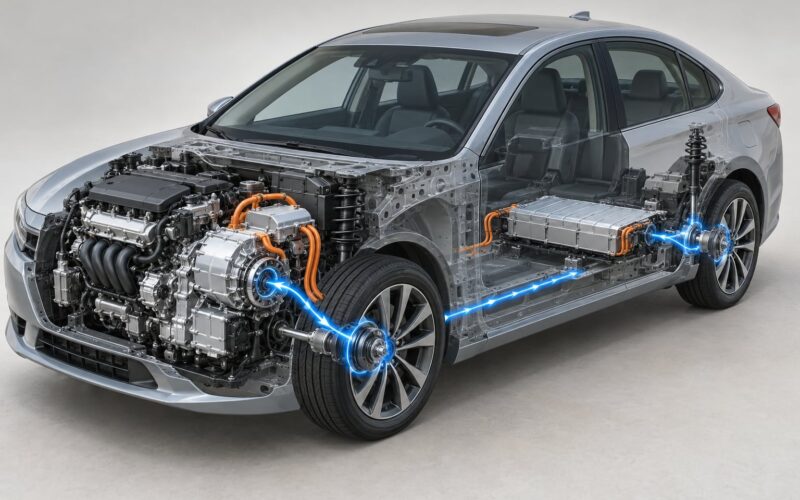
Stage two, rectification in the car. The on-board charger takes that AC and converts it into DC, then adjusts the voltage to whatever the pack wants. Because the on-board charger is built into the vehicle and sized around the motor and battery, it caps the whole car at about 11 kW. That single component is the reason Level 2 tops out where it does.
Stage three, DC into cells. The battery management system sits between the charger and the pack. It balances individual cell voltages, keeps temperatures inside their preferred band, and throttles current as the pack approaches full. Nothing about that is optional; every EV does it, and it is why your car will happily refuse to take the power the cable could deliver.
DC fast charging collapses stages one and two into the station. Its own rectifier produces high-voltage DC and the car hands the power almost straight to the pack, which is the entire reason a small on-board charger cannot stop a 250 kW session.
As 6.6 kW a Level 2 charger question comes up constantly, so it is worth answering here: yes, 6.6 kW is Level 2. That figure comes from a 240-volt circuit at 27.5 amps, which is a common 40A breaker with continuous load limits factored in. Six point six kilowatts is a mid-range Level 2 output, not a weaker tier.
How Charging Power Changes Range and Charging Time
Range added per hour is roughly kilowatts multiplied by charging efficiency multiplied by your car’s consumption in miles per kWh. A car rated at 3 miles per kWh on a 7 kW charger, working at about 90 percent efficiency, gains a bit over 18 miles per hour. Bump the charger to 11 kW and the same car gains closer to 30.
| Charger power | Realistic range added per hour | Typical use | Full overnight charge of a 60 kWh pack |
|---|---|---|---|
| 1.4 kW | 3 to 4 miles | Backup, apartment dwellers, emergency top-ups | Over 40 hours |
| 7 kW | 16 to 22 miles | Home and workplace charging | 8 to 9 hours |
| 11.5 kW | 26 to 34 miles | Home charging on a larger circuit | 5 to 6 hours |
| 50 to 150 kW | 150 to 300 miles in an hour | Highway stops, top-ups between errands | Not typically used for a full charge |
| 150 to 350 kW | Several hundred miles in 30 minutes | Road trips, long-distance corridors | Not typically used for a full charge |
Five things change the result between the label on the charger and the number on your dashboard.
Battery size matters. A car with a 40 kWh pack and a car with a 100 kWh pack behave very differently on the same hardware. Divide the energy you need by the power you have.
State of charge is the biggest factor of all. Charging is fastest in the middle of the pack and much slower near full, so the last 20 percent always takes longer than the first 20 percent did.
Temperature changes everything. A cold pack, a pack that has been sitting in the sun, or a pack that needs cooling will accept less power. Cars often precondition the battery toward a target temperature before a fast charge, which is why a plugged-in car can pull more power than a car that just rolled up.
The vehicle sets the ceiling, not the charger. A 7 kW car cannot take advantage of an 11 kW cord, and a car rated for 180 kW will never touch a 350 kW gun.
Power can be shared. A load-sharing EVSE spreads one 50A circuit between two cars, and several vehicles at a public site can divide the site’s capacity. Your session slows down as others plug in.
Level 1 Charging: Slow but Simple Overnight Charging
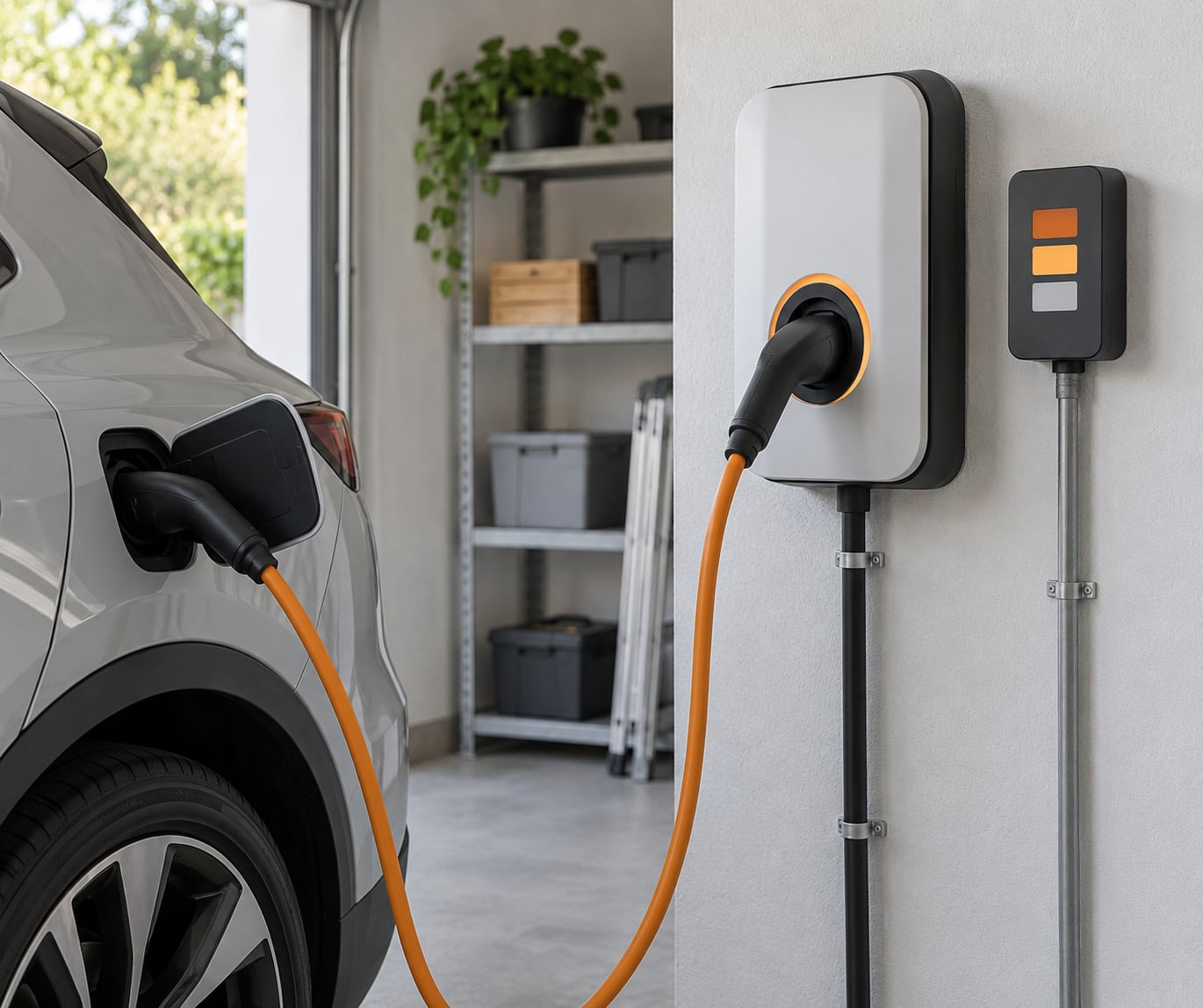
Level 1 charging uses the ordinary 120-volt wall socket you already have, and the cable that came in the trunk or under the frunk lid. There is nothing to install and nothing to ask a landlord about, which is exactly why it matters for renters and for anyone whose parking spot is on the street.
The power depends on the current the car draws. Most vehicles default to 8 amps, which is about 1 kW. Many accept 12 amps for about 1.4 kW, and a handful handle 16 amps for about 1.9 kW, typically on a dedicated 20A circuit. One owner on a forum noted the 16A setting roughly halves overnight charge time compared with the 8A default, and that pattern shows up again and again.
Set the math for a typical 60 kWh pack at 1.4 kW and 85 to 90 percent charging efficiency. You are looking at something in the neighborhood of 45 to 55 hours for a full charge, or roughly 8 to 10 miles of range per hour. Plenty of drivers cover a 30-mile commute on that overnight, arriving with more range than they left with.
Level 1 is also the least efficient of the three. One owner who measured it on an Ioniq 5 reported losing roughly 31 percent of the energy coming in at 120V compared with 240V charging, which works out to meaningful money over years of daily use. The losses come from standby electronics, the charger itself, and the extra heat generated at low power in the cabling.
If you are on Level 1, the practical habit is to plug in every time you park. Charging is slow enough that a two-hour top-up is worth doing, and slow is the whole point: nothing gets hot, nothing stresses the battery, and there is no installation to think about.
Level 2 Charging: The Most Common Home and Public Charging Option
Level 2 charging runs on 240-volt AC, the same split-phase electricity that runs your oven, dryer, and water heater. It is the most common charging level in the world, simply because most people charge at home or at work on a Level 2 circuit.
Power output on Level 2 is set by the amperage the hardware is designed to draw, and the numbers are more granular than most guides suggest.
| Amperage | Typical breaker | Power | Range per hour | Notes |
|---|---|---|---|---|
| 16 amps | 20A | 3.7 kW | 8 to 11 miles | Cheapest to install, often shares a 30A dryer circuit |
| 24 amps | 30A | 5.5 kW | 12 to 17 miles | Maximum safe draw on most 30A dryer circuits |
| 32 amps | 40A | 7.4 kW | 17 to 22 miles | The common home choice |
| 40 amps | 50A | 9.6 kW | 22 to 28 miles | Plenty of older and bigger packs do not need this |
| 48 amps | 60A | 11.5 kW | 26 to 34 miles | Requires a substantial panel in most homes |
Two rules drive everything here. First, continuous loads must stay under 80 percent of the circuit rating, which is why a 40A charger goes on a 50A breaker and a 48A charger needs a 60A breaker. Second, most homes have a panel with a finite amount of spare capacity, and adding a big circuit may mean an upgrade.
This is where a lot of owners waste money. Forum threads are full of complaints about electricians pushing 50A and 60A circuits when a 24A load-managed setup would serve the same two-car household perfectly. If your car accepts less than 32 amps, a bigger circuit buys nothing except a larger electrical bill for the install. Ask for the smallest circuit your actual daily driving needs, and have the electrician run the load calculation rather than assume.
How to check your panel before you choose a circuit
You do not need an electrician to do the homework, and doing it first keeps the quote honest.
Step one, open the panel door and read the main breaker rating. That number caps everything downstream of it.
Step two, add up the amps already committed. Each 15A and 20A breaker counts as 1.5A per amp, and each 30A and 50A breaker counts at full rating under the continuous load rule.
Step three, add your proposed EV circuit at 125 percent. A 40A charger on a 50A breaker, for example, counts as 50A of demand.
Step four, if the total leaves comfortable headroom, your existing panel is fine. If it does not, look at load management before a service upgrade. A load-sharing or smart EVSE can charge two cars on one existing circuit, which is usually a fraction of the work of replacing the panel.
Owners on EV forums report the opposite pattern just as often: quotes for a 50A circuit on a panel that a 24A unit would have served perfectly, with the final invoice reflecting the bigger job. Bring the load calculation to the conversation and ask for the smallest circuit that meets your daily miles.
Renters have good options now. Load-sharing EVSEs let two cars share one 30A or 50A circuit, and smart models can sequence charging so the second car starts after the first is done. One owner on a forum built a working setup with a 24A charger, a manual two-way splitter, and an EV-rated cord, though for anything beyond a temporary arrangement a licensed electrician and a load-sharing unit is the better path. A growing number of apartments also have shared Level 2 stalls managed through a building’s parking system, so it is worth asking before assuming you are stuck with Level 1.
Public Level 2 chargers work the same way, usually at 7 to 22 kW. They take one to three hours for a meaningful top-up and are far less expensive per kWh than fast charging, which makes them the right stop for errands, meetings, and overnight street parking.
How Electric Vehicle Charging Levels Work at DC Fast Chargers
DC fast charging works differently in a way that matters. On Level 1 and Level 2, the charger sends alternating current to the car, and the car’s own on-board charger rectifies it into DC, steps the voltage up or down as needed, and feeds the battery. The on-board charger is why those cars are limited to around 11 kW, and why it gets warm under load.
A DC fast charger skips that step entirely. Its own rectifier converts the grid supply into high-voltage DC and pushes it to the battery. That is why fast chargers are quoted as a voltage range, typically 300 to 900 volts, and why a car designed around a 400V architecture cannot take full advantage of a charger built for 800V, and vice versa.
The handshake is what makes it safe. Before current flows, the plug and the car exchange identification over the connector pins, then both sides agree on voltage, current, and isolation status. If the cable is damaged, the ground is missing, or the car says no, no power moves. A car physically cannot draw more than its on-board components are rated for.
Public charging networks often label fast chargers as “Level 3.” That is marketing shorthand, not the SAE tier, and it is worth knowing so you do not go looking for a “Level 3” home charger that does not exist.
On a 10 to 80 percent charge, many modern cars add around 200 miles in about 20 to 30 minutes. Going the last 20 percent to full can take as long as the entire middle section, and that is not a fault. It is the battery protecting itself.
How to Read Charger Labels and Vehicle Charging Information
Plugs, ports, and marketing numbers blur together, so here is a decoder.
kW is power. kWh is energy. A 7 kW charger running for 8 hours delivers 56 kWh to the battery, and you spent 56 kWh of electricity from the grid. The charger tells you kW, your utility bill tells you kWh, and your car displays both.
SOC is state of charge. That is the percentage readout, and it is an estimate derived from cell voltages and temperature, not a fuel gauge reading.
C-rate describes speed relative to pack size. A 1C charge would refill an entire pack in one hour. Home charging runs well under 0.5C, and fast charging peaks somewhere around 2C to 3C depending on chemistry and temperature. C-rate is also where heat comes from: the faster you push energy into cells, the more per-cell heat is generated, and heat is what wears a battery over time.
Connector types describe the physical plug and the communication pins.
| Connector | Looks like | Used at | Typical vehicles |
|---|---|---|---|
| J1772 | 5-pin, small round | Level 1 and Level 2 AC | Most US and Asian-market EVs and plug-in hybrids |
| CCS Combo 1 | J1772 plus two large DC pins | AC and DC fast | Most US, European, and Korean EVs |
| CHAdeMO | Round, 2 large pins | DC fast | Older Japanese EVs, some European models |
| NACS | Small oval | AC and DC fast | Tesla, and most North American cars moving to it in 2026 |
NACS is worth a note because it answers the “Is Tesla Level 2 or Level 3” question neatly: Tesla cars use the same connector for both, and the level depends entirely on the station. The North American connector standard is now spreading across manufacturers, so check your car’s port before assuming a fast charger will fit.
One more label to read carefully: charger maximum output versus vehicle maximum acceptance. A station advertising 180 kW tells you about the station. Your car’s spec sheet tells you what it can take. The lower number always wins, and a driver who expects 180 kW from a 100 kW car is disappointed for the wrong reason.
How Charging Time Changes From Empty to Full
Charging speed is not a straight line, and this is the single most misunderstood thing about EV charging. Every EV follows a charging curve with three parts.
The ramp is the start. From a low state of charge the car draws peak power immediately, which is why an advertised 250 kW rating usually appears only in the first ten minutes.
The plateau is the long flat middle where the car holds close to peak power. On a cold pack this stage may be short; on a warm one it is where most of the energy goes in.
The taper is the finish. Above roughly 80 percent the battery management system reduces current to protect cell voltage and temperature, and the last 20 percent can take as long as the middle 60 did. Drivers who expect a 250 kW charger to hold 250 kW for 20 minutes misunderstand the design, not the charger.
That is why the 10 to 80 percent figure is the honest one. Automakers publish it because it describes the part of the curve the car controls well. A 0 to 100 percent time is dominated by a slow tail and is a poor tool for comparing cars.
Cold weather compresses the plateau and lowers peak power. So does a heavily loaded car, a hot day, or a battery that has been repeatedly fast charged to full. If the charge is slower than the sign promised, temperature is the first thing to check.
Which EV Charging Level Do You Need?
Most drivers need exactly one of the following, and buying the wrong tier is the expensive mistake.
| Your situation | What you need | Why |
|---|---|---|
| Apartment or condo, no dedicated parking | Level 1 daily, plus a shared or public Level 2 and occasional DC fast | No installation is possible, so build a network habit instead of a home habit |
| Homeowner with a garage and a spare circuit | Level 2 at 24A to 32A | Covers a daily commute overnight without a panel upgrade |
| Two-car household on one panel | Load-sharing Level 2 at 16A to 24A per car | Sequences charging and avoids a service upgrade |
| Long-distance driver, frequent highway miles | Level 2 at home, DC fast for trips | Fast charging is a road-trip tool, not a daily one |
| Driver needing accessible charging or adaptive rates | Level 2 with a reachable handle height and a cable length you can manage | Usability matters more than peak speed for daily use |
| Renter with a driveway or reliable street parking | Portable Level 2 at 16A to 24A | Plug-and-play, no install, moves with the car |
| Simplest possible routine | Level 1 plugged in every night | Zero installation, zero decisions, and enough for short commutes |
For most households the honest answer is a 24A or 32A Level 2 circuit and a habit of charging overnight, with fast chargers kept for road trips. Apartment residents get the most out of a plan: a workplace Level 2 charger if one exists, a public Level 2 for longer stops, and DC fast only when something goes wrong with the plan.
On the question of charging to 80 percent or 100 percent: daily 100 percent charges are not what modern cars are optimised for. Leaving the daily limit around 80 percent reduces time spent at high voltage, and most cars let you set that limit once and forget it. Periodic full charges are still worth doing, and owners report that a weekly 100 percent session keeps the pack balanced and the range estimate honest. One owner found a weekly full charge returned about 0.8 Ah of measured capacity, and another ran two years of regular full charges with no perceptible degradation. Check your manual for the guidance on your specific chemistry.
Safety and Practical Questions About EV Charging
EV charging is a high-current electrical load, and most of the rules exist to keep heat where it belongs.
Use grounded, code-compliant equipment and a properly grounded outlet. Never charge through a household extension cord, and never daisy-chain power strips. If you need more reach, buy an EV-rated cord of the correct gauge and length rather than an extension cord.
Match the charger to the circuit. A 48A unit on a 40A breaker is a fire risk; a 24A unit on a 30A dryer circuit with a load-sharing device is a normal, safe setup.
For any permanent installation, use a licensed electrician. Have them run the load calculation on your panel rather than eyeballing spare capacity, and check what your local electrical code requires. Follow the vehicle owner’s manual for charge limits, preconditioning, and any battery care instructions.
At public chargers, a few habits go a long way. Charge to the level you need rather than 100 percent, move your car when the session ends so the next driver can use it, and leave the bay clean. Sessions that end early because the bay is blocking traffic are the fastest way to lose access.
Frequently Asked Questions
What are the three EV charging levels?
The three levels are Level 1, Level 2, and Level 3, defined by the SAE J1772 standard. Level 1 uses a 120-volt household outlet at about 1.4 kW and adds 3 to 5 miles of range per hour. Level 2 uses a 240-volt circuit at 7 to 11.5 kW and adds 15 to 40 miles per hour. Level 3, usually called DC fast charging, delivers 50 to 350 kW of direct current and can add 150 miles in 30 minutes.
Do I need a Level 2 charger at home?
You need Level 2 if your daily driving distance is more than what a 120-volt outlet can restore overnight, or if you want the car ready in a few hours instead of a full day. A 24A or 32A Level 2 setup usually covers an average commute and typically fits on an existing panel without a service upgrade. If you only drive short distances, plugging into a regular outlet every night is genuinely enough.
Why is my EV charging slower than advertised?
Most often the car, not the charger, sets the rate. A vehicle only accepts the power it is rated for, and both cold and hot batteries accept less. Speed also tapers above roughly 80 percent state of charge, and shared circuits or several cars at one site can divide available power. A slow charge is usually the battery management system working correctly rather than a fault.
Does DC fast charging damage the battery?
It creates more heat per cell than slow charging, so repeated fast charging to 100 percent ages a pack faster than overnight AC charging would. Occasional fast charging on road trips makes little difference over a vehicle’s life. Most cars let you schedule a daily charge limit around 80 percent, which keeps the pack out of the high-voltage range where wear is fastest.
Is it better to charge my EV to 80% or 100%?
For daily driving, charge to around 80 percent and leave the rest for the road. Full charges sit at high voltage, which accelerates long-term wear, so frequent 100 percent sessions shorten pack life. Periodic full charges are still worth doing weekly or before a long trip, because they let the battery management system balance cells and keep the range estimate accurate. Check your manual for guidance on your chemistry.
How long does it take to charge an electric car at each level?
At Level 1, a typical 60 kWh pack takes 40 hours or more for a full charge, though a 30-mile overnight commute is easily covered. At Level 2, expect 5 to 9 hours for the same pack. A DC fast charger reaches 80 percent in roughly 20 to 40 minutes, then slows considerably for the last 20 percent. Battery size and temperature shift all of these numbers.
What to Do First
Start with the number of miles you drive on a typical day, because that is the only figure that matters for choosing a level. Under 30 miles a day, a standard outlet plugged in nightly is a complete charging setup and the cheapest one you will ever own. Between 30 and 100 miles, get a 24A to 32A Level 2 circuit installed and let the car sit overnight. Above that, or if you tow and travel long distances, keep Level 2 at home and treat fast charging as a road-trip tool rather than a daily one.
Then check two numbers before you buy anything: the maximum amperage your car accepts, and the spare capacity on your electrical panel. Everything else, including the tier name on the charger in the showroom, follows from those two facts.