What to do after a minor car accident comes down to four things in this order: check for injuries, move to safety, document the scene, and notify your insurer. Most fender benders take 20 minutes to handle properly and about two hours to handle badly. A police report is not always legally required, but the photos you take and the information you exchange usually decide who pays for the repairs.
Adrenaline does most of the damage to your evidence. People rush to the other car, agree to fault on the spot, and discover days later that the bumper looked fine but the radar sensor behind it was cracked. Slowing down for ten minutes protects your claim.
A minor accident is a low-speed collision with no serious injuries and limited property damage: a parking-lot scrape, a side-swipe on a narrow road, a slow rear-end tap at a light. Most states set a property-damage dollar threshold below which you are not obliged to file a police report, and those thresholds change, so check your own state DMV page rather than relying on a number you read online.
Table of Contents
- What You Need: Tools and Documents for a Minor Car Accident Scene
- Step-by-Step: What to Do After a Minor Car Accident
- Step 1: Make Sure Everyone Is Safe
- Step 2: Protect the Scene and Call for Help
- Step 3: Exchange Information and Document the Scene After a Minor Car Accident
- Step 4: Notify Your Insurer and Arrange the Vehicle
- Common Mistakes After a Minor Car Accident
- When to Contact a Lawyer or Medical Professional
- Frequently Asked Questions
- Do I need to call the police after a minor car accident?
- What counts as a minor car accident?
- Should I tell my insurance company about a minor accident?
- How long after a car accident can injuries show up?
- Do I need a lawyer for a minor car accident?
- What if the other driver leaves the accident scene?
- Conclusion: Start With Safety and Documentation
What You Need: Tools and Documents for a Minor Car Accident Scene
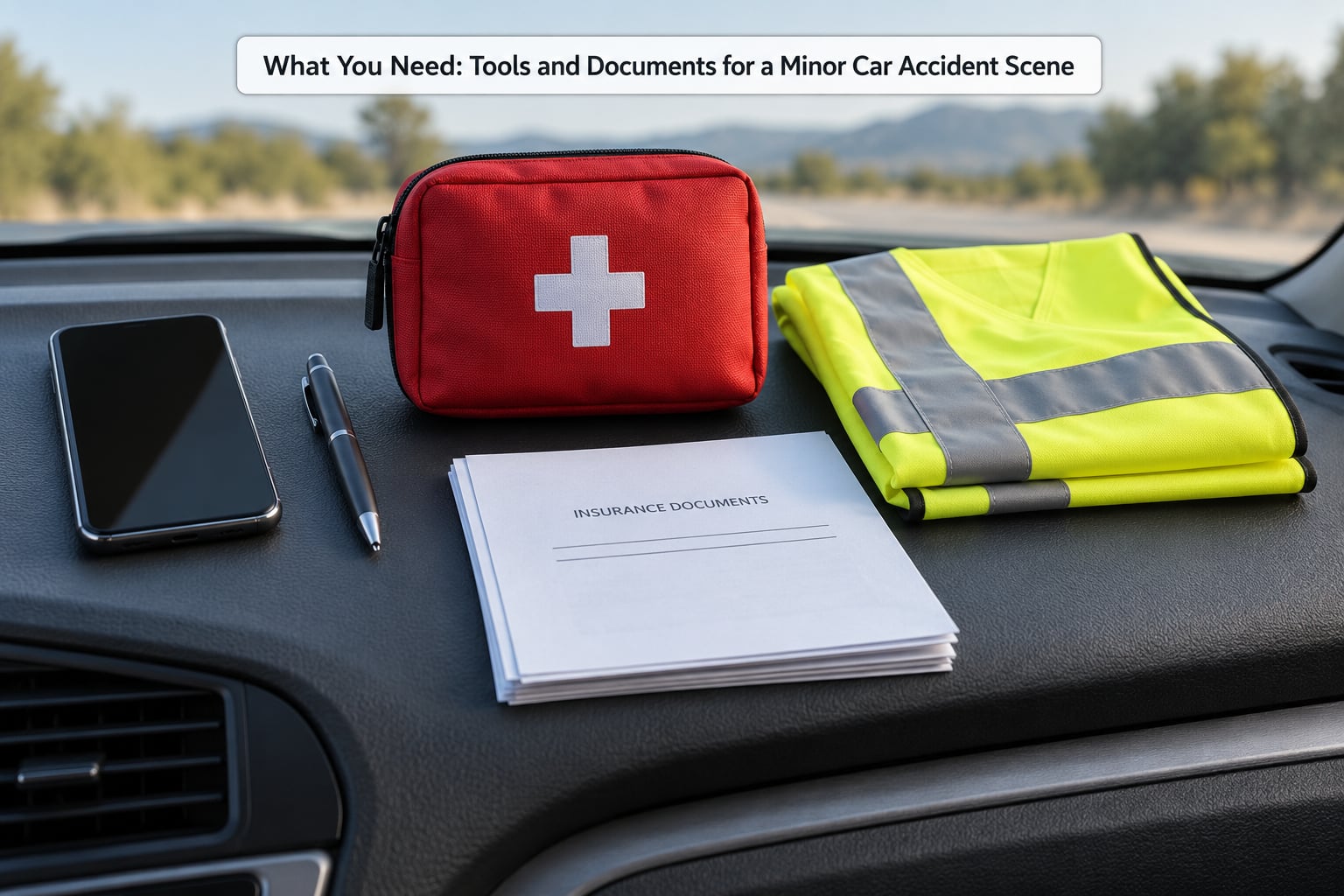
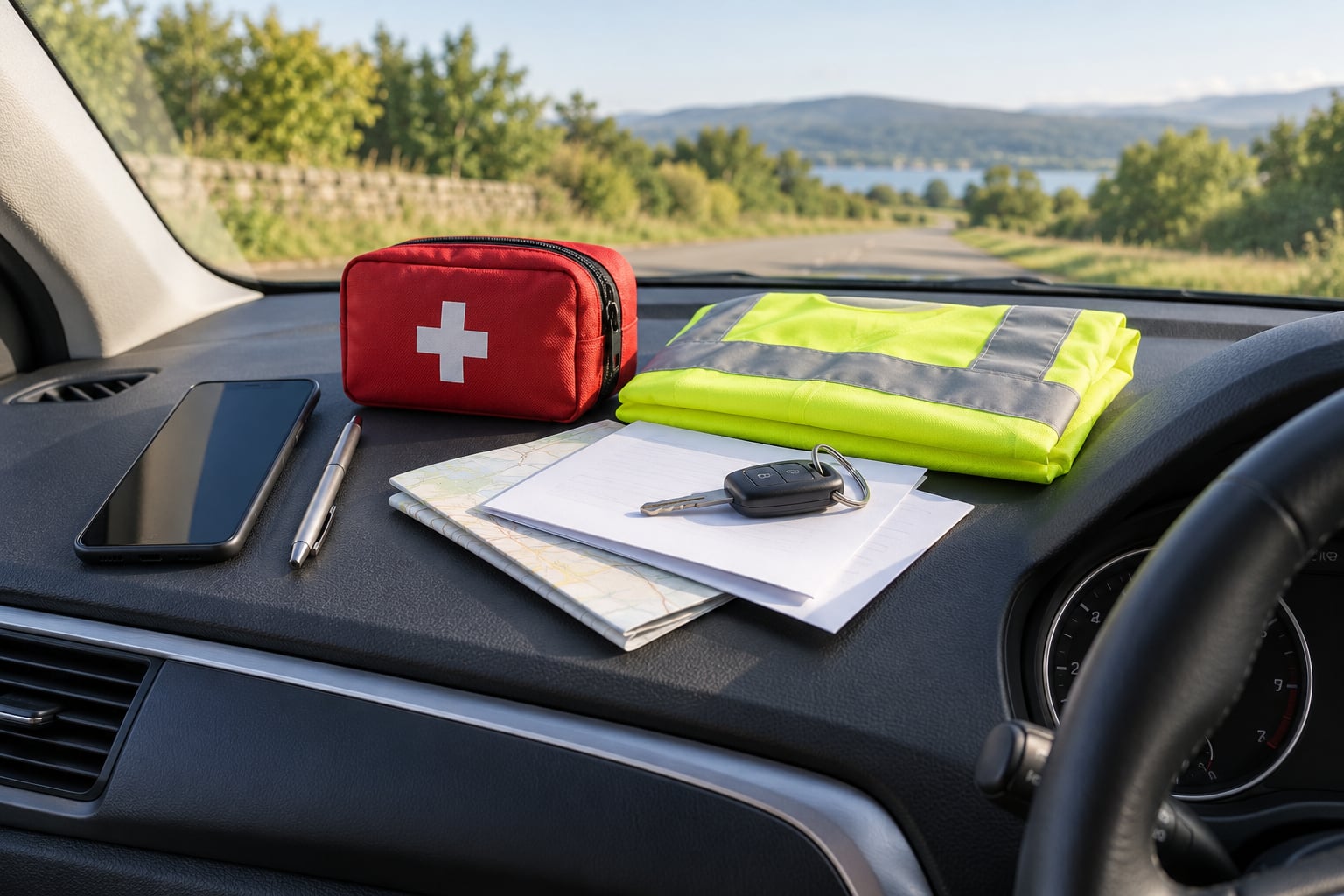
Gather these before you step out of the car. Reaching for your phone in the glovebox while standing in a live lane is how a fender bender turns into a three-car pileup.
- Phone with a charged battery. The same device you use for photos, calls and the claims line. Keep it charged in the car permanently rather than in the glovebox.
- Driver licence and registration. Proof of who you are and whose car you are driving, which you will be asked for.
- Insurance card or policy number. A photo of it on your phone works as well as the paper one, and it is easier to hand over.
- A pen. For writing on the back of a photo, on a note, or on the scene itself. It also keeps your hands busy while you wait.
- A first-aid kit. Small ones fit in the glovebox and cover cuts, scrapes and the one thing you always need: clean water to rinse road grit out of a cut.
- A reflective vest or a bright outer layer. Visibility matters more than you expect on a shoulder at dusk.
- A flashlight. Headlights fail, and inspecting dark under-bumper damage without one means you miss it.
- Roadside assistance number. Call it early rather than waiting, because towing and a rental are the two things drivers most often forget to arrange.
If someone else is in the car with you, hand them your phone and have them take the wide photos while you handle the conversation with the other driver. Two people cover twice the scene in half the time.
Step-by-Step: What to Do After a Minor Car Accident
Step 1: Make Sure Everyone Is Safe
Start with people, not vehicles. Check yourself first, then your passengers, then the other driver and anyone nearby.
Ask each person directly whether they are hurt rather than watching for reactions. Someone with a concussion can answer clearly for the first hour and then fade. Note any difficulty breathing, chest or abdominal pain, loss of consciousness, confusion, heavy bleeding, or an obvious deformity.
If any of those appear, call emergency services right away and do not move the person unless they are in immediate danger. Neck and back injuries are easy to make worse by an untrained helper.
Turn on your hazard lights before anything else. They tell following drivers you are still in the lane.
Step 2: Protect the Scene and Call for Help
Move both vehicles out of the traffic lane if it is safe to do so and nobody is hurt. Even in parking lots, pull to the far edge and put the keys in your pocket.
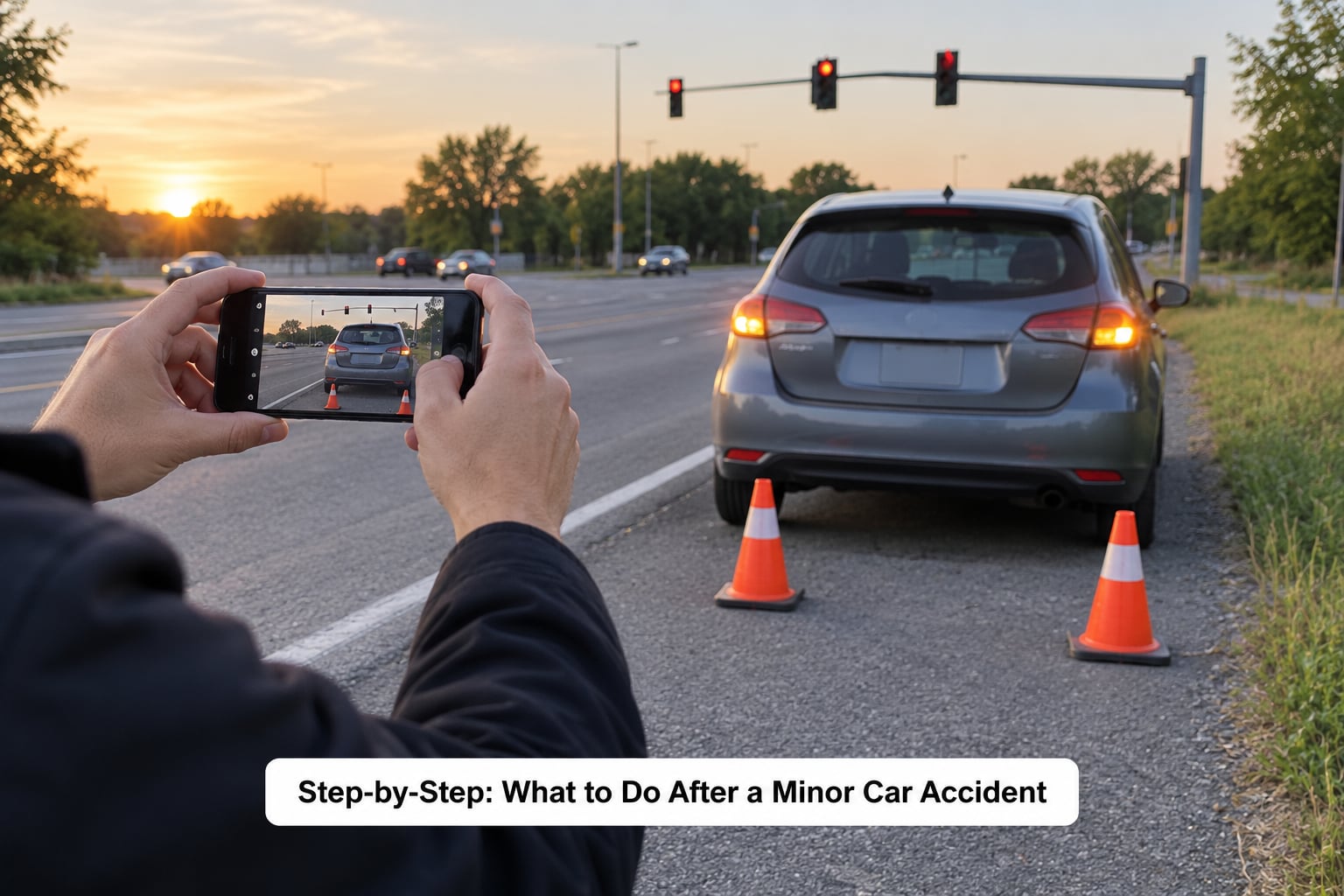
If a vehicle cannot be moved, switch on hazards and set up whatever warning you have: cones, triangles, hazard lights on the roof at the corners. Stay out of the line of fire from approaching traffic, which means behind the vehicle or well off to the side, never directly in its path.
Call the police when someone is injured, when the vehicles are blocking a lane or a dangerous intersection, when the other driver is hostile, intoxicated or leaving, when damage looks far worse than a minor impact, or when you want an official report on the record.
Many drivers skip the police for a pure fender bender. A report is neutral third-party documentation of what happened, and drivers who skipped it have told forums they regretted that choice when the other side changed their story a week later.
If the other driver drives off, note the vehicle, direction and plate if you can see it, then call police. Do not follow. Details of your own vehicle and the scene may be more useful than a chase.
Step 3: Exchange Information and Document the Scene After a Minor Car Accident
Collect the following before anyone leaves. Say it once, calmly, and repeat it into your phone’s voice notes so you do not forget half of it later.
- Full name, address, phone number and email of the other driver.
- Their driver’s licence number and issuing state.
- Vehicle make, model, year, colour and plate number of both vehicles.
- Their insurance company, policy number and the name on the policy.
- Their insurer’s claims phone number, written down.
- Registration and name of the vehicle owner, which is not always the person driving.
Then walk the scene with your phone and take more photos than feels reasonable: wide shots that place each car in the intersection, mid-range shots of each corner, and close-ups of every dent, scratch and crack from several angles.
Add the surroundings. Street signs, lane markings, the signal phase, wet pavement, debris, a stop sign half hidden by a tree, the distance between the two cars.
Photograph anything that could change how the crash reads later: shadows hiding a gap, foliage blocking a sign, the position of a witness’s car. Empty traffic lanes in your wide shot tell the story better than a close-up of a scuffed bumper.
Sketch the layout if the positions are not obvious: the direction each car was travelling, the lane each one sat in, and the point of impact. A rough drawing with a phone photo of it is enough, and it takes under two minutes.
Talk to witnesses separately, not as a group. Ask for a name, a contact number and a short written note of what they saw, including which direction each vehicle was coming from. A written statement is worth more months later than a friendly recollection, and witnesses are often gone within a week.
If you have a dashcam, save the clip before you power the device down or unplug the card. Copy it to your phone or laptop the same evening and keep the original card somewhere safe.
Step 4: Notify Your Insurer and Arrange the Vehicle
Tell your insurer as soon as you are home and safe. Most policies require prompt notice, and early notice lets them open the file, assign an adjuster and tell you which shops are on their network.
Read your own policy’s notice clause first, because deadlines differ and they often start on the day of the crash, not the day you call.
When you call, stick to facts. Give the date, time and place, the vehicles involved, what you saw, and the injuries you noticed. Do not speculate about who caused it, do not say sorry for the accident, and do not agree to a recorded statement that contains guesses.
Ask three questions on the call: whether you should open the claim now or document it only, whether coverage applies, and what your deductible is. Some drivers file a record-only report to create a paper trail without using coverage, which is worth asking about if you might be the other side’s insurer later.
Get two or three repair estimates before you accept anything. Quotes from the insurer’s preferred shop, an independent shop and a dealer are a useful comparison, and it also reveals which panels are damaged behind the bumper cover.
If the car is drivable, drive it carefully. If it is not, or the damage is near a wheel, tyre, steering rack, brake line or any sensor mount, arrange a tow rather than limping to the shop.
Ask the shop to check for damage you cannot see. Bumper covers hide cracked mounts, broken parking sensors and misaligned radar behind them. On newer cars, the forward camera behind the windshield, the radar behind the grille and the blind-spot sensors in the mirror can all be knocked out of alignment by a low-speed impact, and a car can feel fine while lane assist steers you toward another vehicle.
Ask whether the repair includes a sensor calibration or a wheel alignment, and get that in writing. A shop that skips calibration can hand you back a car with a driver-assist system quietly failing.
Common Mistakes After a Minor Car Accident
These come up again and again, and most of them cost money rather than causing injury.
- Leaving the scene before exchanging information. Not knowing who the other driver is makes a claim nearly impossible. Stay until you have names, plates and insurer details.
- Arguing about fault on the roadside. Nobody wins that exchange. Say you want the facts documented and move on.
- Apologising or saying “my fault.” An apology is read as an admission. Be courteous, not accountable.
- Skipping the medical check. Soreness and stiffness often show up several days later. A short exam on the day of the crash creates a medical record tied to the date, which matters enormously later.
- Posting about the crash online. Comments about the other driver, photographs of the damage and speculation about fault end up in the other side’s hands. Keep it off social media until the claim closes.
- Deleting photos or dashcam clips. Files overwrite. Copy them the same day.
- Settling privately with no written agreement. Cash handed over with no signed release that spells out what it covers leaves you unable to claim for damage discovered later. If you do settle privately, the agreement should name both vehicles, list what is covered, and be signed and dated by both parties.
- Signing a repair authorisation you have not read. Shops can add damage as they strip the car. Ask that any supplement go to you first.
- Trusting a verbal estimate as final. Insurance offers are estimates, not caps. If the teardown finds more, ask in writing how the additional cost is handled.
- Assuming rates are safe because you were not at fault. Some drivers report an increase anyway. Insurers can raise premiums on a not-at-fault claim in many states, so ask your agent directly whether your policy has accident forgiveness or a claims-free threshold.
Two habits carry most of the weight. Photograph every angle including the surroundings, and keep one organised file with a dated timeline, every receipt and every call log. When a claim is disputed six weeks later, that file is what moves the conversation forward.
When to Contact a Lawyer or Medical Professional
This section is general information, not legal or medical advice. Insurance rules, reporting thresholds and deadlines vary by state and change over time, so confirm your own position with a qualified professional.
See a medical professional the same day if you felt any impact to the head, even a small one, or if you have a headache, dizziness, nausea, blurred vision, ringing ears, neck pain, shoulder pain, numbness or tingling. These symptoms can appear hours or days later, and a documented early evaluation protects you if symptoms continue.
Some people also find that a minor collision leaves them jumpy, anxious or unable to stop replaying it. That response is common and treatable. Mention it to a doctor rather than assuming it will pass on its own.
Talk to a lawyer when injuries are more than trivial, when there is a dispute over fault, when the other driver lacks insurance or the policy limits are low, when several vehicles are involved, when you are driving a borrowed, rental or commercial vehicle, or when an offer arrives that feels too low for the injuries involved. A short consultation before you sign a release is cheap compared with signing away a claim you did not know you had.
A short consultation is not always needed. If nobody is hurt, damage is limited to a bumper cover, the other driver accepted responsibility, both insurers agree, and the offer covers a fair repair, the claim is usually straightforward.
Whichever route you take, keep a dated timeline: when the crash happened, when you noticed pain, every appointment, every call, every email. Insurers adjusters and lawyers build cases out of timelines, and they are tedious to assemble later.
Frequently Asked Questions
Do I need to call the police after a minor car accident?
Often not. Most states only require a report when someone is injured, when the crash involves a hit-and-run, or when property damage passes a state threshold that varies by state and changes over time. Call anyway if vehicles are blocking traffic, the other driver is leaving or being aggressive, or you want a neutral third-party record because the other side may dispute what happened.
What counts as a minor car accident?
A minor accident is a low-speed collision with no serious injuries and limited vehicle damage, such as a parking-lot scrape, a side-swipe on a narrow road or a slow rear-end tap at a light. The legal line is set by each state’s property-damage reporting threshold, so the same collision can be reportable in one state and not in another.
Should I tell my insurance company about a minor accident?
Yes, notify your insurer promptly even when the damage looks trivial. Your policy’s notice clause sets a deadline that often starts on the day of the crash, and early notice lets them assign an adjuster and steer you toward covered shops. You can ask whether to open a claim or log it for record-keeping only, which creates a paper trail without using coverage.
How long after a car accident can injuries show up?
Often longer than people expect. Drivers report soft-tissue soreness, neck stiffness and headaches appearing three to seven days after low-speed collisions. That delay is normal, not a sign that you were uninjured. A medical evaluation on the day of the crash gives you a record dated to the collision, which matters if symptoms continue.
Do I need a lawyer for a minor car accident?
Usually not when nobody is hurt, the damage is limited to a bumper cover, the other driver accepted responsibility and both insurers agree on the repair. Get advice before signing any release if there are injuries, a dispute over fault, an uninsured or underinsured driver, several vehicles involved, or an offer that looks low for the injuries involved.
What if the other driver leaves the accident scene?
Note the vehicle, colour, direction of travel and plate if you can see it, then call police and do not follow. Move yourself to safety, photograph the scene from every angle, and tell your insurer the same day. Dashcam footage and a clear description of the vehicle are the two things that most often turn an unidentified hit-and-run into a recoverable claim.
Conclusion: Start With Safety and Documentation
Six things, in order: check for injuries, move to safety, turn on hazards, document the scene, exchange information, notify your insurer. That sequence is what to do after a minor car accident without handing a small repair into a long dispute.
The photos you take in the first ten minutes and the medical note you get that same evening do more for you six weeks later than any argument you win at the roadside.