To defrost a windshield fast, run the front defroster at maximum heat with the air conditioning on, switch recirculation off, and crack the windows a few inches to pull dry outside air in. Then spray the glass with a warm water or de-icer mix, scrape with a plastic blade, and buff dry. Thin overnight frost clears in 5 to 10 minutes; a quarter-inch of solid ice takes closer to 20 with the defroster running.
The reason that combination beats the defroster alone is moisture. Warm air by itself melts ice slowly because it holds water vapour, and cabin air is already damp. Running the A/C strips that moisture out while the heater supplies the heat, so the air reaching the glass is warm and dry at the same time. Recirculation off and the windows cracked keep fresh dry air moving through instead of washing over the same humid air again.
Updated for October 2026. No garage required, no special equipment beyond a scraper, and nothing here needs more than a bottle of warm water and a few minutes of patience.
Table of Contents
- What You Need
- Step-by-Step
- 1. Start With the Car’s Defroster
- 2. Use Warm Water to Melt the Ice
- 3. Apply a Windshield De-Icer
- 4. Scrape the Glass Without Scratching It
- 5. Finish With a Microfiber Cloth
- Common Mistakes
- Frequently Asked Questions
- How quickly can I defrost a windshield?
- Is warm water safe for a frozen windshield?
- Will a hair dryer defrost a car windshield quickly?
- How do I remove frost without scratching the glass?
- Can I use a spray de-icer on my car dashboard?
- What should I do if the windshield is still icy after scraping?
- Conclusion
What You Need
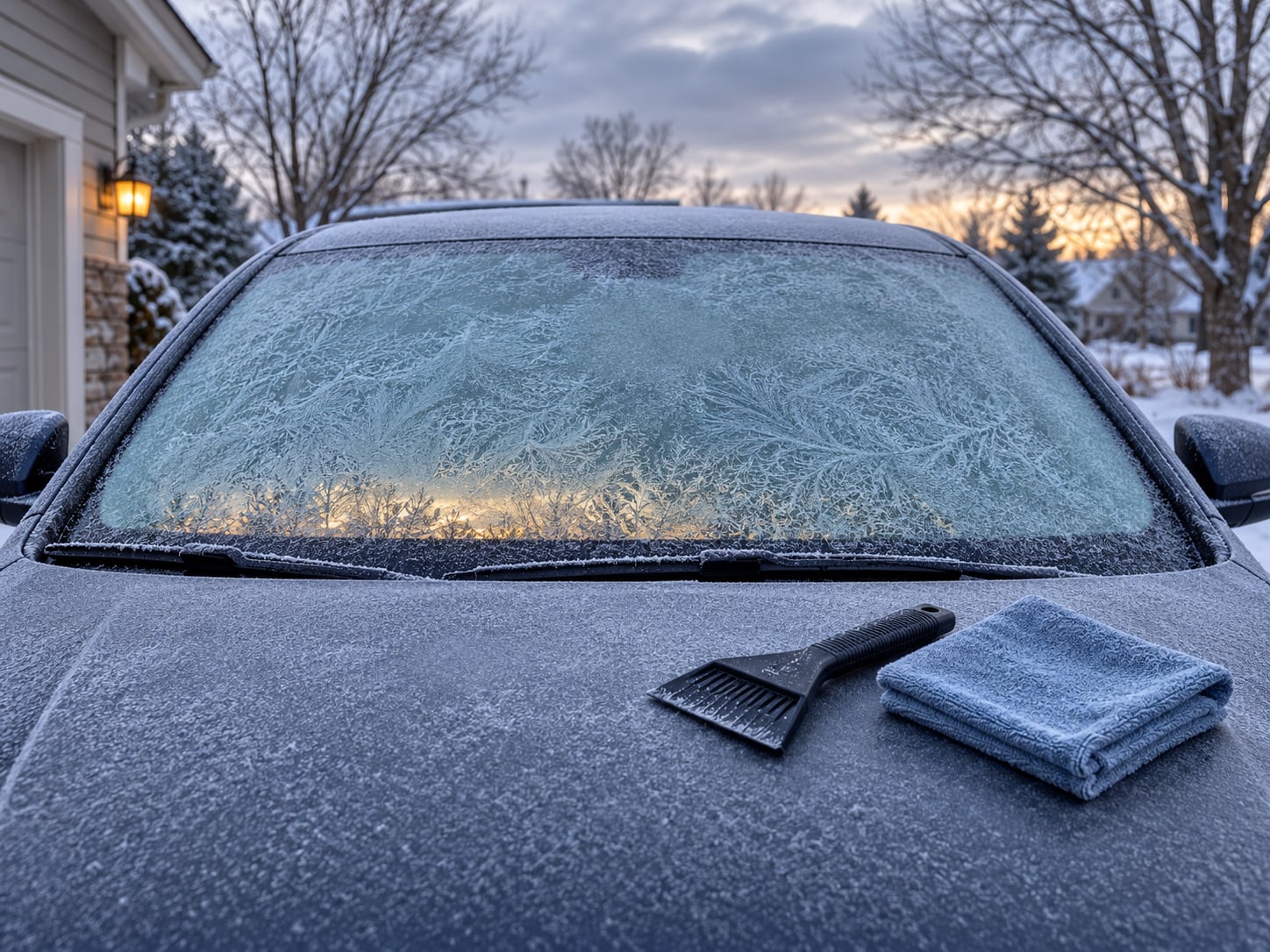
A plastic ice scraper is the one item worth owning. The cheap foam kind works for light frost, but a rigid plastic blade with a rubber edge pushes through thicker ice without touching the glass as much.
A spray bottle filled with lukewarm water handles most frost. A de-icer spray or the homemade mix below takes over when the glass is below freezing and plain water just refreezes. Keep both in the car, because a frozen windshield is not the time to go looking for supplies.
A microfiber cloth finishes the job. It lifts the loose crystals and the water film that a scraper leaves behind, and that film is what makes the road look blurry at low sun angles.
A safe heat source is optional but useful: a garage, a carport, or a remote engine start that ran the car for 15 or 20 minutes before you went inside. Skip open flames and any propane or kerosene heater parked next to the car.
Never use boiling water. A windshield is laminated glass, and a sudden temperature swing between near-freezing glass and hot liquid can crack it or split an existing chip straight across the driver’s view. Lukewarm water that feels mild on the inside of your wrist is the right temperature.
Step-by-Step
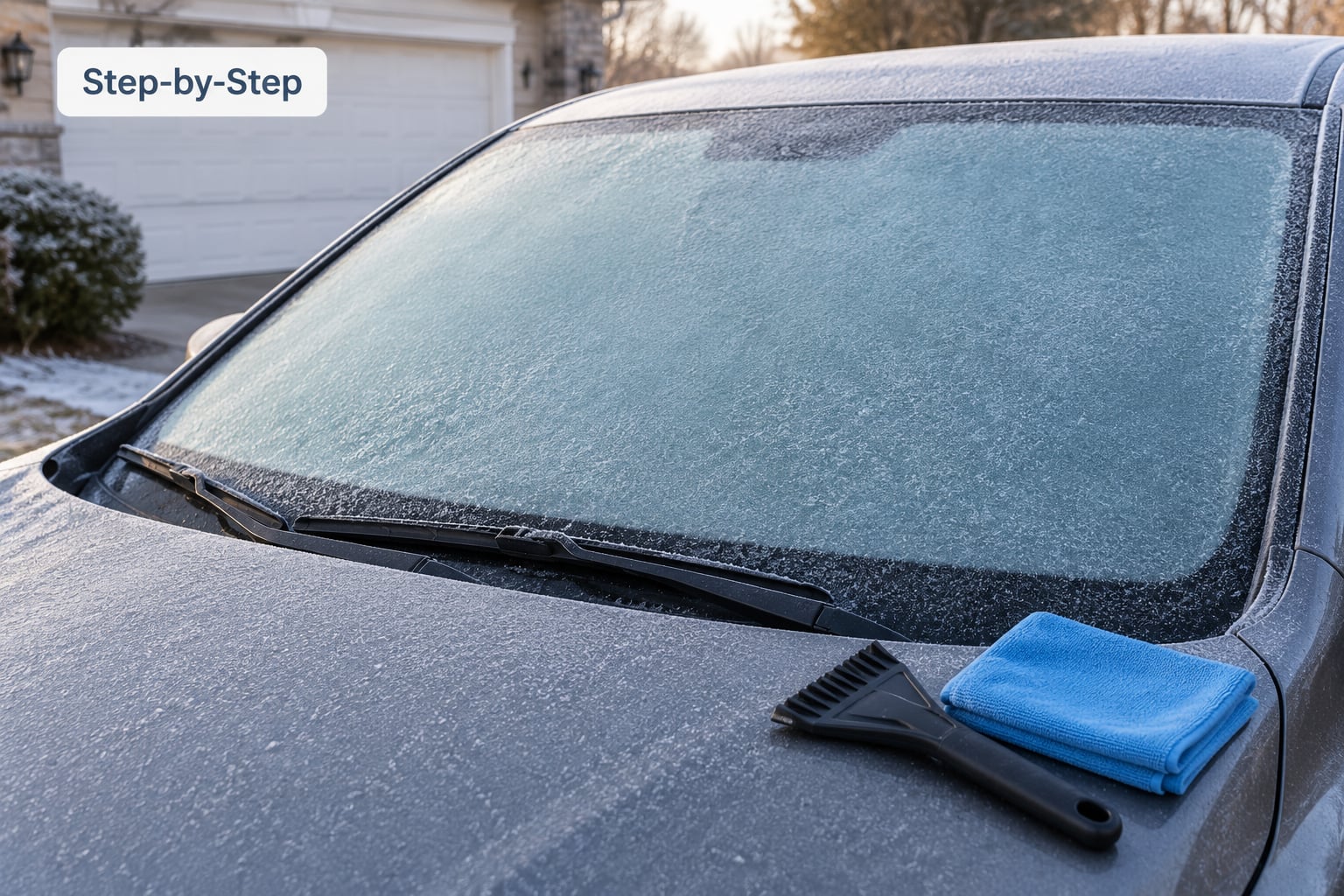
1. Start With the Car’s Defroster
Turn the front defrost on, set the heat to maximum and the fan to high, then turn the air conditioning on at the same time. Point every vent you can toward the windshield, including the side window vents that aim at the A-pillars.
Switch recirculation off so the system pulls air from outside rather than reheating damp cabin air. Open each window about an inch or two. The defroster should be running and the windows cracked before you touch the glass, not after.
You will see it working when the airflow noise changes and the edges of the frost start retreating. Keep it running the whole time you scrape, because the warm dry air is what stops the scraped area refreezing instantly.
2. Use Warm Water to Melt the Ice
Fill a spray bottle with lukewarm water and mist the glass generously, working from the top edge down so the water carries loosened ice out of your scraper’s path. Let it sit for 30 to 60 seconds on light frost, longer on anything thicker.
Cold water makes this worse. It can refreeze on contact and leave you a harder layer to chip at. Lukewarm water gives the thermal shock the glass cannot absorb, and the run-off soaks away grit that would otherwise scratch under the blade.
3. Apply a Windshield De-Icer
When the glass is well below freezing, spray an even mist of de-icer over the whole windshield, including the edges and the corners near the wipers where ice packs thickest. Give it a minute or two to soften, then scrape.
You can mix your own: two parts water to one part isopropyl or rubbing alcohol, the ratio AAA recommends. The alcohol lowers the freeze point, so the liquid stays liquid on cold glass instead of refreezing.
Keep spray off the dashboard, the wiper arms and any camera or sensor housings around the windscreen or grille area. Aerosol propellant and surfactants are fine on glass and corrosive on plastic trim, so aim low and wipe the overspray off the dash with a damp cloth.
4. Scrape the Glass Without Scratching It
Use overlapping strokes, moving the blade sideways and slightly downward so ice travels toward the wiper area rather than back over glass you just cleared. Keep the blade flat against the glass and angled a few degrees so the edge leads and the plastic body rides slightly above the surface.
Scrape while the defroster is still running. If the blade starts juddering or you hear a gritty dragging sound, stop, mist more water and wipe the surface with the cloth to flush out the trapped grit, then resume. That juddering is the moment scratches happen.
Keep the scraper off the rear glass too. Rear defroster heating elements sit just under the inside surface and a hard plastic edge can damage them, and those grids are expensive to replace.
5. Finish With a Microfiber Cloth
Wipe the remaining moisture and loose crystals away with the microfiber cloth, moving across the glass rather than in tight circles. Then check for missed ice along the top edge and in the corners, since those are the areas that still block your upward view.
Look straight through the driver’s side of the windshield from your seated position. You should see clean glass in every direction the mirrors need, not just a peephole in the middle. If the sun hits it and the road still looks blurry, there is a film left and one more pass with the cloth will fix it.
Common Mistakes
Using boiling or hot water. The fastest way to crack a laminated windshield. Lukewarm water melts frost just as well and does not risk thermal shock.
Scraping with keys, a coin, or a metal edge. Any hard metal leaves scratches in the glass that never come out. A credit card works as a plastic shim in a pinch, but a real scraper with a rubber lip is faster and does less damage.
Spraying de-icer across the dashboard. Overspray on textured plastic and leather dries to a sticky film. Mist the glass, then wipe the dash with a damp cloth before you drive.
Letting the car idle in a closed garage with the door down. That is a carbon monoxide risk every single time, no matter how brief. If it has to idle, do it outdoors with the garage door fully open.
Driving on a cleared patch in the middle. A narrow strip of clear glass still hides pedestrians, cyclists and cars entering your lane, and in many jurisdictions an obstructed windshield is a citation on its own. Clear the driver’s full view before you move.
Forcing frozen wipers. Rubber blades stuck to ice tear when you pull. De-icer the base of each blade first, let it sit, then ease the arm up slowly.
Waiting on the defroster alone. Twenty minutes of idling for a small clear patch is the most common complaint from owners on car forums. Start the airflow first and scrape while it works rather than after.
Frequently Asked Questions
How quickly can I defrost a windshield?
Light overnight frost usually clears in 5 to 10 minutes with the defroster running and a scraper in hand. A thin layer of solid ice takes closer to 20 minutes. Working in parallel matters more than any single tool: start the airflow, spray, then scrape while the glass is still being warmed. Thick ice in the corners near the wipers is always the slowest part.
Is warm water safe for a frozen windshield?
Yes, as long as it is lukewarm rather than hot. Windshields are laminated glass, and pouring near-boiling water on freezing glass creates thermal shock that can crack it or run an existing chip across the view. Lukewarm water melts frost effectively and safely. Cold water is the one to avoid, because it can refreeze on contact and leave a harder layer to scrape.
Will a hair dryer defrost a car windshield quickly?
It clears frost quickly on small areas but it is a bad idea on the whole windshield. The concentrated heat causes thermal shock, and holding hot air on one spot can warp or crack laminated glass. If you use any hot-air tool, keep it moving, stay well back and work on a small section at a time. The defroster is safer and covers more glass per minute.
How do I remove frost without scratching the glass?
Soften first, then scrape. Mist the glass with lukewarm water or de-icer, wait a minute, and scrape with overlapping strokes using a plastic blade held flat. If the blade judders or drags, stop and clear the grit rather than pushing through it, since trapped particles under the edge are what cause scratches. Finish with a microfiber cloth to lift loose crystals.
Can I use a spray de-icer on my car dashboard?
Keep it off the dash if you can. Aerosol propellants and surfactants are safe on glass but leave a sticky film on textured plastic and can haze leather trim. Mist the windshield, then wipe down the dashboard with a damp cloth. Wiper arms and any camera or sensor housings near the windscreen are worth wiping too, since overspray collects there and dulls the view.
What should I do if the windshield is still icy after scraping?
Do not keep scraping harder. Run the defroster with the A/C on and the windows cracked for a few more minutes, reapply de-icer to the stubborn corners near the wipers, and scrape again while the glass is warm. Below about minus 10 C, plain water and alcohol mixes stop working quickly, so cover the car overnight and precondition it in the morning instead of fighting the ice.
Conclusion
The fastest safe sequence is short: start the defroster on high heat with the A/C running and the windows cracked, mist the glass with lukewarm water or a two-to-one water and isopropyl alcohol mix, scrape with a plastic blade while the warm air is still working the glass, then buff dry with a microfiber cloth. Check from the driver’s seat that the whole view is clear, not just the middle, and look over the glass for cracks before you drive.