Hybrid cars save fuel by adding an electric motor and a battery to a gasoline engine, then using that motor in four ways: driving on electricity alone, switching the engine off at stops, turning into a generator while the car slows down, and helping a smaller engine handle the load. The result is usually 20% to 40% less fuel burned than a comparable gas car, with the biggest gap in stop-and-go traffic.
The part most people get wrong is regenerative braking. Owners expect it to work hardest on the highway, where the car burns the most fuel. It actually works most in the city, where the car is constantly slowing down.
Here is what each mechanism does, where the savings come from, and what quietly erodes them.
Table of Contents
- What Is a Hybrid Car?
- How Do Hybrid Cars Save Fuel?
- How Does Regenerative Braking Save Fuel?
- Why Does Stopping the Engine Help?
- How hybrid cars save fuel in different driving conditions
- What Is the Typical Fuel Savings of a Hybrid?
- What Can Drivers Do to Save More Fuel?
- Do Hybrid Cars Always Use Less Fuel?
- Frequently Asked Questions
- How much fuel do hybrid cars save?
- Do hybrids get better fuel economy in the city or on the highway?
- Why does my hybrid get less MPG than the sticker says?
- Do hybrid cars use gas and electricity at the same time?
- How long do hybrid engines and batteries last?
- Conclusion
What Is a Hybrid Car?
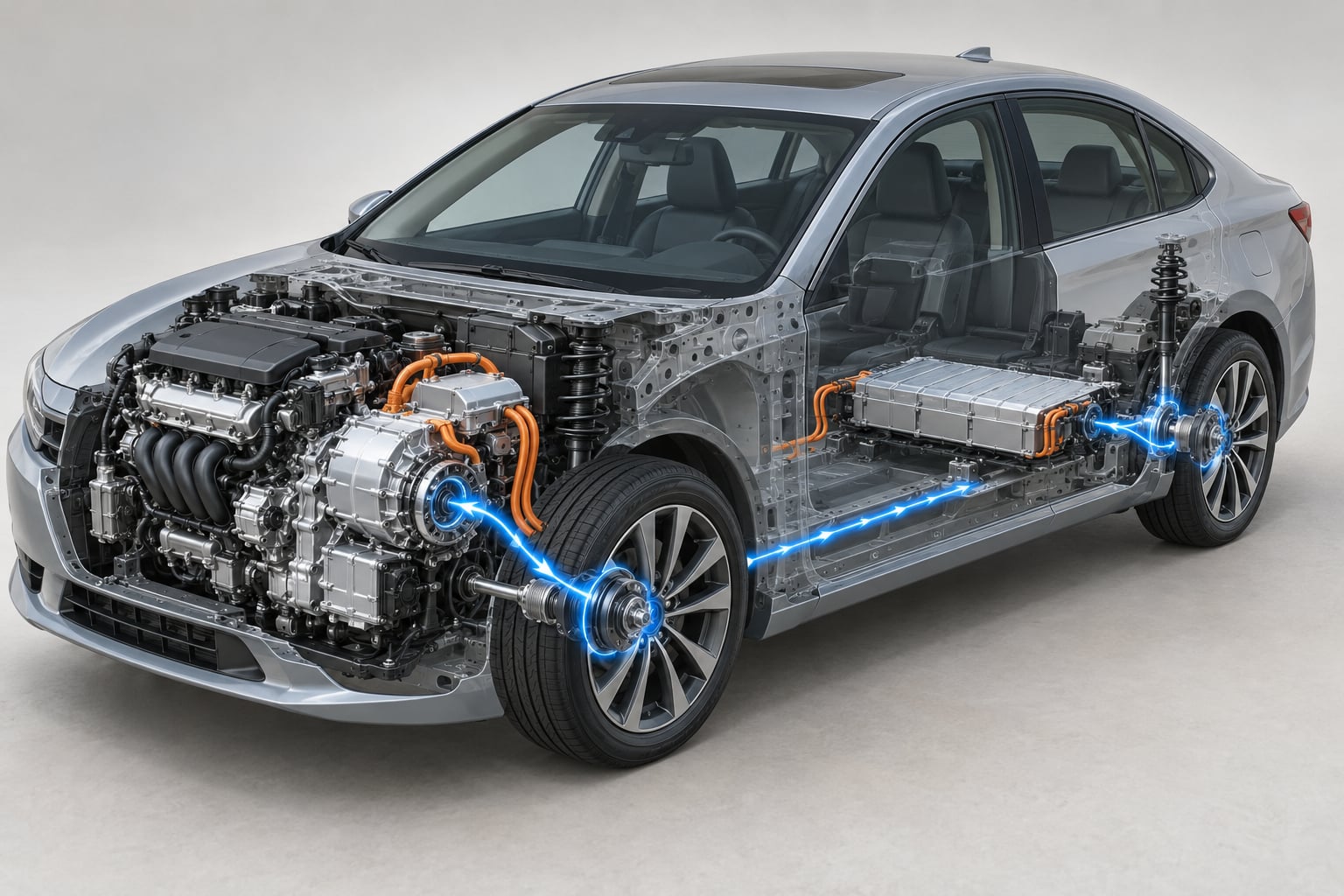
A hybrid is a car with two power sources: a conventional internal combustion engine and an electric motor fed by a battery pack. A standard hybrid has no charging cable. The battery fills itself from the gasoline engine and from braking.
The main parts you will find under the hood or in the trunk:
- Gasoline engine — the familiar one, usually smaller than in the gas version of the same car.
- Electric motor — drives the wheels, assists the engine, and doubles as a generator.
- Battery pack — stores energy. On most models it sits behind the rear seat or under the floor.
- Inverter and control computer — decides, several times a second, which source drives the wheels.
- Planetary gearset — couples the engine and motor without a conventional clutch.
That last piece matters more than most people expect. The motor and engine can change roles instantly, so the car does not need to stop, wait, and restart. The transition is continuous.
Two other hybrid types exist. A plug-in hybrid (PHEV) has a bigger battery you can charge from a wall outlet, so it can cover a chunk of your commute on electricity alone. A 48V mild hybrid adds a small motor and battery that smooths out acceleration and stops the engine briefly, but it cannot drive on electricity by itself.
How Do Hybrid Cars Save Fuel?
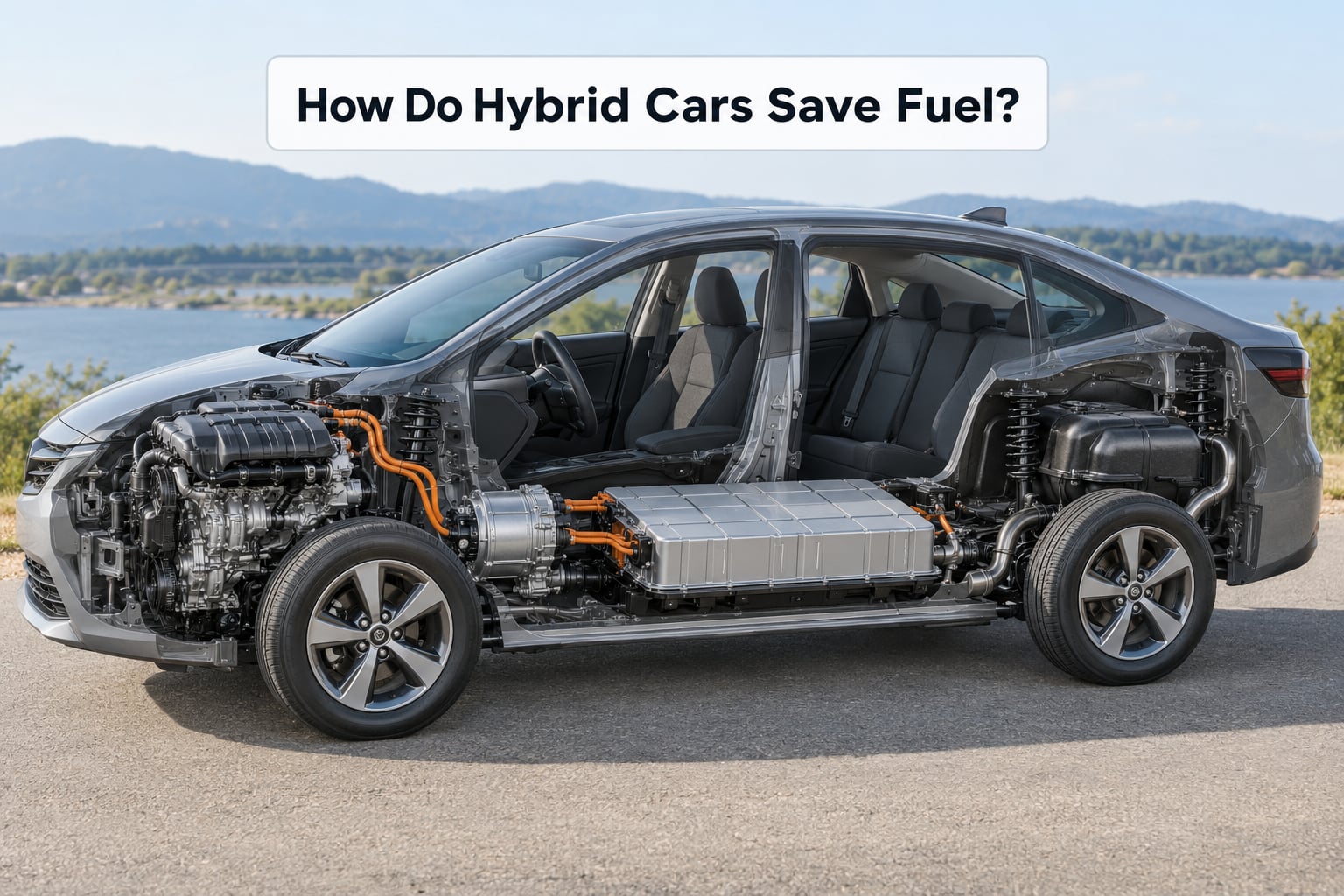
Hybrids save fuel in four ways: they drive on battery power alone at low speeds, they shut the gasoline engine off completely at stops, they use the electric motor as a generator during braking to send energy back to the battery, and they let the motor assist so a smaller, more efficient engine can do the work.
Each one works on a specific condition:
- When you crawl through traffic or drive gently under about 25 mph, the powertrain runs on electricity alone, so the engine is off and you burn no fuel at all.
- When you come to a full stop at a light or in a jam, the engine shuts off instead of idling, where a gas car would be burning a measurable amount of fuel every second.
- When you brake or slow, the motor spins backwards as a generator and pushes some of that kinetic energy into the battery instead of turning it into heat in the brakes.
- When you accelerate hard or climb a hill, the motor adds torque alongside the engine, so the engine can be a smaller, more efficient unit running closer to its sweet spot.
Underneath all four is a computer making decisions too fast to notice. It reads wheel speed, battery charge, and engine load, then picks the cheapest way to satisfy your request. Lawrence Berkeley National Laboratory modeling of powertrains has put the overall fuel saving in US traffic at roughly 40%, with higher figures in stop-heavy traffic patterns elsewhere: about 47% to 48% in Indian traffic and 53% to 55% in Chinese traffic.
A useful mental model: a conventional car spends most of its fuel moving the car and losing the rest as heat. A hybrid keeps more of that energy in play and spends the engine only on the parts of the drive where burning fuel makes sense.
How Does Regenerative Braking Save Fuel?
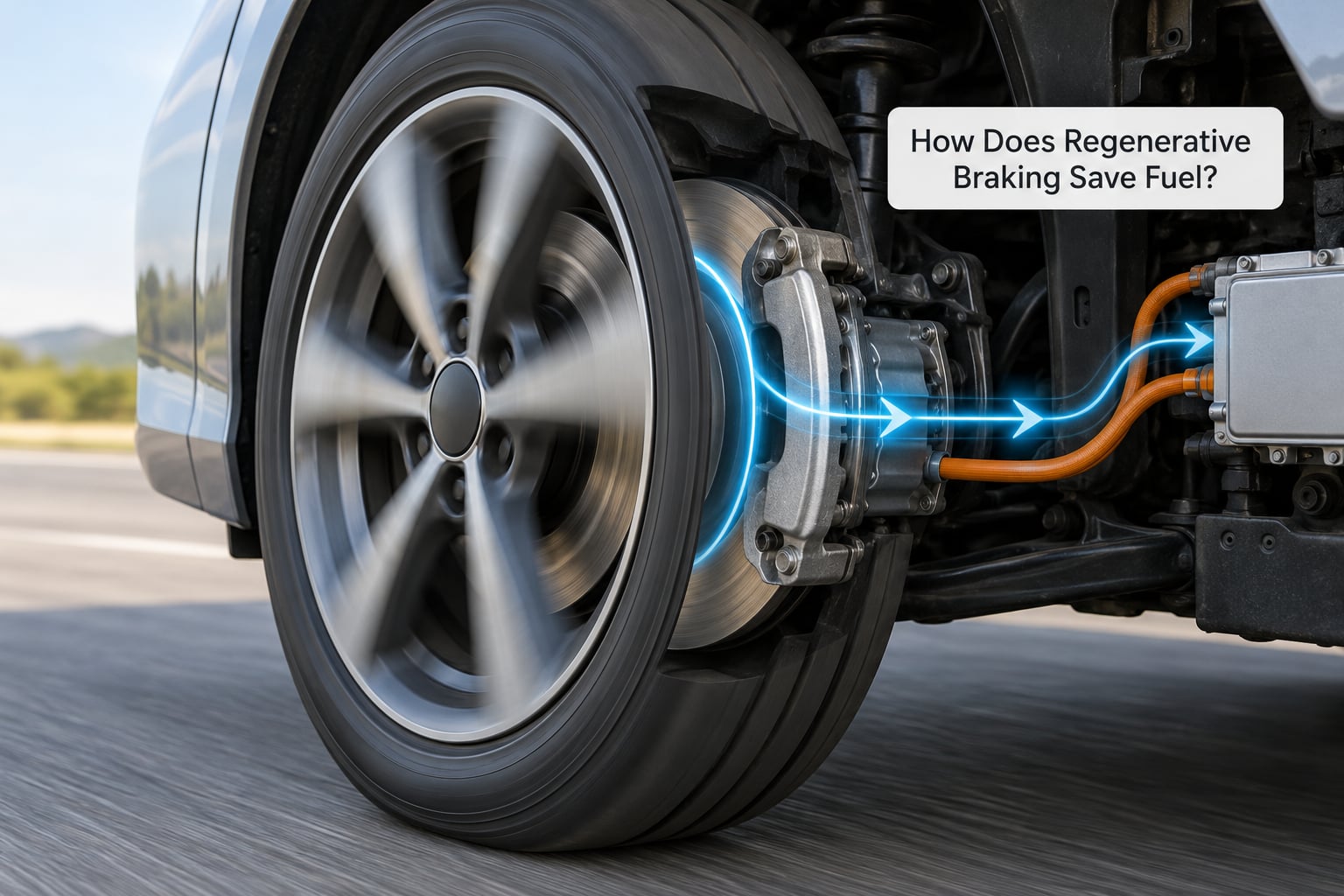
When a conventional car slows down, the friction brakes turn motion into heat and throw it away. Regenerative braking flips that. The electric motor becomes a generator, and some of the energy that would have been heat goes back into the battery.
Three things determine how much you recover. Speed at the start of the braking matters: the faster you were going, the more energy there was to take. Battery charge matters: a full battery accepts less, so the system leans on the friction brakes instead. And how long the deceleration lasts matters, since the recovery tapers as you approach walking pace.
That last point is why the mechanism earns its keep in town. A single city stop from 30 mph offers a meaningful charge. Twenty seconds at a light in a jam offers almost nothing. On a highway, a gentle lift off the throttle gives a small return, and steady cruising at 70 mph gives close to none.
The brakes blend automatically. You feel a normal pedal, sometimes with a lighter bite at low speeds, and sometimes you have to press harder as the motor reaches its limit. Owners on a Subaru forum report seeing less than the estimated combined mileage partly because they cannot tell how much of any given stop the system actually captured.
There is a quieter benefit. Because the friction pads do less of the stopping work, they wear more slowly, which is where a good part of the long-term ownership savings comes from rather than the fuel gauge.
Why Does Stopping the Engine Help?
A gas engine idling in traffic delivers almost no forward motion while burning fuel. A hybrid cuts the engine entirely and restarts it in a fraction of a second when you move off. Over a commute with dozens of stops, that idle time adds up fast.
The engine shuts off at full stops, at long traffic pauses, and at certain points during gentle deceleration once the battery charge is high enough. Most owners notice it most in a jam, where the silence is the giveaway that fuel is not being burned.
None of this involves plugging anything in. On a standard hybrid the battery refills from the engine and from braking, so shutoff never leaves you stranded. A plug-in hybrid is different: it can charge from a wall outlet, and running it without charging means carrying a heavy battery that rarely gets used.
How hybrid cars save fuel in different driving conditions
| Driving condition | What the hybrid does | How much it helps |
|---|---|---|
| City stop-and-go | Electric-only crawling, engine off at every light, frequent regen | Largest gain. This is where most of the savings come from |
| Suburban commuting | Mixed electric and engine running, moderate regen | Solid, predictable gain |
| Highway cruising | Engine runs most of the time, regen mostly unavailable | Smallest gain. Steady speed is where a gas car is already efficient |
| Steep hills | Motor assist on climbs, regen on descents | Meaningful, especially repeated grades |
| Short trips only | Battery may not get a full charge cycle back | Weak. The system never reaches its best state |
| Towing or heavy load | Engine works harder for longer | Reduced, though usually still positive |
One forum consensus worth repeating: gas cars tend to hold their edge on steady highway miles, while hybrids pull far ahead in traffic where slowing happens constantly. Both halves of that statement are true at once, which is why the honest answer to any highway question depends on the route.
What Is the Typical Fuel Savings of a Hybrid?
The numbers below are realistic combined ranges, not sticker figures. Model year, trim, wheel size, and weather all move them.
| Vehicle type | Approximate real-world combined MPG |
|---|---|
| Compact gasoline sedan | 28 to 35 |
| Midsize gasoline sedan | 26 to 33 |
| Gasoline midsize SUV or pickup | 18 to 25 |
| Full hybrid compact or midsize car | 45 to 60 |
| Full hybrid SUV or pickup | 30 to 42 |
| Plug-in hybrid, charged regularly | 40 to 60 combined after charging |
| Plug-in hybrid, rarely charged | 20 to 30 |
| 48V mild hybrid | Within a few percent of the gasoline version |
To size your own usage, the gallons number is easier than the MPG number. At 15,000 miles a year, driving 45 MPG burns about 333 gallons. At 30 MPG the same driver burns 500. At 12,000 miles it is roughly 267 gallons against 400. At 20,000 miles, about 444 against 667.
Multiply that gap by whatever you actually pay per gallon and you have your annual difference in a single step, without anyone needing to guess.
What Can Drivers Do to Save More Fuel?
None of these are exotic. They just have to be done consistently.
- Look ahead and brake early. Let the car slow for you whenever you can. Every bit of lift-off throttle you manage yourself is recovery the system can capture at full strength.
- Accelerate smoothly. The motor picks up light throttle for free, so hard launches spend energy the system then has to work to put back.
- Keep tires at the specified pressure. Underinflated tires add rolling resistance on every mile. It is the cheapest change available.
- Use the drive modes the manufacturer provides. Eco modes usually raise brake regen and lower the top speed. Sport modes do the opposite, and they cost you real MPG.
- Read the gauge instead of guessing. The power zone means you are charging the battery hard, and it is a signal to ease off. Sustained time there means the system is spending what it captured.
- Do not idle and do not creep in neutral. If the car is stopped, the engine should be off. If you are holding the brake, that is a wasted opportunity.
- Let the car warm up gently. Short trips at low speed leave the engine cold and the battery uncycled, which is the least efficient way to use a hybrid.
- Keep it serviced as specified. Fresh oil, correct spark plugs, and healthy brakes keep the engine out of the inefficient zone it tries hardest to avoid.
One habit surprises people. Efficiency often climbs after the first several thousand miles as the control computer finishes adapting and the battery works through early cycles. Drivers who see weak numbers on day one and assume something is broken often sell a car that would have improved on its own.
Do Hybrid Cars Always Use Less Fuel?
No, and the honest exceptions matter.
Highway-only driving. On a road with few stops, the engine runs most of the time, regen has almost nothing to work with, and the extra battery weight becomes pure dead weight. One pickup hybrid owner reported 17.6 MPG against a 24/24 sticker on a mostly-highway commute. Another saw 39.28 then 41.67 MPG on a Camry Hybrid rated 51/53, with two-thirds of that driving on the highway.
Rated versus real. EPA combined numbers assume a fixed mix of city and highway cycles that many commuters do not match. On top of that, many hybrid packs add 300 to 400 pounds, which costs a few MPG on its own.
Aggressive driving. Every hard acceleration drains the battery, and the engine has to refill it with fuel that was never going to be recovered.
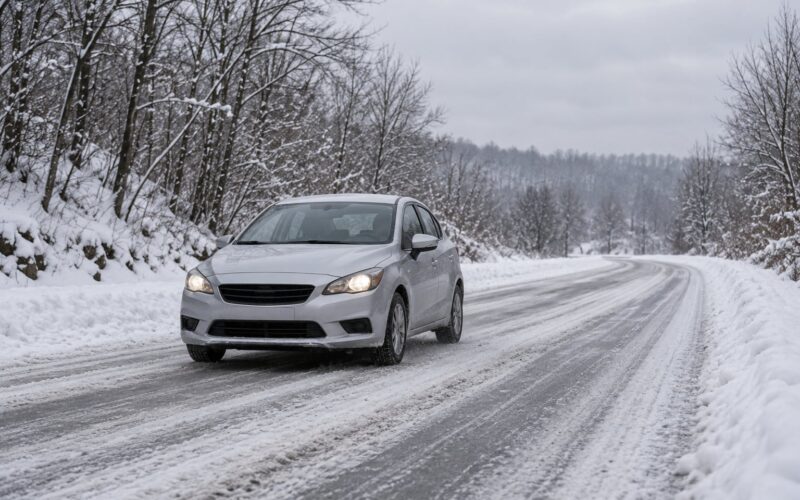
Cold weather. A cold battery accepts less charge, the heater and defroster add load, and the oil is thicker. Winter figures on hybrids usually fall short of summer ones by more than the same drop on a gas car.
Short trips. If you drive two miles at a time and never let the battery get properly cycled, the system spends much of its time recovering rather than benefiting.
A tired battery. Most modern hybrids do not lose fuel economy dramatically as they age, but a pack near the end of its service life makes the engine work harder and trims a few MPG off the top.
A newer gas car. A modern gasoline vehicle with cylinder deactivation and a good transmission is efficient on paper. Comparing a decade-old hybrid to a new gas car is not the comparison that matters.
Frequently Asked Questions
How much fuel do hybrid cars save?
Most hybrids burn roughly 20% to 40% less fuel than a comparable gasoline car, and around 40% in US traffic patterns according to Lawrence Berkeley National Laboratory modeling. The gap is largest in stop-and-go city driving, where electric-only crawling, engine shutoff at lights and frequent regenerative braking all work at once. Steady highway cruising narrows it considerably.
Do hybrids get better fuel economy in the city or on the highway?
City driving, without much debate. Stop-and-go traffic gives a hybrid far more opportunities to run on electricity, shut the engine off, and recover energy while slowing down. On the highway the engine runs most of the time and regenerative braking has little to capture. A gas car can even match or beat a hybrid on a long, steady, hill-free drive at highway speeds.
Why does my hybrid get less MPG than the sticker says?
Sticker figures come from a fixed test cycle that mixes city and highway driving in proportions many commuters never match. Add highway-heavy routes, cold weather, extra climate control, larger wheels, and the added weight of a hybrid battery, often 300 to 400 pounds. Owners also report that fuel economy often climbs after the first several thousand miles as the control system adapts.
Do hybrid cars use gas and electricity at the same time?
It varies by situation. A standard hybrid starts the engine when it needs power, may run both engine and motor together for hills or acceleration, and sometimes runs on electricity alone at low speeds. A plug-in hybrid can use wall charging, stored battery power, or the engine, depending on charge level and settings. A 48V mild hybrid always burns gasoline, using the motor only to smooth acceleration and stop briefly at idle.
How long do hybrid engines and batteries last?
Most hybrid engines outlast comparable gasoline engines because they spend less time running at high load, and the friction brakes wear more slowly so the drivetrain is handled gently. Batteries in modern hybrids commonly run 150,000 to 200,000 miles or more without a replacement, and many vehicles monitor pack condition closely enough to report degraded cells to the driver. Follow the owner’s manual for service intervals and battery care.
Conclusion
Hybrids save fuel in four ways that all point the same direction: run on electricity when it is cheap to do so, stop burning fuel when the car is not moving, capture energy instead of discarding it, and keep the gasoline engine small and lightly loaded.
Start by comparing real-world fuel economy for the specific route you drive, not the sticker number for someone else’s commute. Then look ahead, brake early, keep your tires at spec, and let the engine shut off. Those habits are worth more than most people expect, and they are free.