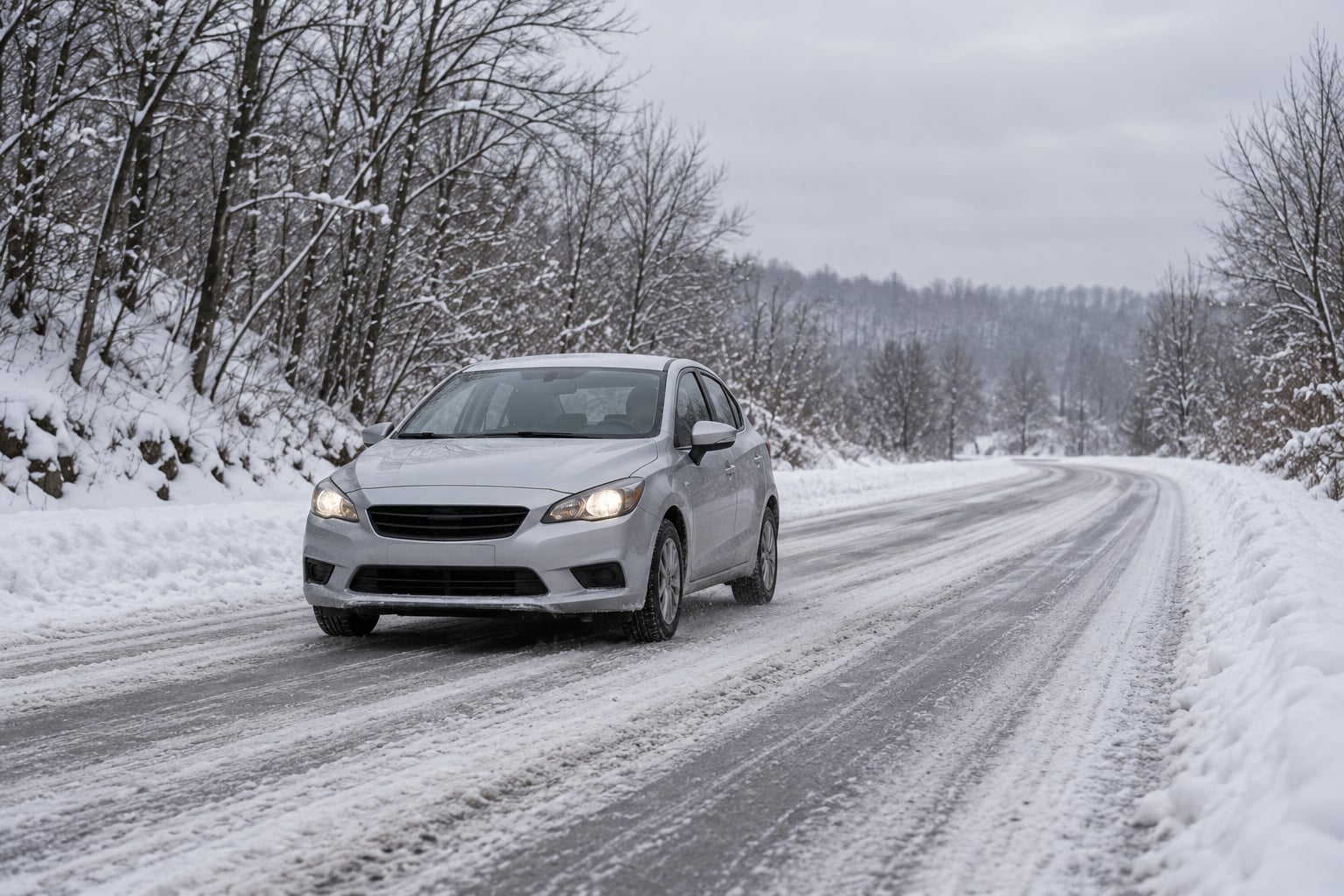
To drive in snow for the first time, slow well below the speed limit, leave 8 to 10 seconds of gap, and make every input gradual. Ease onto the gas, brake in small taps, and turn the wheel a little at a time. If the car slides, lift off the accelerator and steer where you want the car to go. Practicing on a quiet road first turns an hour of white-knuckle commuting into a calm, repeatable routine.
The first snowy drive feels harder than it is, mostly because everything happens faster than expected. A tap of the brake that would be nothing on dry pavement becomes a problem, and a lane change takes three times the room. Give yourself an extra 20 minutes, start on an unfamiliar-but-quiet street, and stop for a practice loop on an empty parking lot before you commit to a main road.
Table of Contents
- What You Need
- Tires and the vehicle itself
- Visibility tools
- Emergency supplies
- Clothing and a plan
- How to Drive in Snow for the First Time: Step-by-Step
- Check Weather and Road Conditions Before Leaving
- Prepare the Car and Clear the Windows
- Start Slowly and Create Extra Space
- Use Smooth Inputs on Icy Roads
- Handle Hills, Turns, and Stops Safely
- Stay in Control When the Vehicle Starts to Slide
- Know When to Stop and Ask for Help
- What to Do After Driving in Snow
- Common Mistakes and How to Fix Them
- Safety Tips for Your First Snowy Drive
- Frequently Asked Questions
- How slowly should I drive when it first starts snowing?
- Do I need winter tires to drive safely in snow?
- Should I use cruise control on snowy roads?
- How do I stop a car from skidding on ice?
- Is an automatic transmission easier for a first-time snow driver?
- Should I drive in a snowstorm if I have an emergency?
- Conclusion
What You Need
You need four things before you set out: a car that is ready, tools that make you visible, supplies for a breakdown, and a plan you can abandon.
Tires and the vehicle itself
Winter tires with the 3 Peak Mountain Snowflake marking give you the biggest single improvement in grip, because the rubber compound stays soft in cold temperatures. All-season tires work on packed snow if you drive slowly, and all-wheel drive helps you get moving but does nothing for your stopping distance.
Visibility tools
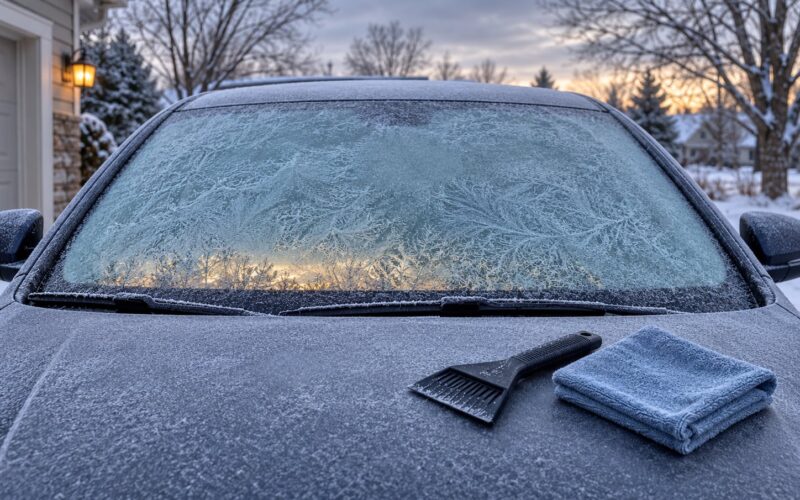
A plastic ice scraper and a brush get snow and ice off the windshield, roof, mirrors, and lights. A small bottle of windshield washer fluid rated for freezing temperatures stops the glass from fogging on the inside. Keep a clean rag in the door pocket for the smear the defroster leaves.
Emergency supplies
Carry a shovel, a flashlight, a blanket, a first aid kit, jumper cables, a scraper, a gallon of water, and a charged phone. A bag of sand or cat litter gives you something to spread under a spinning wheel for traction.
Clothing and a plan
Dress for standing outside, not just sitting inside. Put gloves, a hat, and a waterproof coat in the car so you are not digging in a t-shirt if you get stuck.
Before leaving, check the National Weather Service forecast and your state DOT road conditions page. If a winter storm warning, blizzard warning, or travel ban is active, postpone. Knowing your route and one backup route also matters, since unplowed side streets are often where first-time drivers get stranded.
How to Drive in Snow for the First Time: Step-by-Step
The process below runs in order because each stage makes the next one safer. Work through it once on a quiet day and it becomes habit by the second time.
Check Weather and Road Conditions Before Leaving
Postpone the trip when visibility drops, when freezing rain is in the forecast, or when a storm warning is active. The danger window is not the snow itself but the temperature swing near 32F, when wet snow melts and refreezes into a glaze that looks like a dry road.
Prepare the Car and Clear the Windows
Clear every window completely, plus the roof, the hood, the mirrors, and all four lights, before you start the engine. Snow sliding forward off the roof onto a warm windshield is a real and sudden hazard for the car behind you.
Check tire tread depth and pressure, and confirm your washer fluid and defroster work. Clear the tailpipe of snow and ice before running the engine, and expect your first few minutes to be spent defrosting, not moving.
Start Slowly and Create Extra Space
Start at walking pace and leave 8 to 10 seconds of following distance instead of the usual three. You can count the seconds by picking out a fixed point on the road and counting the feet it takes to reach it.
Slow is correct in snow, not cowardly. Drivers who panic in their first winter are almost always the ones who matched traffic speed to avoid being tailgated, and that is exactly the pressure that causes a slide.
Use Smooth Inputs on Icy Roads
Every control input should be gradual, because traction is lost under abrupt force rather than slow force. Press the gas a little, hold it, and add a little more. Brake the same way, in small taps rather than one hard push.
If your car has anti-lock brakes, hold the pedal down firmly when you need to stop hard and let the system pulse; pumping the brake by hand cancels out what ABS is doing for you. With no ABS, repeated light taps are the right technique. Skip cruise control entirely on a slippery road.
| Surface | Approximate stopping distance at 35 mph |
|---|---|
| Dry pavement | 60 to 97 feet |
| Wet pavement | About double the dry distance |
| Packed snow | About triple the dry distance |
| Ice | Up to ten times the dry distance |
Look farther ahead than usual. Scanning 20 to 30 feet in front of your bumper gives you time to react before the situation is already a problem.
Handle Hills, Turns, and Stops Safely
Uphill, pick a steady moderate speed and do not stop midway. Start in a low gear on a manual, or manual mode on an automatic, so the engine does the work instead of your foot.
Downhill, select a low gear early and let engine braking pull the car down rather than riding the brakes the whole way. With anti-lock brakes, brake firmly and steadily instead of pumping. Never stop on a hill without the brake on and the vehicle in park.
For turns, take them slower than feels necessary and widen your arc. Brake to a complete stop before the turn if you have to, then ease back out.
Stay in Control When the Vehicle Starts to Slide
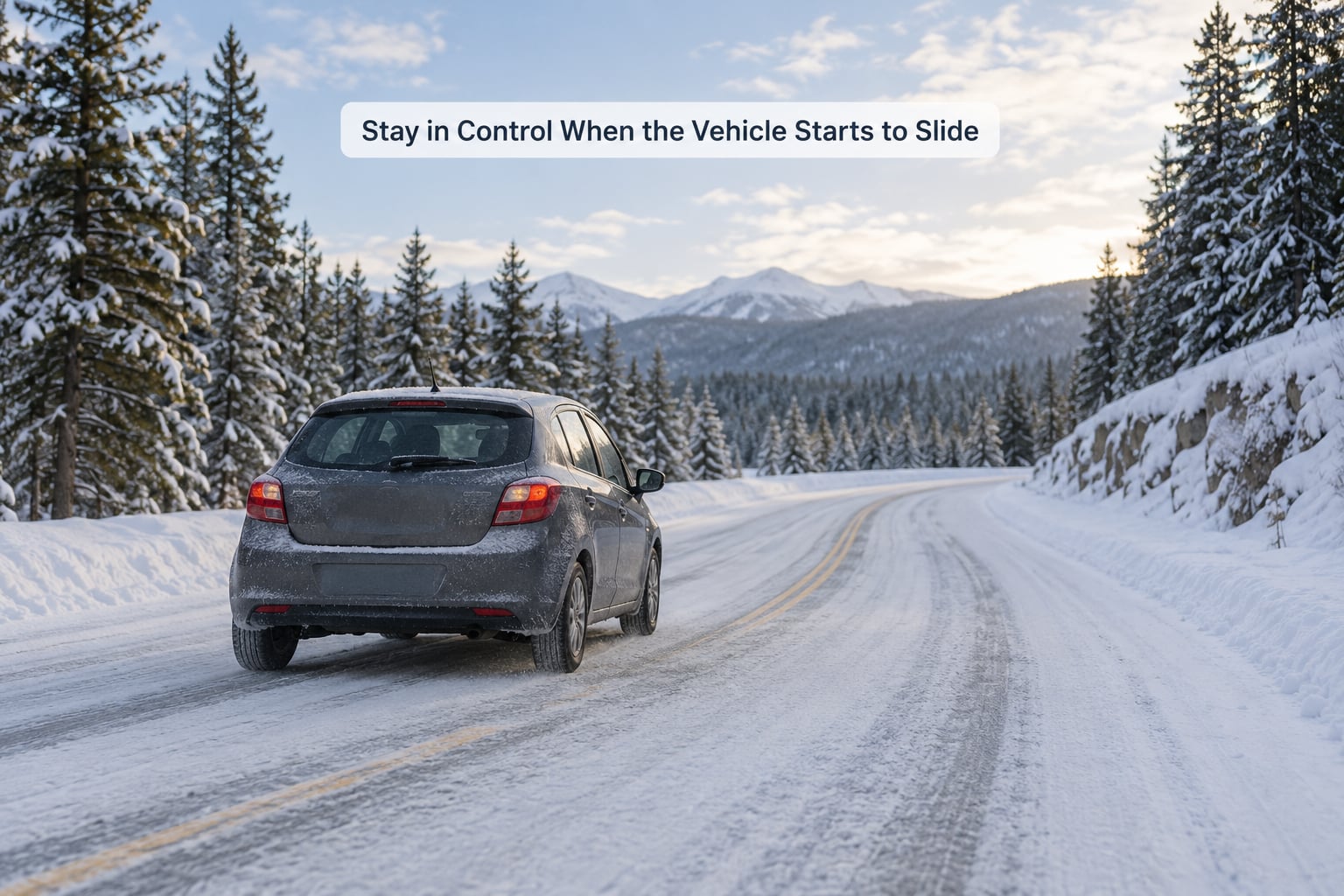
When the car slides, lift off the accelerator and steer where you want the car to go. Do not brake hard and do not turn away from the direction of the slide.
Two different things can happen. In oversteer, the rear end swings out and the car fishtails; steer into the skid to catch it. In understeer, the front washes out and the car keeps going straight when you turn; ease off the gas slightly and make a small, smooth correction. Both recover the same way, with less force and more patience.
Staying calm matters as much as technique. On r/driving, a newly licensed driver described skiding across two lanes in a few inches of snow, pulling over, and having a panic attack that outlasted the incident for the rest of the day. The slide was survivable; the panic made it worse.
Know When to Stop and Ask for Help
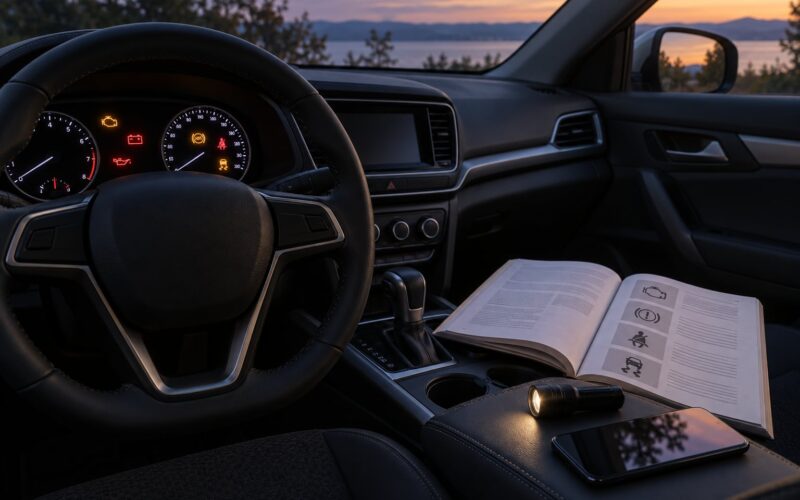
Pull over and stop driving when visibility drops below what you can see the road surface in, when snow starts piling up faster than the plows, or when a warning light comes on. If the car spins twice or loses control more than once, do not keep pushing; get to a safe place and wait for conditions to improve or call for help.
What to Do After Driving in Snow
Once home, clear the car again and check for ice hiding in wheel wells and behind the bumpers. Tap the brakes gently at walking pace to dry them off, and inspect the tires and underbody if you hit a deep drift.
Common Mistakes and How to Fix Them
Almost every first-snow accident traces back to one of seven habits. Each has a simple correction.
Stomping the brake. It locks the tires and removes steering. Tap it repeatedly instead, or hold firmly if the car has ABS.
Turning the wheel sharply. Sharp steering input breaks the front tires loose. Use small, overlapping adjustments and keep the wheel still through a turn.
Following too closely. Double your usual gap and then add more, because stopping distance on ice can be ten times longer.
Using cruise control. It holds your speed when you need to back off. Cancel it before you reach a slippery stretch.
Speeding up to match traffic. Frustrated drivers behind you are a pressure, not a reason to accelerate. Signal early, keep your line straight, and let them pass.
Leaving snow on the car. Roof snow, a frosted rear window, and ice around the lights all create hazards. Clear them every time, before you move.
Using high beams in falling snow. The light reflects straight back at you and hides the road edge. Use low beams instead.
Two more that catch beginners out: driving through a snowdrift, and passing a snowplow on the right, where the plow can throw material straight into your windshield.
Safety Tips for Your First Snowy Drive
Practice on an empty parking lot first. At walking pace, test how quickly the car stops, how it feels to turn gently, and how much room a lane change needs. Delivery drivers, who are the most confident voices on this, put it plainly: slow is smooth, smooth is fast, and stop stabbing at the gas and brakes.
Drive in daylight where you can, and leave early so you are not chasing traffic on unplowed streets. An automatic is easier for a nervous beginner because there is no clutch to think about; a manual is fine if you know it, using a low gear for hills and starts.
Keep at least half a tank of gas, since getting stuck burns fuel and a half tank is much cheaper than a tow. Check local driving guidance before you leave, since snow emergency routes and local traction laws differ by state.
Finally, remember what drivers on r/drivinganxiety say: give yourself buffer time, go when roads are empty so nobody is behind you, and drive at a pace that still feels manageable. Confidence comes from repetition, not from pushing through a bad first hour.
Frequently Asked Questions
How slowly should I drive when it first starts snowing?
When snow first starts, drop your speed by about 5 to 10 mph below the speed limit and double your following distance to 8 seconds or more. Fresh snow looks grippier than it is until cars pack it into a smooth glaze. Stay under the limit rather than matching it, and let the conditions set the pace.
Do I need winter tires to drive safely in snow?
They help a great deal, but they are not a permit to drive fast. Winter tires with the 3 Peak Mountain Snowflake marking keep a softer compound in cold weather and add grip compared with all-season tires. If you are on all-season tires, drive slower, leave more space, and brake earlier.
Should I use cruise control on snowy roads?
No. Cruise control holds a set speed, which is exactly what you do not want when the surface changes or you need to back off. Cancel it before entering snow or ice, and drive the whole trip manually, with gentle pressure on the accelerator and brake.
How do I stop a car from skidding on ice?
You often cannot prevent the first skid, but you can control the outcome. Ease off the accelerator, keep the wheel pointed where you want the car to go, and avoid hard braking. If the rear steps out, steer into it; if the front washes out, release a little gas and make a small smooth correction.
Is an automatic transmission easier for a first-time snow driver?
Usually, yes. One less pedal means your attention stays on the road instead of the clutch. Put the transmission in manual mode and select a low gear for hill starts and downhill stretches, and always come to a full stop before shifting between drive and reverse.
Should I drive in a snowstorm if I have an emergency?
Only if it is genuinely necessary, and then slowly. Check state DOT alerts first and avoid unplowed secondary roads and bridges, which freeze first. Leave extra time, tell someone your route, and keep a winter kit in the car. If visibility drops so you cannot see the road edge, pull over and wait.
Conclusion
Your first action is not touching the gas pedal. Check the forecast and road alerts, then clear every window, light, mirror, and the roof off the car before you start it. Once you are out, drive to a quiet stretch of road, test your brakes at walking pace in an empty lot, and only then join traffic.
Everything after that is repetition: 8 to 10 seconds of gap, gradual inputs, a low gear on hills, and steering into any slide. Drivers who practice that sequence a few times in bad conditions stop being afraid of snow, and that confidence is what turns a stressful first drive into an ordinary one.