When a tornado warning is issued for your area, go to a basement, storm cellar or safe room if you have one. If you do not, move to a small interior room on the lowest floor with no windows, far from exterior walls. Stay there until the warning is lifted or expires. Lead time is usually 10 to 14 minutes, so decide where you will shelter before the alert, not during it.
I have sat through enough spring severe-weather seasons in the Midwest to know where the hesitation happens. People do not ignore warnings because they are careless. They hesitate because nobody ever told them what “somewhere safer” actually looks like in a house with no basement, on the fourth floor of an apartment, or in a car on the highway.
This guide is the National Weather Service guidance put into the order it needs to happen in, plus the situations that trip people up most often.
Table of Contents
- What You Need Before the Alert Sounds
- At least two ways to receive official alerts
- A warning device you can hear at night
- A shelter spot picked in advance
- A go bag within reach
- A plan for people who need help
- Step-by-Step: What to Do When a Tornado Warning Is Issued
- 1. Confirm the alert and check whether it covers you
- 2. What to do when a tornado warning is issued inside: move to shelter
- 3. Protect people, pets and essential supplies
- 4. Stay away from windows and exterior doors
- 5. Keep monitoring official updates while sheltered
- 6. Wait for the all-clear before leaving shelter
- Common Mistakes That Turn Survivable Into Dangerous
- Standing outside to watch the storm
- Opening windows to equalize pressure
- Driving toward the funnel or trying to outrun it
- Sheltering in the wrong room
- Treating the warning as a false alarm because nothing happened last time
- Leaving shelter the moment the storm passes
- The bathtub myth
- Wearing sandals or going barefoot
- Frequently Asked Questions
- Is a tornado warning different from a tornado watch?
- What should I do if I am in a car when a tornado warning is issued?
- Where should I take shelter if I live in an apartment or a house without a basement?
- Should I open windows during a tornado?
- What should I do if I am outside when a tornado warning is issued?
- How do I know when it is safe to leave tornado shelter?
- Conclusion
What You Need Before the Alert Sounds
Almost everything that matters during a tornado warning was decided weeks earlier. The alert itself should only be the moment you act, not the moment you start thinking.
At least two ways to receive official alerts
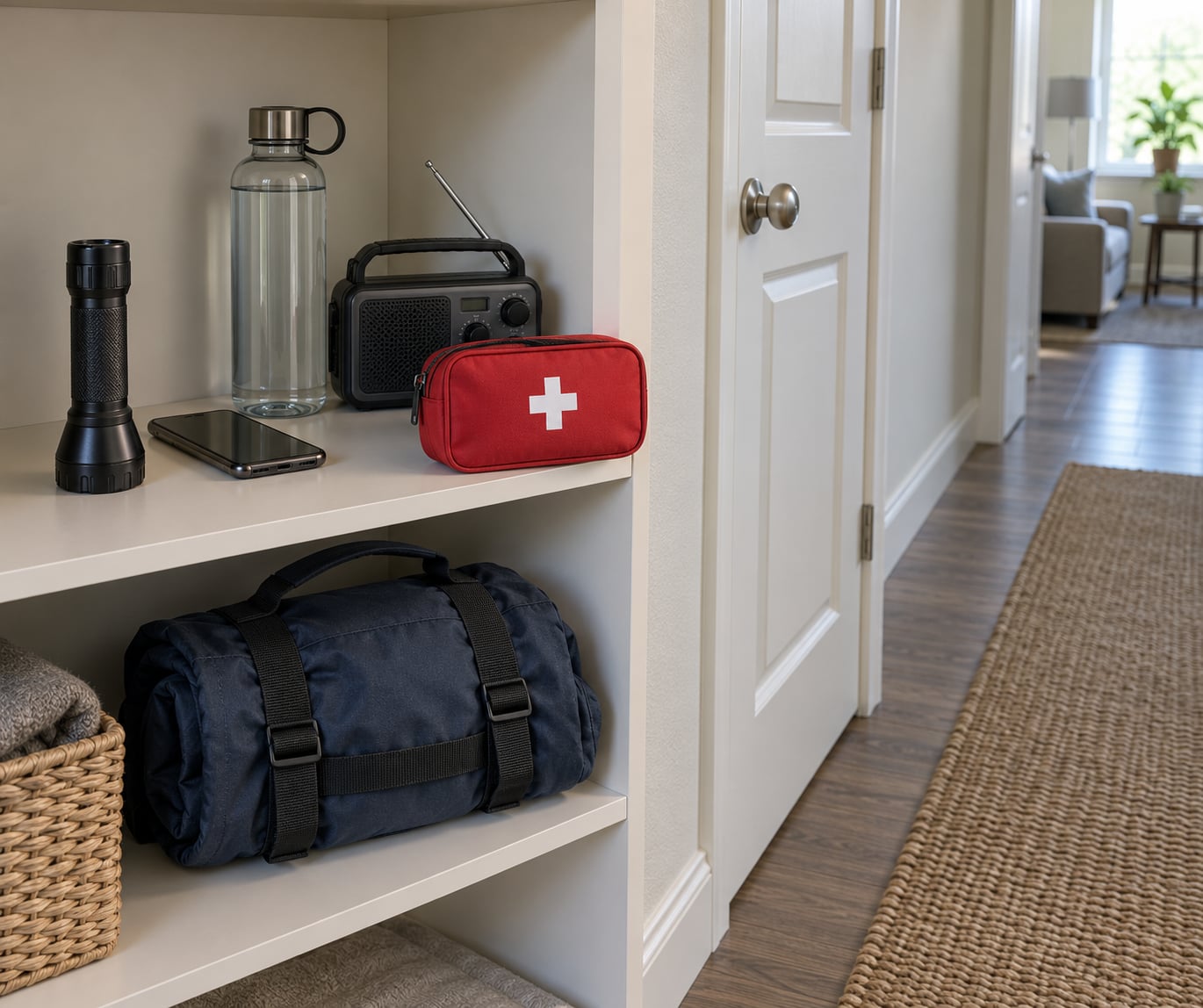
Wireless Emergency Alerts push severe-weather messages straight to your phone if carrier Wireless Emergency Alerts are turned on. They are free and they cover tornado warnings in most US counties. Add a NOAA Weather Radio with a battery backup as your second channel, because towers and power go down exactly when you need information most.
A warning device you can hear at night
When the bedroom is at the back of a house, a phone on silent in the kitchen will not wake anyone. A bedside receiver with a loud alarm or a vibrating unit for hard-of-hearing sleepers solves a problem people usually discover at 3 a.m. Outdoor sirens are a supplement, not a replacement, and many are designed to carry roughly a mile.
A shelter spot picked in advance
Walk the house and decide today. Basement, storm cellar or an interior safe room wins. If there is no basement, choose the lowest-floor interior room with no exterior walls and no windows, ideally a walk-in closet, bathroom or interior storage room. Avoid rooms with a wide-span ceiling such as living rooms, sunrooms and open-plan lofts.
A go bag within reach
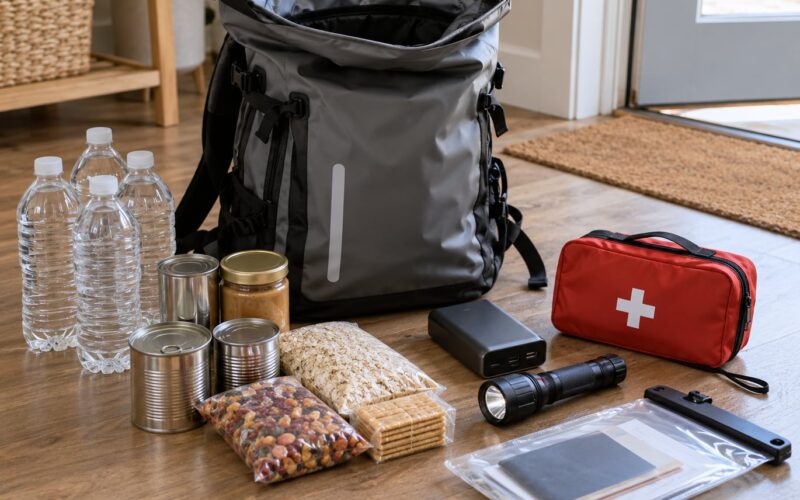
Keep one bag per person and pack it so you can carry it with one arm. Include sturdy shoes, medications, a flashlight, spare batteries, a small first aid kit, copies of identification and insurance documents, water, snacks, and a charged power bank. In a warning you may be sheltering for 30 minutes or closer to two hours.
A plan for people who need help
Infants, older adults, pregnant people, anyone with a mobility limit and pets all change the timeline. Decide now whether you carry the baby carrier or move the car seat, where the inhaler or oxygen concentrator lives, and whether your dog answers a recall. If the person you help cannot move quickly, shelter earlier rather than at the moment you hear the tone.
Step-by-Step: What to Do When a Tornado Warning Is Issued
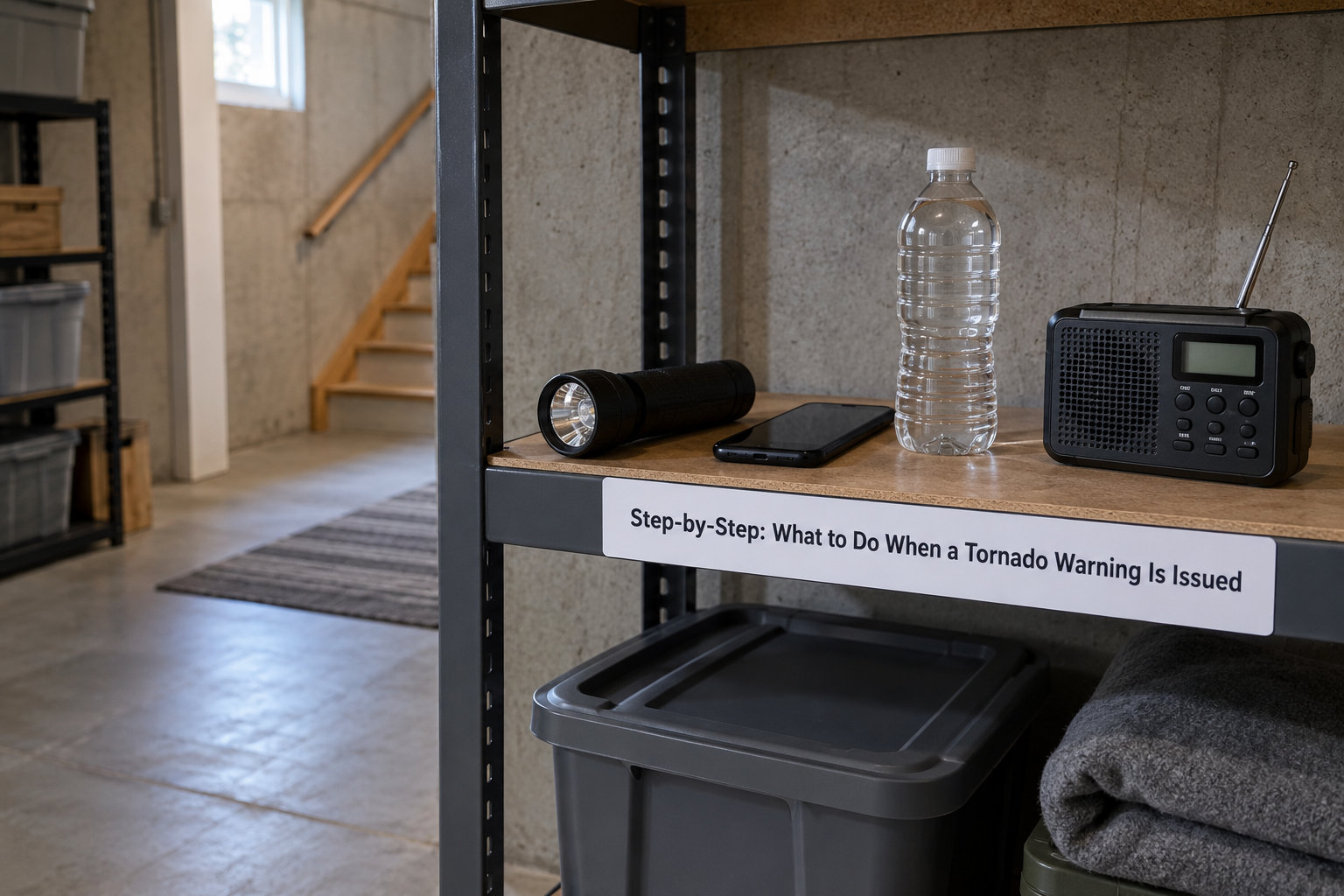
Six steps, in this order. If you only have time for one thing, it is step two.
1. Confirm the alert and check whether it covers you
Open the alert that fired. Look for the warning polygon, the shaded area on the map, because that is the geographic area at risk, not the entire county or state named in the headline text. Warnings last about 10 to 15 minutes and are sometimes reissued repeatedly as the storm moves.
Take the alert from a NOAA Weather Radio broadcast, a Wireless Emergency Alert, local television, or a National Weather Service office directly. Do not wait for a reply on a text thread or for the app to load before moving. Verification takes seconds, and being wrong about a false alarm costs you nothing a shelter trip does not.
2. What to do when a tornado warning is issued inside: move to shelter
Go down, go small, and get behind more walls. A basement under an interior room is the best spot most homes offer. A reinforced safe room or a storm shelter built of concrete, brick or block with a heavy floor or roof is even better.
In a house with no basement, head for the lowest interior room with no windows and no exterior wall, such as an interior hallway closet, bathroom, or pantry. Pull a chair over it if the room has no solid table. Cover your head and neck with your hands, a blanket, a mattress or a helmet, and put on sturdy shoes. Flying debris is what kills most people, and it injures heads, hands and feet.
In an apartment or condo with no basement, you are not out of options. Use a ground-floor or lowest-floor interior room if the building has one. Otherwise go to an interior hallway, closet or bathroom on the lowest floor you can reach quickly, away from exterior walls and windows, and shelter in place. Leaving the building for a car is one of the worst choices available.
In a mobile or manufactured home, do not stay. These structures are the least safe place in a tornado and home insurance often reflects that. Leave early and drive to a sturdy permanent building, a designated community shelter or a low-lying area nearby. If you cannot leave in time, get as far from windows and exterior walls as possible and cover your head.
3. Protect people, pets and essential supplies
Pick up children and pets on the way through, not after you have settled. Load the dog into a carrier if you have one. Grab the go bag, the medication and the phone in a single sweep.
Do not spend the first minute of a warning filling bathtubs or hunting for documents. Later is fine for everything except shelter, shoes, phone, medication, infant supplies and an infant or pet already in the house.
4. Stay away from windows and exterior doors
Do not stand at a window to watch, do not step onto a porch or patio and do not open an exterior door to look at the sky. Glass breaks inward, siding and roofing peel off, and exterior walls are the first structure to fail. Sit in the middle of the room with your back to a wall and as much concrete, drywall and floor between you and the outside as possible.
5. Keep monitoring official updates while sheltered
Turn on Wireless Emergency Alerts and keep the battery weather radio on. Local television and radio usually carry the expiration notice and the next update time. Keep your phone on for text and WEA alerts rather than streaming video, which drains the battery fast.
Once the power drops, expect a longer wait, so switch to battery and conserve. Charge power banks ahead of storm season and keep a car charger in the go bag. Do not go outside to check the damage until the warning has ended.
6. Wait for the all-clear before leaving shelter
Do not leave when you hear thunder fade or when the siren stops, because the sirens are designed to be heard past the storm itself and warning polygons are drawn ahead of the projected track. The warning can end while a second rotation is still on the way, and one storm system often produces several rounds across a single evening.
Stay sheltered until the warning expires or is cancelled, and use your radio to hear the expiration time. When you do come out, watch for downed power lines, gas leaks, broken glass, unstable structures and unstable roofs, and keep people clear of any building with structural damage. Check on neighbors, especially older adults living alone, and photograph damage before you clean it up for your insurer.
Common Mistakes That Turn Survivable Into Dangerous
Most tornado injuries come from choices made in the first few minutes, and nearly all of those choices come from one of these habits.
Standing outside to watch the storm
People drive past or step onto the porch because the sky looks dramatic. Funnel clouds can form quickly, and the storm may be between you and the nearest building. Get inside before conditions look interesting, not once they do.
Opening windows to equalize pressure
This is old advice and it is wrong. Opening windows does not protect the house and it wastes minutes you could have spent sheltering. Shut windows and doors only if you are passing them anyway, then move on.
Driving toward the funnel or trying to outrun it
A car is a far worse shelter than a building. Do not drive toward a tornado, and do not plan to race to a hotel. Highway overpasses are not safe: overpasses have no structural protection, they trap debris in the converging flow, and stopping on one puts you in a queue with nowhere to go.
If you are in a car when the warning is issued, keep driving away from the storm if a clear route exists and do not stop under a bridge. If the vehicle is rolling or hail is coming down, stay belted, get below window level, cover your head and hold on. Leave the car for a low-lying ditch or low spot only if one is within a few steps.
Sheltering in the wrong room
Mobile homes, manufactured homes, sheds, carports, tents, storage units, box trucks and open parking structures offer almost no protection. Large rooms with flat, wide-span roofs are a poor choice too, which rules out auditoriums, cafeterias, gymnasiums and most open-plan living rooms. A room with a few exterior walls and no window beats all of them.
Treating the warning as a false alarm because nothing happened last time
This is the mistake I hear about most. Warning lead time is short, the warning polygon is deliberately larger than the actual track, and forecasters would rather draw a large box than miss an edge. Yes, most warnings do not bring a tornado to your exact address. A warning polygon that includes twenty square miles of houses you will never see damage is a forecaster protecting everyone inside it.
Ignoring a warning because the last three passed quietly is exactly the pattern that turns a survivable event into a fatal one, and it is how warning fatigue turns into a real injury. Residents in places such as Michigan, Iowa and Chicago describe getting multiple texts, calls, emails and sirens for storms that never reached them, and then mentally switching off when a genuine one arrives.
Leaving shelter the moment the storm passes
The first rotation is rarely the last. Wait for the expiration notice, because the second wave is the one people get hurt by.
The bathtub myth
Get into the bathtub and fill it with water? No. Bathtubs are typically next to an exterior wall with a window. Shelter in the interior room instead and let emergency crews handle water and utilities after the storm.
Wearing sandals or going barefoot
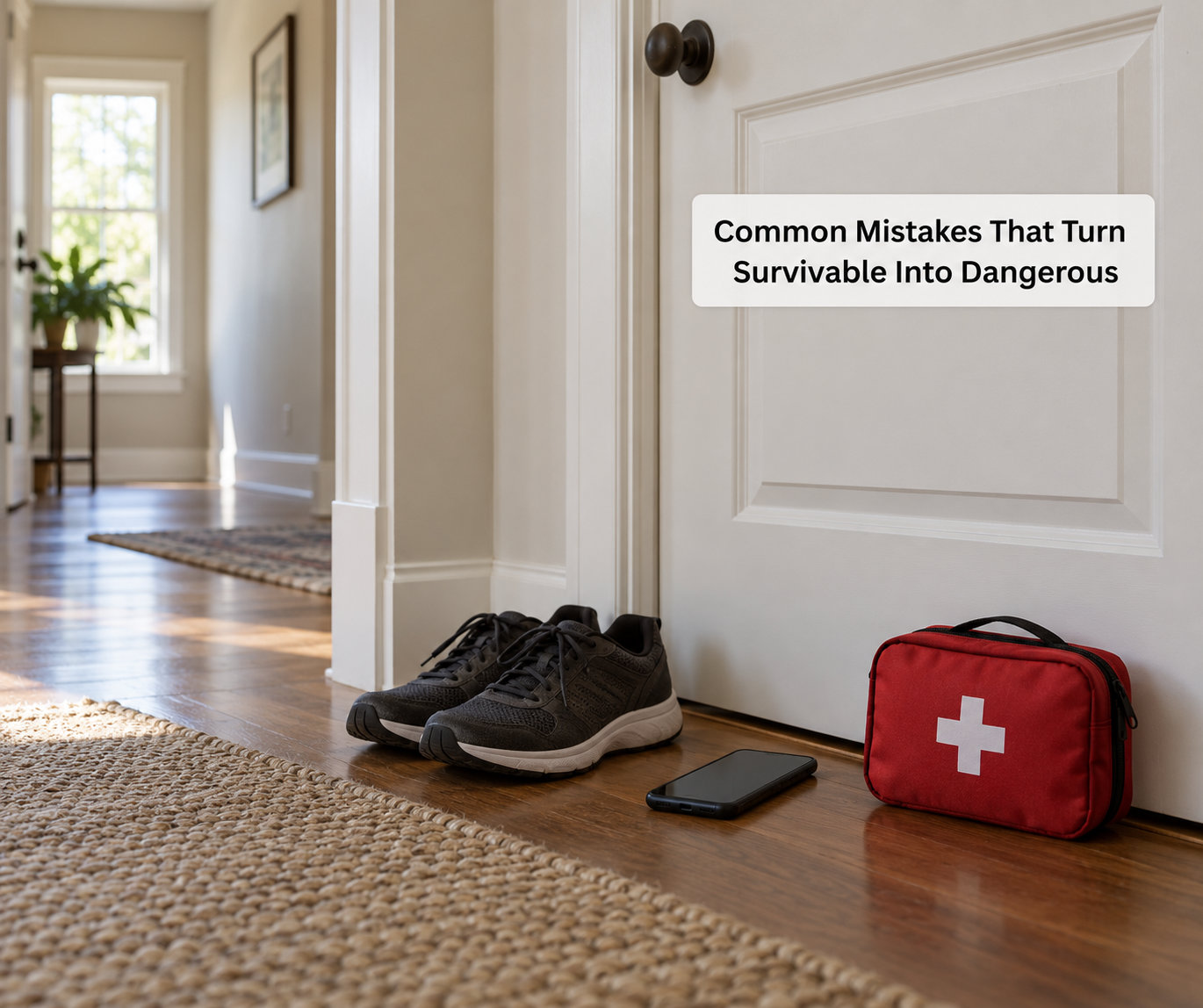
Broken glass, nails and splintered wood are everywhere after a tornado. Shoes on your feet, not by the door, is one of the cheapest safety improvements you can make.
Frequently Asked Questions
Is a tornado warning different from a tornado watch?
A tornado watch means conditions favor tornadoes across a broad area and that is when warnings can be issued. A tornado warning is issued for a smaller polygon when a tornado has been sighted or detected on radar, and it means take shelter now. Warnings typically run 10 to 15 minutes. A tornado emergency is the rarest and most serious level, issued when a confirmed tornado is moving toward a populated area with little or no time to act.
What should I do if I am in a car when a tornado warning is issued?
A car is not safe shelter. If you can keep driving away from the storm along a clear route, do so. Never stop under a highway overpass, since debris can funnel around and above it and there is no structure to protect you. If hail or wind is already hitting, stay belted, move below window level, cover your head and hold on. Leave the vehicle for a low spot only if one is immediately within reach.
Where should I take shelter if I live in an apartment or a house without a basement?
Use a small interior room on the lowest floor you can reach quickly, with no windows and no exterior wall, such as a bathroom, interior closet or hallway. Avoid sunrooms, living rooms with wide-span ceilings and any room with a large window. Shelter in place rather than going down to your car or leaving the building, since a car gives almost no protection. Keep shoes, phone, medication and a flashlight with you.
Should I open windows during a tornado?
No. Opening windows does not protect your home and it costs you time you should be spending getting to shelter. Many homes lose windows anyway, and an open window makes it easier for wind and debris inside. The same goes for standing at a window to watch or stepping onto a porch. Close anything on your way to your shelter room if it costs seconds, then get to the center of the building.
What should I do if I am outside when a tornado warning is issued?
Get to the nearest sturdy permanent building and put as many walls between you and the outside as the building allows, on the lowest floor with no windows. If no building is within a few minutes of walking, lie flat in the nearest low-lying area such as a ditch or ravine, cover your head with your hands, and stay there until the storm passes. Do not take shelter under trees, near cars or in a tent.
How do I know when it is safe to leave tornado shelter?
Stay inside until the warning expires or is cancelled, confirmed on your NOAA Weather Radio, television or Wireless Emergency Alert. Thunder fading or sirens going quiet is not a signal, since sirens carry past the storm and warnings end on a schedule rather than when danger passes. A single storm system often produces several rounds, so expect to wait for an expiration notice before leaving shelter and treating the second wave as the real one.
Conclusion
If you take one thing from this guide, take this: treat every tornado warning as real, get to the lowest small interior room you can reach, get behind more walls than you think you need, and stay there until the warning expires. Decide the shelter spot, the alert channels and the go bag today, because the ten minutes you get are not enough to think.
Guidance here follows the National Weather Service, NOAA, FEMA Ready.gov and OSHA recommendations for tornado safety. Check weather.gov and ready.gov for current alerts and an emergency kit checklist.