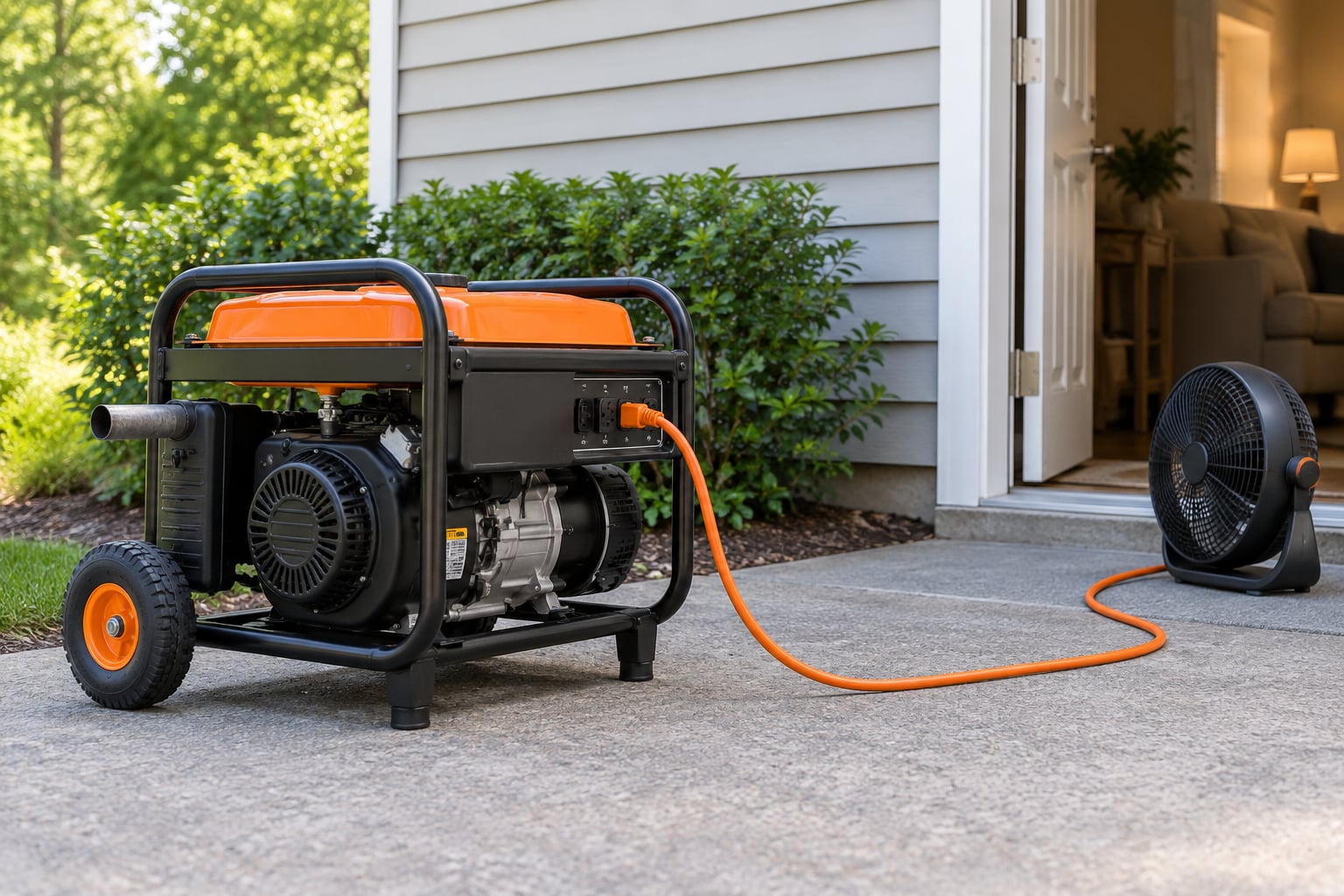
Run a generator outdoors only, at least 20 feet from your house, with the exhaust pointing away from doors, windows and vents, and with working battery-operated carbon monoxide alarms on every level. Never connect it to a wall outlet. The Consumer Product Safety Commission reports nearly 100 deaths a year from generator-related carbon monoxide poisoning, and roughly 765 non-fire CO deaths between 2009 and 2019, about 40% of all consumer-product CO deaths.
Most of those deaths trace back to a handful of avoidable decisions: running the unit in a garage, backfeeding the house through an outlet, or connecting too much to it at once. None of those mistakes need any skill to avoid, they just need a clear sequence and a few items on hand before the lights go out.
This guide walks through that sequence in order: what to gather, how to place the unit, how to start and warm it up, how to connect loads without overloading, and how to shut down and store it. Model instructions always win over anything written here. If your manual and this guide disagree, follow the manual, the rated output on the label, and your local rules.
Table of Contents
- What You Need
- How to Use a Generator Safely at Home: Step-by-Step
- 1. Read the Manual and Check the Generator
- 2. Prepare a Safe Outdoor Operating Area
- 3. Add the Correct Fuel and Check Connections
- 4. Start the Generator and Let It Stabilize
- 5. Connect Appliances Without Overloading
- 6. Monitor the Generator During the Outage
- 7. Shut Down, Cool, Refuel, and Store Correctly
- Common Mistakes
- Common Mistakes and Quick Safety Tips
- Frequently Asked Questions
- Can I run a generator in my garage, even if the door is open?
- How far should a portable generator be placed from my house?
- How long can a portable generator run continuously at home?
- Can I safely power a refrigerator with a portable generator?
- What should I do if generator fuel spills or a CO alarm sounds?
- Final Safety Checklist
What You Need
Gather everything before the outage, not during it. Reaching for a cord in the dark while the engine runs is how people make avoidable mistakes.
- The generator and its manual. The manual tells you the approved fuel, rated and surge output, oil type, altitude limit and start procedure. If the manual is missing, find the model number and get the manufacturer’s version.
- Approved fuel in an approved container. Most portable units run on fresh gasoline from the manual’s stated octane range. Never use stale fuel, kerosene, or a mix.
- Weather-resistant extension cords. Outdoor-rated, three-pronged, and heavy gauge for the run length. Household indoor cords are not acceptable.
- GFCI protection. Either cords with a built-in GFCI plug or a GFCI-protected receptacle. Ground fault protection matters most outdoors and in wet weather.
- Working battery-operated carbon monoxide alarms. One on every level of the home, plus one near sleeping areas. Battery-operated or battery backup, never mains-only.
- An approved fire extinguisher. A dry chemical type rated for electrical and fuel fires, within reach of the operating area but outside the machine’s clearance.
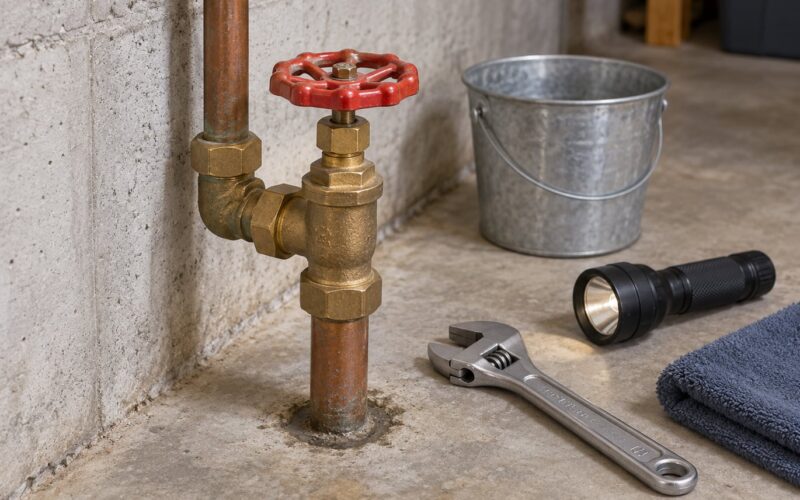
- A flashlight and basic tools. A wrench for the fuel cap on some models, a screwdriver set, and pliers.
Add a fuel stabilizer and a battery maintainer if the unit sits unused between storms. Prepping the generator a week before a hurricane is far better than prepping it during one.
How to Use a Generator Safely at Home: Step-by-Step
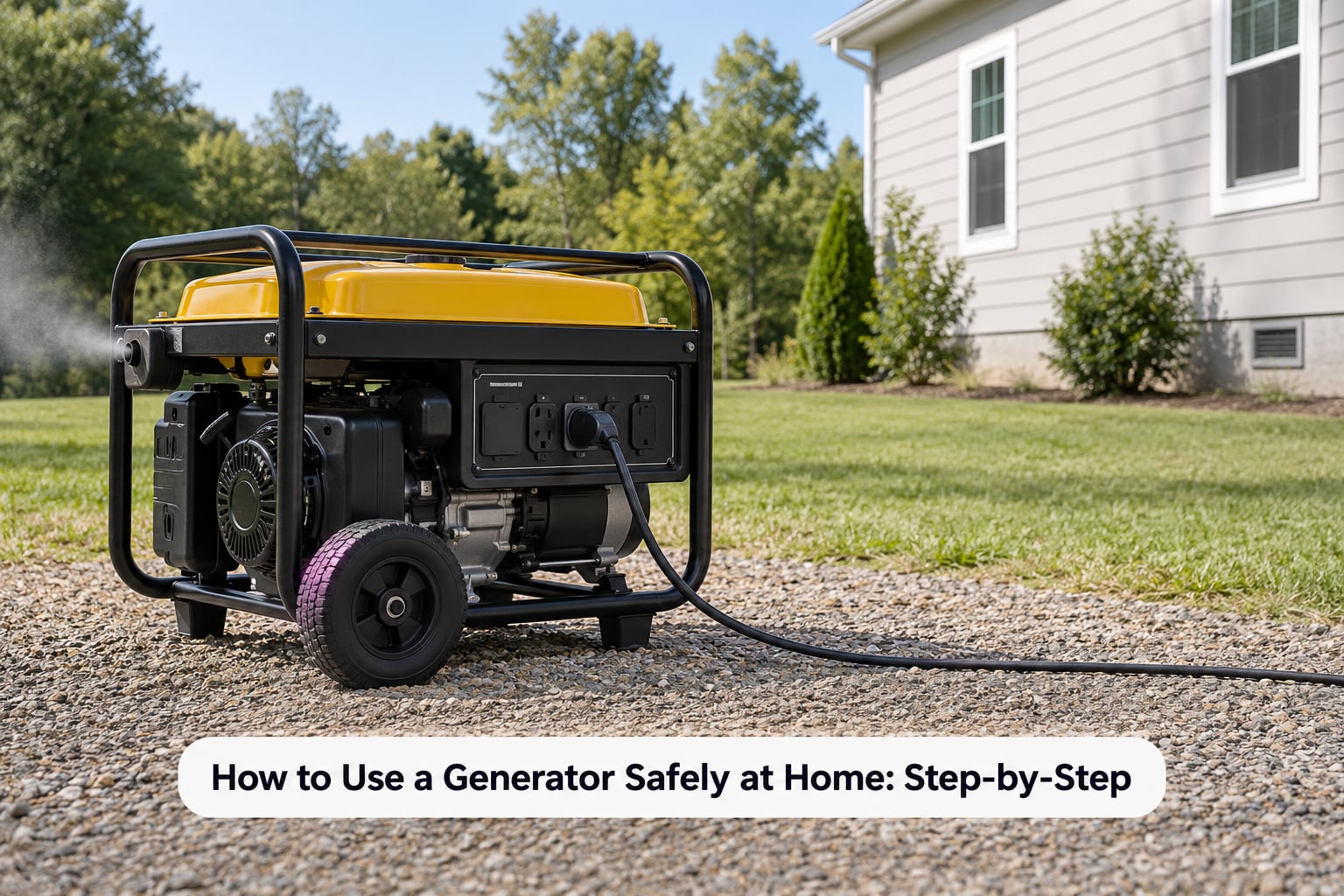
A safe sequence runs in seven stages: inspect, place, fuel, start, connect, monitor, shut down. Skip a stage and the next one gets harder. Your manual, local fire codes and the unit’s rated output take priority over anything here, and one point deserves emphasis up front: a portable generator powers approved outdoor equipment directly. It does not power your house through household wiring or a wall outlet. Connecting the house properly requires a transfer switch or a breaker interlock installed by a licensed electrician.
1. Read the Manual and Check the Generator
Identify the generator type, its fuel system, and its rated and surge output before you start anything. The manual also lists approved fuels, the oil specification, the maximum operating altitude and any model-specific warnings. Running a unit above its rated altitude, or on fuel the manual excludes, can cause damage no safety step can undo.
Then inspect the machine. Check the frame for cracks, the control panel and switches for movement, the fuel cap for a tight seal, the air filter for debris, and the exhaust for obstructions or a blocked rain flap. Look at the cords and outlets for cuts, exposed wire or heat damage, and confirm the ground pin is present on every plug. A fresh unit still deserves this walk-around.
2. Prepare a Safe Outdoor Operating Area
Set the unit on level, dry ground outside, following the distance the manual prescribes. Twenty feet from the dwelling is the widely cited minimum, and some authorities and manuals call for more. Count the distance to the nearest door, window, vent, gable end, eaves, grill or combustible material, not to your property line.
Point the exhaust away from the building, away from neighbours and away from where people are working. Airflow matters in both directions: keep the intake side clear too, since a restricted inlet starves the engine and can make it run rough. Never run a generator in a house, garage, basement, shed, crawl space, enclosed porch or under a deck. Opening a door or window does not turn an enclosed space into a safe one.
Weather protection has a narrow line. An operating generator exposed to rain needs a purpose-made running cover, ideally NFPA-rated, that stays open at the intake and exhaust. A tarp, a tent or a homemade plywood box is a different thing entirely: any of those can trap exhaust back toward the operator.
3. Add the Correct Fuel and Check Connections
Refuel a cold generator. Shut the engine off, move the unit away from any ignition source, and use an approved container with the fuel your manual specifies. Add the fuel without spilling, wipe away any drips on the frame or ground, and secure the cap. If your manual calls for a pre-start fuel check, do it: open the fuel valve and confirm flow before cranking.
Stored gasoline goes bad, and it will not tell you. Treat fuel older than about 30 days as stale and add stabilizer to anything you plan to store. A simple habit from prepper forums is to tape over the fuel cap and write the purchase date on it, so you know at a glance what is in the tank. Empty and dispose of fuel the manual calls for once the tank has sat unused through a full season.
A 20/20 rule circulates as shorthand for this: treat fuel as good for about 20 days without stabilizer and about 20 weeks with the right amount added, then swap it out. Treat those as practical planning figures rather than a guarantee. Check the manufacturer’s storage directions, since they govern what your unit needs.
4. Start the Generator and Let It Stabilize
The startup sequence is generic: open the fuel valve, set the choke if the manual calls for it, set the controls to their start positions, then pull the recoil starter or press the electric start button. Move the choke back to running position as the engine catches, and back off the throttle or let the automatic speed governor settle. Follow the indicator lights and any oil-pressure warning.
Then leave it running with nothing plugged in for about five minutes. Voltage and frequency have to stabilise before a load sees them, and connecting appliances early is a common route to fried electronics. How to use a generator safely at home starts with that patience. If it runs rough, smells of fuel, or hunts in speed, switch off and find the cause rather than pushing through.
5. Connect Appliances Without Overloading
Add up running watts and startup watts, not just one of them. Motors such as refrigerators, freezers, water pumps and shop tools draw a large surge for the first second or two, and that surge is what trips a breaker. Then apply the 80% continuous-load rule: on a branch circuit or the generator’s continuous rating, keep the steady load at or below 80% of the rating. A 7,500-watt unit is comfortable at roughly 6,000 watts of steady running load.
Connect one appliance at a time, largest surge first, and turn appliances on in sequence rather than all at once. Watch which appliances you should keep unplugged: space heaters, electric furnaces, large motors, welders, and anything with a heating element that draws heavily. Even a modest heater can take a small generator’s entire budget.
Cord length and gauge are the pair people get wrong. A cord that is too thin for the distance heats up, melts its insulation, and starts a fire behind the wall where nobody is looking.
| Cord gauge | Maximum run length | Typical use |
|---|---|---|
| 12 AWG | 25 feet | One medium appliance near the unit |
| 10 AWG | 50 feet | Several small loads at mid-distance |
| 8 AWG | 100 feet | Heavier loads or a long reach toward a transfer switch |
Match the cord’s amperage rating to the load, never the other way round. Never run a cord through a door or window opening; the pinching at the frame damages the insulation and brings the cord right into the house. Keep cords out of standing water and off wet ground. Do not connect the house through any wall outlet. That backfeeding arrangement, sometimes called a suicide cord or widowmaker cord, energises the utility’s lines, can defeat the main breaker, and kills utility lineworkers who believe a line is dead. Electricity reaches the house only through a licensed-electrician-installed transfer switch or breaker interlock, and the utility should be notified before a transfer switch goes in.
6. Monitor the Generator During the Outage
Watch the unit while it runs rather than treating it as set-and-forget. Listen for a change in engine note, feel for abnormal vibration, and look for fuel on the ground, smoke from the exhaust, hot outlets or scorched plug faces. Note any cord that has gone warm near a plug, and check CO alarms on each level. Keep up with the weather too, since a change in wind direction can move exhaust toward the house.
Shut down immediately if fuel spills, if you smell fuel, if the generator behaves abnormally, or if a CO alarm sounds indoors. Move everyone outdoors to fresh air and call emergency services from there. Headache, dizziness, nausea, confusion and weakness are CO symptoms, and CO has no smell and no colour, so the absence of an odour means nothing.
7. Shut Down, Cool, Refuel, and Store Correctly
Shut down in order. Disconnect the loads, turn off the connected appliances, run the generator briefly with no load if the manual directs it, move controls to off, close the fuel valve, and let it cool. Never turn off the engine while a load is still connected, because the sudden loss of speed can spike voltage.
Once the engine and exhaust are cool, refill if you have fuel, wipe spills and cap the tank. Do not leave fuel inside the machine with the cap off, and store the container away from ignition sources, heat and children. Run the unit monthly with a fresh fuel mix even when you do not need power; that is what keeps the carburetor, oil and starter in working order. Disconnect or maintain the 12V starter battery between uses, since a stored generator with a flat battery will not start when the grid comes back on.
Store it dry and covered, off the floor, away from moisture and dust. Before you put it away for the season, run a load on it briefly to confirm the output is stable.
Common Mistakes
Each of these has a direct fix, and most appear in the checklists published by fire departments and by OPEI and PGMA’s Take It Outside campaign.
- Running it indoors or in an open garage. An open door does not make a garage safe. Fix: outdoors only, at the prescribed distance, every time.
- Running it in an enclosed porch, shed, basement, crawl space or under a deck. Fix: treat any partially enclosed space as inside.
- Pointing the exhaust at a door or window. Fix: rotate the unit so exhaust travels away from the building and from people.
- Powering the house through a wall outlet. Fix: a licensed electrician installs a transfer switch or breaker interlock.
- Overloading with heating appliances. Fix: keep the steady load at or under 80% and leave space heaters and electric furnaces unplugged.
- Using indoor or thin extension cords. Fix: outdoor-rated three-prong cord, gauge matched to run length, no cord under a door or window.
- Operating in rain with no protection. Fix: an NFPA-rated running cover that keeps intake and exhaust open, never a tarp or a homemade box.
- Refuelling while hot or running. Fix: engine off, engine cool, approved container, wipe spills, cap secure.
- Connecting appliances before the unit stabilises. Fix: about five minutes at no load before the first plug goes in.
- Ignoring the CO alarms. Fix: one alarm per level, near sleeping areas, tested monthly, fresh batteries.
- Storing gasoline for months without stabilizer. Fix: treat fuel past about 30 days as stale, stabilise what you store, date the container.
- Letting the starter battery die. Fix: a battery maintainer, or disconnect the battery when the unit is stored.
- Using a generator with no CO sensor shutoff and assuming it is safe indoors. Fix: UL 2201 or PGMA G300 shutoff is a backup layer, not permission to run inside.
Common Mistakes and Quick Safety Tips
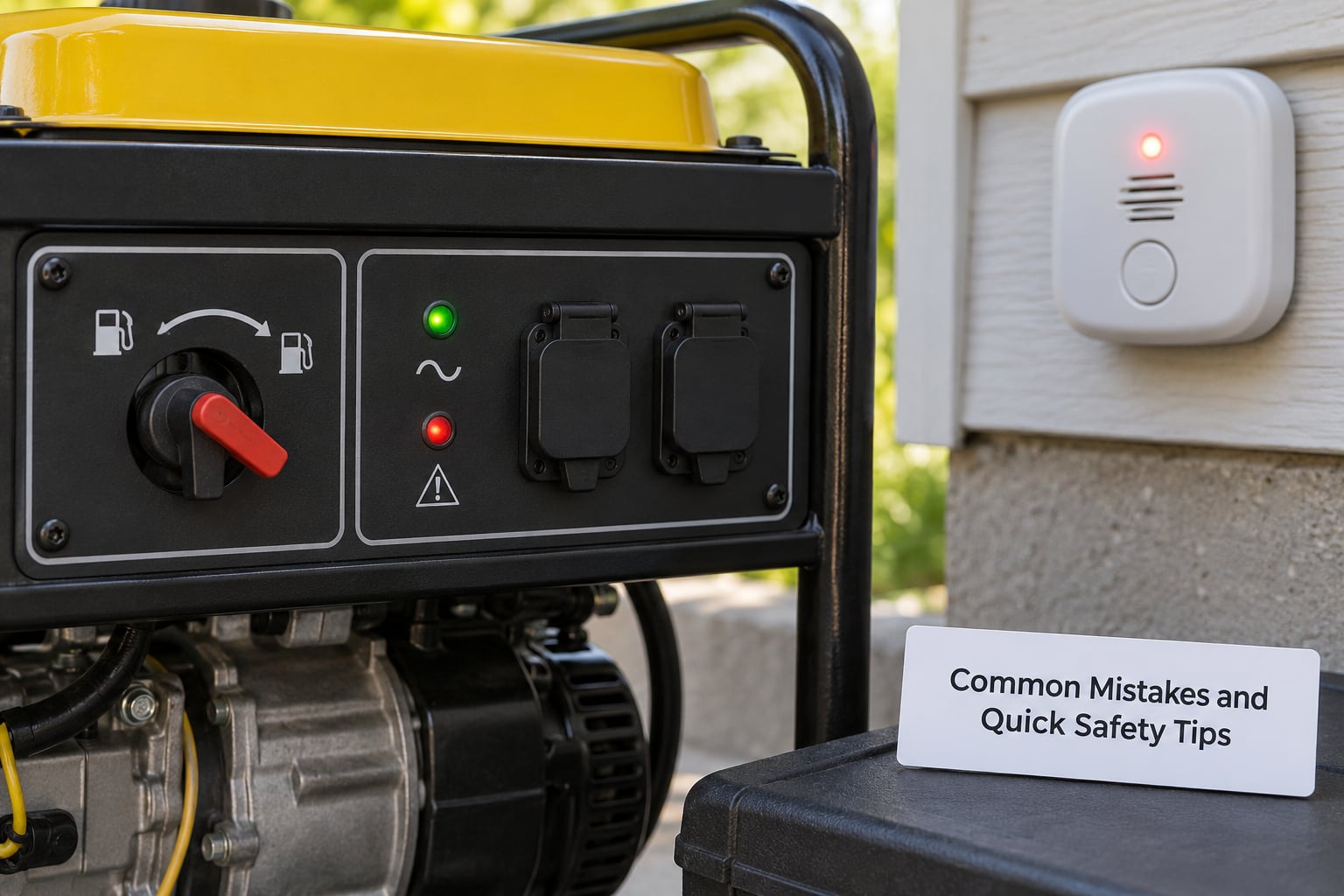
A short list to keep by the generator covers the habits that matter most. These are the same points emergency management offices and the American Red Cross repeat during storm season.
- Install battery-operated CO alarms on every level, with one near sleeping areas, and press the test button once a month.
- Keep an approved fire extinguisher within reach of the operating area but clear of the machine.
- Protect the controls from rain without enclosing the unit, and never wrap the exhaust or intake.
- Store fuel away from ignition sources, in an approved container with the cap tight.
- Stop the generator and get outdoors if anyone reports headache, dizziness, nausea, confusion or weakness.
- Follow the unit’s altitude limit; derating at elevation is a real constraint, not a formality.
- Run the generator monthly with fresh fuel so it starts when you need it.
- Check whether your unit carries UL 2201 or PGMA G300 certification, which includes a CO sensor shutoff.
On weather, honest guides differ, so rely on this: a generator is fine in rain only under an open-sided rated cover, never in lightning, never in flooding water, never in deep snow that blocks ventilation, and not in high wind that can tip or carry debris.
Frequently Asked Questions
Can I run a generator in my garage, even if the door is open?
No. A garage counts as an enclosed space, and an open door does not make it safe. Carbon monoxide can still build up in the garage and spill into the house, where it settles and reaches sleeping areas. Forum accounts of households being found by fire crews after indoor alarms triggered make the risk concrete. Run the unit outdoors instead, at the distance your manual prescribes, with the exhaust aimed away from openings.
How far should a portable generator be placed from my house?
At least 20 feet, and further if your manual says so. Count the distance to the nearest door, window, vent or gable, not to the property line. Wind can carry exhaust toward the building, so give yourself margin and point the exhaust away from the house, from neighbours and from anyone working nearby.
How long can a portable generator run continuously at home?
For as long as your fuel lasts and your manual allows, since many units are rated for extended continuous duty. Check the oil level more often during long runs, keep the fuel valve open, and keep the unit outdoors at the prescribed distance. Refuel only after the engine and exhaust are cool.
Can I safely power a refrigerator with a portable generator?
Yes, and a refrigerator is one of the most sensible loads. It typically draws 100 to 400 running watts with a much larger startup surge, so let the generator run about five minutes with no load first, then start the fridge by itself. Plug it into the generator with a heavy-gauge outdoor cord rather than through an indoor extension cord.
What should I do if generator fuel spills or a CO alarm sounds?
For a fuel spill, shut the engine off, move the unit away from ignition sources, wipe up the spill and ventilate before refuelling. For a sounding CO alarm indoors, stop the generator, get everyone outside to fresh air, and call emergency services from there. Do not re-enter to retrieve belongings. Headache, dizziness, nausea and confusion are symptoms that need urgent attention.
Final Safety Checklist
Before the engine turns over, six things should be true. You have read the manual and know your approved fuel and rated output. The unit is outdoors on level dry ground at the prescribed distance, with the exhaust aimed away from doors, windows and vents. Working CO alarms are installed on every level. Every connection uses outdoor-rated, properly grounded equipment and cords matched to load and length. The connected load stays inside the rated output and the 80% continuous-load limit. And you know how you will shut it down, cool it and refuel it without rushing.
That is how to use a generator safely at home: outdoors, away from openings, alarmed, loaded sensibly, and shut down in the right order. Do those five things and the machine is doing what it was built to do.