
You freeze your credit report by submitting a separate request to Equifax, Experian and TransUnion — online, by phone or by mail — and each bureau gives you a PIN so you can release the file later. Under federal law that has been true since 2018, so the process is free at all three bureaus, and it does not change your credit score at all.
Most people put it off because it feels like paperwork. It is closer to five minutes per bureau. What makes it worth doing is what it blocks: while your file is frozen, a lender who asks for it is refused automatically, which means a thief with your Social Security number cannot open a new credit card or take out a loan in your name.
This guide walks the whole thing, bureau by bureau, plus the parts that get left out: how to confirm the freeze actually landed, what a freeze does not stop, how to thaw temporarily for a mortgage without leaving yourself exposed, and what to do when fraud is already sitting on your report.
Everything here applies to the United States. Rules, PIN systems and identity checks are set federally, but a few states add their own protections, so procedures can vary slightly by where you live.
Table of Contents
- What You Need Before You Start
- How to Freeze Your Credit Report at the Three Bureaus
- What a Credit Freeze Does and Does Not Stop
- Credit Freeze vs. Credit Lock vs. Fraud Alert
- How to Freeze Your Credit Report Step by Step
- Step 1: Gather the Information You Need
- Step 2: Choose the Credit Bureau and Request a Freeze
- Step 3: Verify Your Identity
- Step 4: Select and Confirm the Freeze
- Step 5: Save Proof and Check Your Reports
- Step 6: How to Temporarily Thaw Your Credit
- Step 7: Verify the Freeze Is Actually in Place
- Step 8: What to Do When Fraud Is Already on Your Report
- Step 9: Freezing a Child’s or Dependent’s Credit
- Common Mistakes to Avoid
- Frequently Asked Questions
- Does freezing your credit report affect my credit score?
- Do I need to freeze my credit with all three bureaus?
- How long does a credit freeze last?
- Can someone open a bank account if my credit is frozen?
- How do I temporarily turn off my credit freeze?
- What if I forget the credit freeze PIN?
- How to Protect Your Credit After the Freeze
What You Need Before You Start
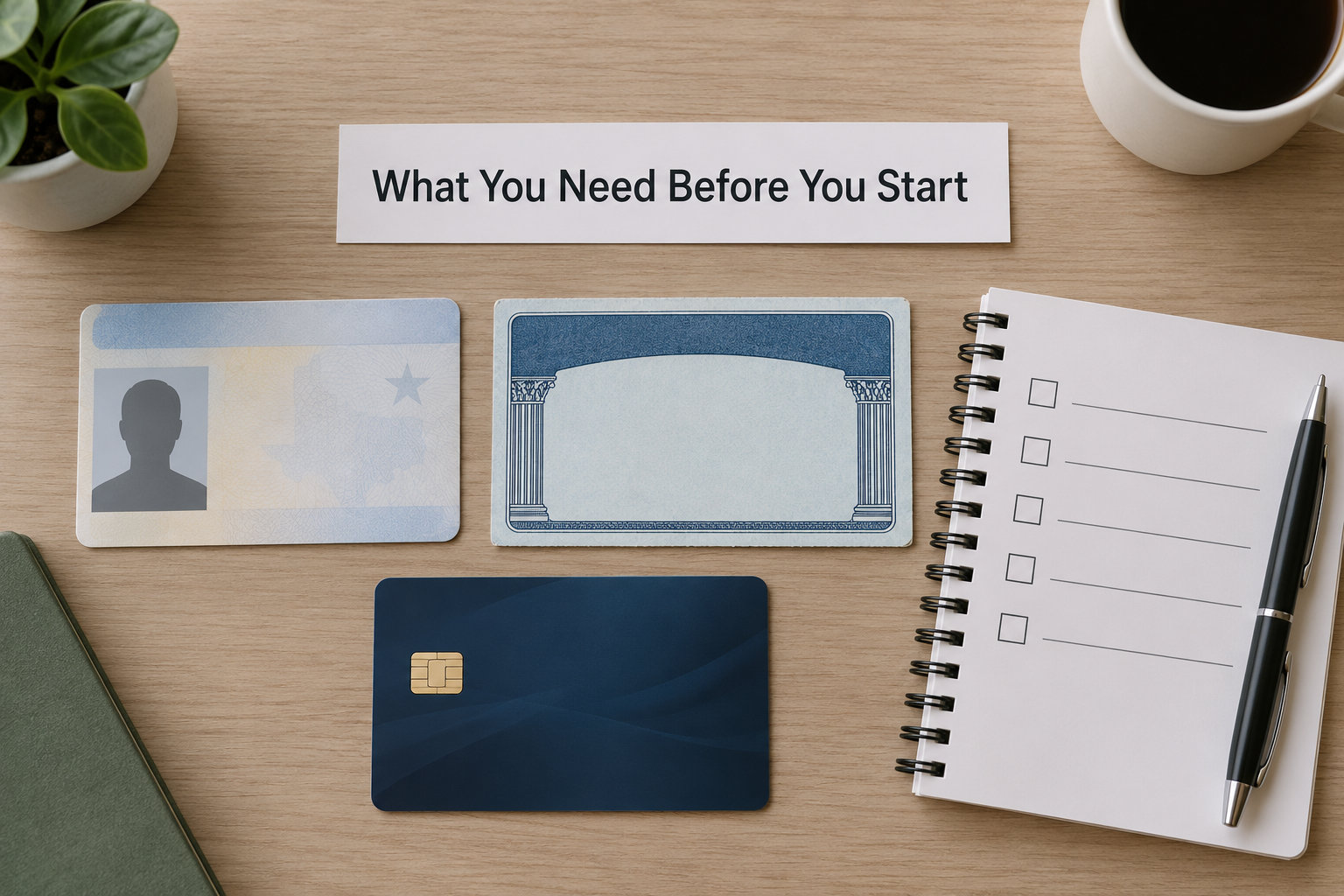
The freeze is free, but the verification is real. Each bureau needs enough information to confirm you are you, and the more of it you assemble up front the fewer times you get bounced back to start over.
- Your Social Security number. This is the anchor for verification. It does not appear on the freeze form itself in every channel, but the bureau uses it to match records.
- Your full legal name, date of birth, and full address history. Bureaus often ask for the address you used two to five years ago, because that is how long address records tend to stick around.
- Proof of address. A recent utility bill, lease, or bank statement works. Some bureaus request this only when the automated match fails.
- A second form of identification. A driver license, state ID, or passport. Certainty checks can ask for it.
- An email address and a phone number you actually check. The PIN usually arrives by one of those two channels within minutes.
- A safe place to store the PIN. A password manager, an encrypted note, or a printed copy in a locked drawer. This is the single most common reason people get stuck later.
- Twelve quiet minutes. Three bureaus at four minutes each is realistic if your records line up.
One warning before you type anything into a search box: only use each bureau’s own website, typed directly. Freeze look-alike sites resell your application to multiple bureaus and charge for the privilege. You never need a third party to place a federal free freeze.
How to Freeze Your Credit Report at the Three Bureaus
You need three separate freezes. Equifax, Experian and TransUnion do not share a database, so a freeze at one says nothing to the other two. That single misunderstanding is the most common failure, and people only discover the gap when a lender runs a hard pull and gets refused.
Freezing online takes the least time and returns a PIN the fastest. Phone works well if you would rather talk to a person. Mail is the slowest but the most useful when your name, address history, or records are unusual.
| Bureau | Phone | Best channel | Mail to |
|---|---|---|---|
| Equifax | 888-298-0045 | Online or phone | Equifax Information Services LLC, P.O. Box 740241, Atlanta, GA 30374 |
| Experian | 888-397-3742 | Online or phone | Experian, P.O. Box 9554, Allen, TX 75013 |
| TransUnion | 888-909-8872 | Online or phone | TransUnion LLC, Consumer Dispute Center, P.O. Box 2000, Chester, PA 19016 |
USA.gov maintains a plain-language page that links out to each bureau’s freeze service, and it is a good starting point if you want one trusted place to jump from. The Consumer Financial Protection Bureau and the Federal Trade Commission both publish the same information on their own sites.
What a Credit Freeze Does and Does Not Stop
A freeze blocks one specific thing: a credit bureau handing your file to a company asking for it. Everything else keeps working, and pretending otherwise is how people get surprised.
A freeze does stop this:
- New credit cards opened in your name
- Auto loans, personal loans, and lines of credit
- Most new account inquiries that require a credit check
- Co-signed or authorized-user accounts opened without you
- Insurers checking your credit when you shop for coverage
A freeze does not stop this:
- Charges on the cards and accounts you already have
- Someone opening a bank account, since many banks do not pull a credit report
- Debit card fraud and ACH transfers
- Medical identity theft, where fraudulent bills land in your medical file
- Tax-related identity theft, such as a fraudulent return filed in your name
- Pulls by specialty data brokers that are not one of the three bureaus
- Marketing calls, which depend on other data sources entirely
So the answer to “can someone steal my identity if my credit is frozen” is no — but it is closer to “someone cannot open new credit in your name.” Takeover of existing accounts is still possible, and it needs its own response.
Credit Freeze vs. Credit Lock vs. Fraud Alert
These three get mixed up constantly, and they are not interchangeable. If someone on the internet tells you to pay for a freeze, that is a red flag by itself.
| Credit freeze | Credit lock | Fraud alert | |
|---|---|---|---|
| Cost | Free | Free or subscription, depending on bureau | Free |
| Blocks new credit accounts | Yes | Yes | Not automatically; lenders must verify identity first |
| Legal basis | Fair Credit Reporting Act | Contract with the bureau | Fair Credit Reporting Act |
| How long it lasts | Until you remove it | Until you cancel | 1 year, renewable |
| Renewal | None needed | Annual | Must be renewed each year |
| Best for | Almost everyone | People who want automatic renewal and easy unlocking | Active identity theft recovery |
One fraud alert type worth knowing is the extended fraud victim statement. It runs up to seven years instead of one year, and it requires you to have filed a police report or FTC IdentityTheft.gov report. An initial fraud alert gives you the same one-year protection without the paperwork. Active-duty service members can add a military-specific alert on top of a freeze, which also covers address changes.
How to Freeze Your Credit Report Step by Step
Step 1: Gather the Information You Need
Assemble your Social Security number, date of birth, current and past addresses, ID, and contact details before opening a single browser tab. If your address history is messy, write out what you have and when, because a mismatch here is what triggers manual review and a several-day delay.
The most common early mistake is entering information through a search-ad landing page rather than the bureau’s own domain. Check the address bar character by character before you type your Social Security number.
Step 2: Choose the Credit Bureau and Request a Freeze
Start with any one of the three and repeat the process for the other two. Equifax, Experian and TransUnion each run their own system, and there is no central request that covers all three.
When you compare the options, weight speed and channel availability, not quality. The protections are federally identical. Online is fastest, phone gives you a person to ask questions, and mail is the fallback when your records do not match cleanly.
Step 3: Verify Your Identity
Expect one of two paths. The fast path matches your details against what the bureau already holds and finishes in minutes. The slow path sends you to a third-party identity verification service that asks knowledge-based questions about your credit history, or asks for documents.
If a request is rejected, it is nearly always a mismatch in name spelling, an address you forgot, or a date of birth entered in the wrong format. Go back to the bureau’s own troubleshooting page rather than resubmitting repeatedly, because repeated failures can add a delay.
Step 4: Select and Confirm the Freeze
Choose the security freeze option, review the terms, and confirm. If the bureau’s flow ever asks you to pay, leave the page: freezes are free of charge for consumers, and there has been no fee since the Economic Growth, Regulatory Relief, and Consumer Protection Act took effect in 2018. Any page charging you is either a credit lock or a reseller.
Write down the confirmation number, the date, and the bureau reference code on screen before you close the tab.
Step 5: Save Proof and Check Your Reports
Your PIN is the key to everything later, so store it in two places: a password manager and a printed copy kept somewhere secure. People forget these PINs more often than they forget passwords, because nothing prompts them to remember.
Proof of freeze is not proof of creditworthiness. It confirms the file is blocked, not that the report is clean. Nor is it monitoring: a freeze is a barrier, while a monitoring service watches for new activity and alerts you about it. Serious protection usually pairs one with the other.
Step 6: How to Temporarily Thaw Your Credit
You have three options, and picking the narrowest one is the smart move.
- Single-use PIN. Generated for one named lender, valid for that lender only. Best for a mortgage or auto application.
- Temporary thaw for a set period. Lifts the freeze for a chosen window, then drops back down automatically. Useful when several lenders need access in the same week.
- Permanent lift. Removes the freeze entirely. Rarely the right answer.
Online and phone thaws usually process within about an hour. Mailed requests can take up to three business days, which is why nobody should mail a thaw request the day a closing date arrives.
Mortgage shoppers on personal finance forums describe the failure mode clearly: they thaw, then apply in a second lender’s portal and forget that the thaw covered a window rather than a specific lender. One user ended up with two separate lenders pulling a frozen file mid-purchase. Schedule the thaw, write down the exact end time, and confirm it lapsed before you apply elsewhere.
Step 7: Verify the Freeze Is Actually in Place
Do not assume. After placing each freeze, log back into that bureau’s site and check the freeze status, or request your free summary report. Equifax, Experian and TransUnion each show a freeze indicator on the account page, and each issues a disclosure confirming the freeze is in effect.
Readers on identity theft forums repeat this advice more than any other: confirm at all three, not one. If a bureau cannot verify you at all, that is itself a signal to investigate, and it is worth calling their fraud line before going further.
Step 8: What to Do When Fraud Is Already on Your Report
Freezing first is the right order. Block new accounts, then clean up the old ones.
- Place freezes at all three bureaus the same week.
- File a report at IdentityTheft.gov and keep the report number, which supports an extended fraud alert.
- File a police report if there is a specific incident, since seven-year protection requires one.
- Request an extended fraud victim statement from each bureau.
- Dispute each fraudulent account in writing with the creditor and the bureau, and follow up in 30 days if it is not resolved.
- Place an extended alert, and add new accounts to your credit monitoring.
Step 9: Freezing a Child’s or Dependent’s Credit
Children are a growing target, largely because their Social Security numbers circulate through data breaches and their files are usually empty enough that a fraudulent account can sit undetected for a year or more. For a minor, you contact each bureau as the parent or legal guardian and request the freeze on their behalf.
Two practical points. Ask each bureau to mark the file as one that should not be opened without your authorization, since an empty file can otherwise be mistaken for a nonexistent person. And when your child turns 18, revisit it with them rather than leaving a decision they never made.
Caregivers in the same position for an aging parent face the identical process, with a note: keep durable power of attorney paperwork with the person who will need it, because bureaus ask for it before releasing anything.
Common Mistakes to Avoid
- Freezing only one bureau. Fix: complete all three and verify each one, since each keeps a separate file.
- Confusing a freeze with a fraud alert. Fix: an alert prompts lenders to verify you; a freeze refuses the file outright. Use the freeze as the baseline and an alert when fraud is active.
- Losing the PIN. Fix: store it twice, and if it is truly gone, call the bureau, re-verify your identity, and request a replacement.
- Using a third-party site. Fix: navigate to each bureau directly by typing the domain yourself.
- Paying without reading what you are buying. Fix: a subscription product with a monthly fee is a credit lock, not a freeze.
- Never checking the confirmation reports. Fix: request a summary report from each bureau after the freeze lands.
- Thawing permanently when a temporary window would do. Fix: re-freeze on a schedule the same day.
- Assuming it blocks everything. Fix: read the does-not-stop list above before you feel safe.
Two habits worth keeping after the initial setup. Review each bureau’s freeze status once a year, since some state rules automatically lift a freeze after seven years, and a PIN that quietly stops working usually signals a lift rather than a fault with your account. And treat a freeze-thaw-freeze cycle as normal rather than as a failure of your setup.
Frequently Asked Questions
Does freezing your credit report affect my credit score?
No. A security freeze is not a credit event, so it does not change your score in either direction. It also has no effect on accounts you already have, and lenders can still review your file once you authorize them. What changes is availability: while frozen, most new accounts cannot be opened, which simply prevents new inquiries and new balances from appearing.
Do I need to freeze my credit with all three bureaus?
Yes, if you want real protection. Equifax, Experian and TransUnion hold separate files, and a freeze at one does not reach the others. Most people discover the gap when a lender pulls from an unprotected bureau. Place the freeze three times, then check the status at each one so you are not relying on assumption.
How long does a credit freeze last?
A freeze lasts until you remove it, which is why you never have to remember to renew it. A handful of states will automatically lift a freeze after seven years under state law, so an annual check is worthwhile. Most consumers who lift a freeze do so temporarily and re-freeze on a schedule rather than opening their file up permanently.
Can someone open a bank account if my credit is frozen?
Often yes, and this surprises people. Many banks and credit unions verify identity using their own criteria rather than pulling a credit report, so a freeze does not stop account opening in your name. Debit card fraud and transfers from accounts you already have are also unaffected. Monitor your statements and consider adding an account alert as well as a freeze.
How do I temporarily turn off my credit freeze?
Log in to the bureau, choose to temporarily unfreeze, and set a start and end time. Online and phone thaws usually process within about an hour; mailed requests can take up to three business days. For a single lender, ask for a single-use PIN instead, which opens your file for that one applicant only. Re-freeze on a schedule rather than lifting the freeze outright.
What if I forget the credit freeze PIN?
Call the bureau directly using the number on its official site and expect to re-verify your identity before they issue a new PIN. Bureaus also offer PIN resets through your online account if you still have login access. This is why storing the PIN in a password manager matters: without it you are starting the identity check again, which is the slow part.
How to Protect Your Credit After the Freeze
Start today with one bureau, then finish the other two this week. Take the confirmation screenshot, store the PIN twice, and check each bureau’s freeze status before you close your laptop. That is the whole task, and it costs nothing.
Then protect the edges a freeze cannot reach. Add credit monitoring so you hear about new activity, keep transaction alerts on your existing accounts, and if a data breach hits your data again, freeze first and clean up second rather than the other way around.
Rules and verification procedures do change, and the FTC and CFPB both update guidance as identity theft tactics shift. Check the current bureau and government pages rather than relying on an old summary, including this one.
This is general information about a U.S. consumer process, not legal or financial advice. Credit freezes are federal, with some state-level variations, so if you are dealing with active fraud or a dispute, talk to your bank, a credit union, or a consumer law attorney in your state.