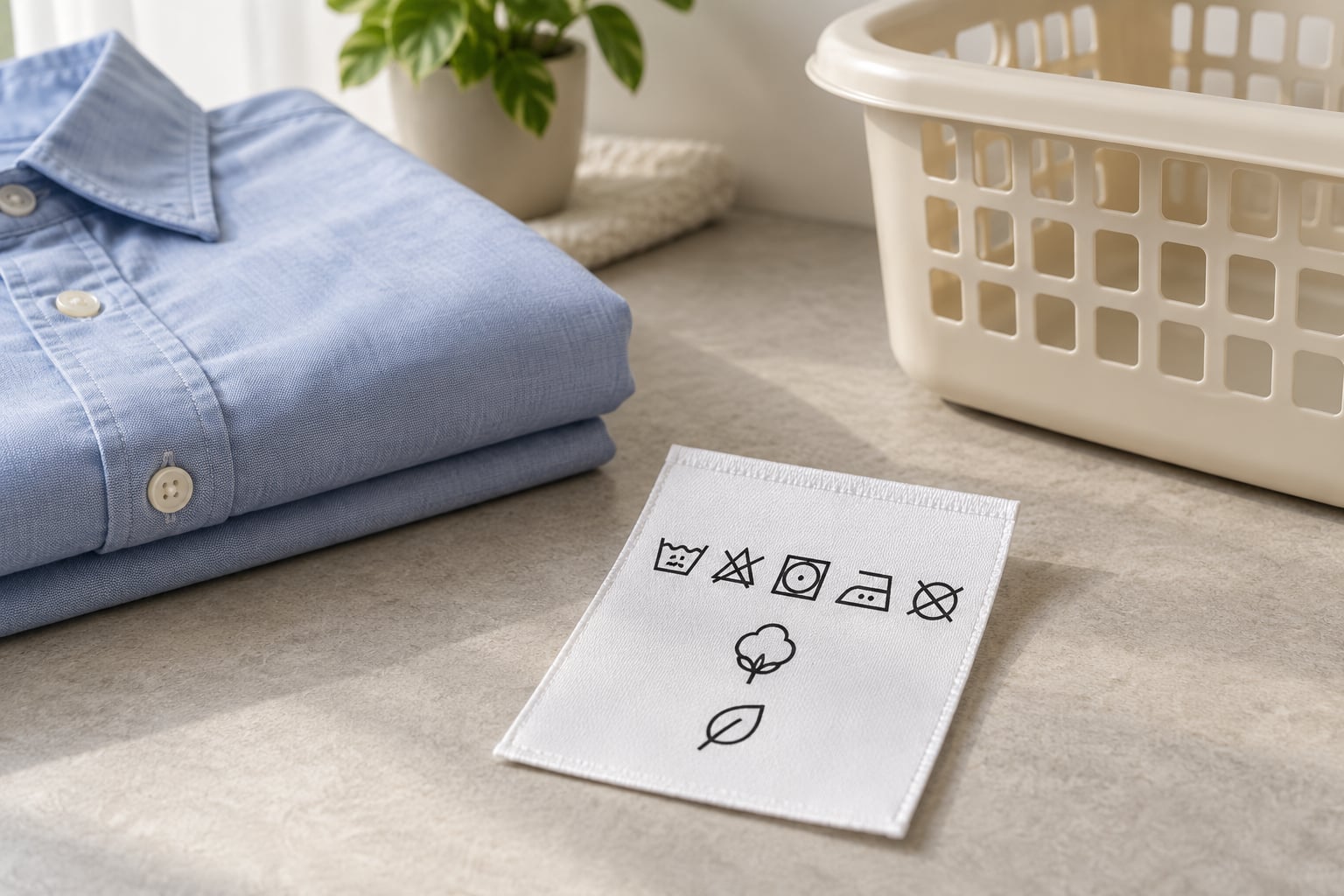
A clothing care label is the small tag sewn into a garment that uses standardized symbols to tell you how to wash, bleach, dry, iron and professionally clean it. Almost every label worldwide follows the ISO 3758 standard, also called GINETEX, so the same mark means the same thing in Madrid as it does in Manila. Learning how to read a clothing care label takes about five minutes once, and it is the single easiest way to stop a good shirt from shrinking into a crop top.
There are only five base shapes, and they always appear in the same order on the tag: wash tub, triangle, square, iron, circle. Everything else on the label is a variation built from three rules. Dots mean heat, bars underneath mean go gentler, and a diagonal cross means do not do this at all.
Table of Contents
- What You Need
- Step-by-Step: How to Read a Clothing Care Label
- 1. Find the Care Label
- 2. Identify the Fabric and Garment Details
- 3. Decode the Washing Symbols
- 4. Understand the Drying Symbols
- 5. Read Ironing and Pressing Instructions
- 6. Check Special-Care Warnings
- 7. Put the Instructions Into Practice
- Clothing Care Label Symbols Cheat Sheet by Fabric
- Common Mistakes
- Frequently Asked Questions
- What do the different symbols on clothes care labels mean?
- What are the 5 basic care labels?
- How can I identify a clothing label?
- What should I do if the clothing care label is missing?
- Do I have to follow the care label, or can I wash the garment normally?
- Can I use a gentle machine cycle instead of hand washing?
- Conclusion
What You Need
You need the garment itself, a light source good enough to read small print, and a working washing machine and dryer if you plan to launder the item. That is genuinely it. No special equipment, no app, no decoder pen.
Worth adding to the drawer:
- A garment bag or mesh washing bag for anything marked hand wash or gentle, so a loose button or zip cannot snag the fabric.
- Liquid detergent that dissolves fully. Powder residue is the usual cause of the grey film that appears on dark cotton after a few washes.
- A spray bottle of diluted white vinegar for hard water, or a gentle detergent formulated for wool and silk.
- A white towel to press knits flat while damp, which replaces a tumble dryer for wool sweaters.
- Your phone camera, for photographing the label before you ever cut it off.
A garment steamer is optional but useful. Many labels allow steam without any direct heat, which is gentler than an iron on silk and wool.
Step-by-Step: How to Read a Clothing Care Label
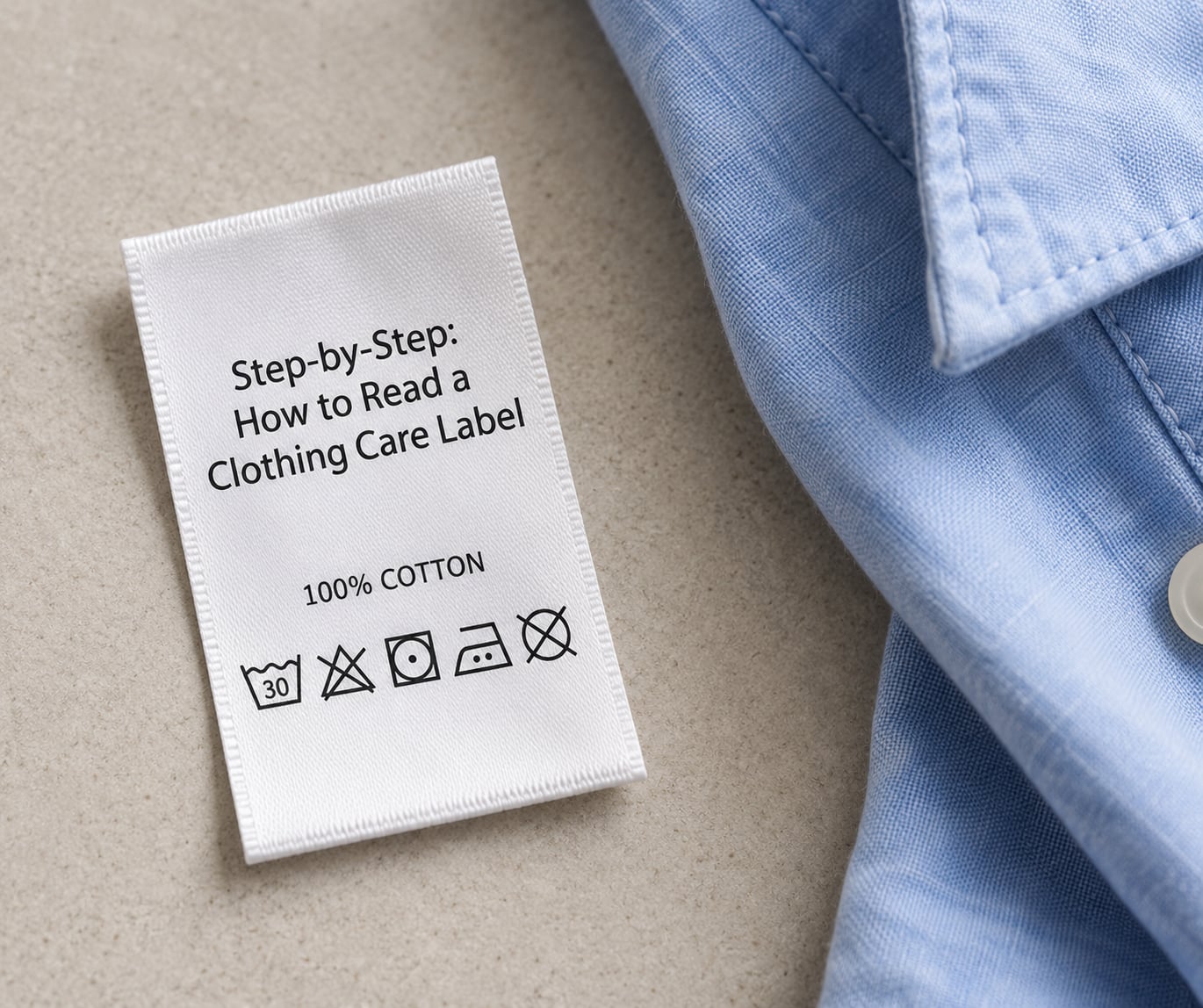
Read the label in a fixed order rather than symbol by symbol as your eye jumps around. Fibre information first, then washing, then bleaching, then drying, then ironing, then professional cleaning. If two instructions conflict, the more restrictive one wins, so a do not tumble dry mark overrides a tumble dry low mark sitting next to it.
1. Find the Care Label
Shirts and blouses put it at the back of the neck, trousers and skirts hide it in the waistband or side seam, coats and jackets carry it inside the pocket or under the lining, and underwear puts it at the back of the waistband or between the legs. Look for a narrow strip of fabric with tiny printed graphics rather than a size or brand tag, which are separate pieces of labelling entirely.
Two tags means two jobs. The printed tag gives you size, brand and country of origin. The soft, code-numbered tag with symbols is the one that matters for washing. If the printed tag is missing but the code tag survives, you can usually look the manufacturer instructions up online using the number.
When the label is gone entirely, take a photograph of the style number printed on the printed tag before you throw that tag away. That number identifies the exact garment and usually brings up the manufacturer’s own care instructions.
2. Identify the Fabric and Garment Details
The fibre content line sits near the top of the label and lists what the garment is made of by weight. 100% cotton behaves very differently from 100% polyester, and a blend like 60% cotton 40% polyester is a compromise between the two. Percentages must add up to 100, and the fibre listed first is the dominant one.
Below that you will often find the country of origin, which tells you almost nothing about care, plus the manufacturer’s registered name or code. That code matters more than the brand name, because it identifies the legal entity responsible for the garment and the instructions attached to it.
Also scan for wording in any language. Garments made for export often carry instructions in the language of the manufacturing country, and phrases such as wash on reverse side or do not wring are simply instructions that were never translated.
3. Decode the Washing Symbols
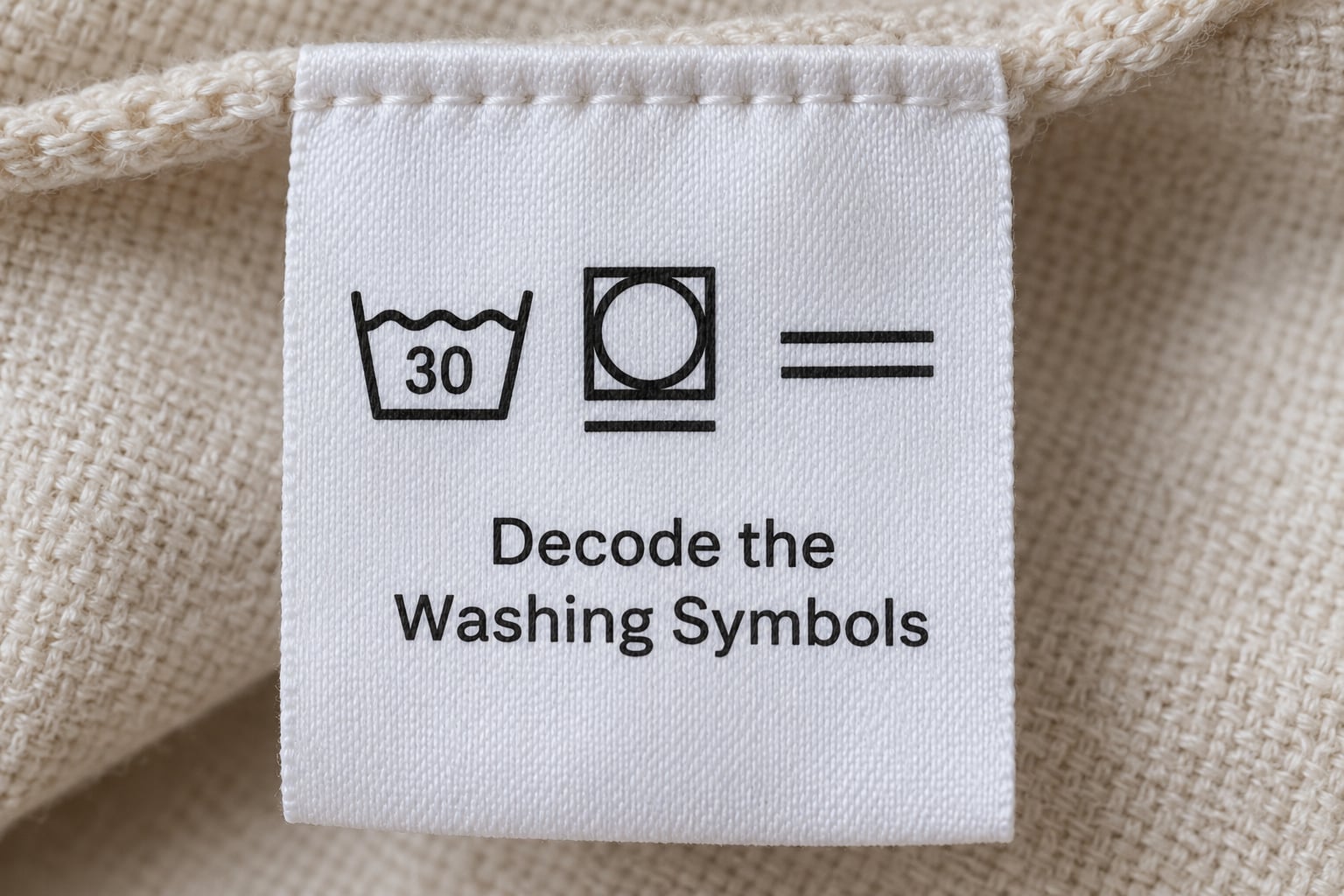
The wash tub symbol means machine washable. Inside the tub, a number in degrees Celsius gives the maximum water temperature, and a single line beneath the tub means a gentle or delicate cycle with reduced agitation and slower spin. Two lines under the tub mean permanent press, an intermediate cycle that protects wrinkle-resistant finishes.
A tub with a hand symbol inside it means hand washing only, and one with two wavy lines means hand washing is permitted. A tub crossed through with a large X means do not wash at all, which usually points toward professional cleaning. A tub with dots inside is unusual and appears on older labels; the dots set the water temperature in the same way the number does.
That last point trips up nearly everyone. A 30 inside the tub means 30 degrees Celsius, about 86 degrees Fahrenheit. It is not a length of time, and it is not Fahrenheit, whatever the number feels like in a country that measures heat in the eighties.
A bar through a hand symbol means do not wring, which protects knits from stretching. Roll the water out of the garment in a towel instead.
4. Understand the Drying Symbols
The square covers both tumble drying and air drying, so read it carefully. A square with a circle inside and one dot means tumble dry low heat, two dots means medium heat and three dots means high heat. A square with a circle and a cross means do not tumble dry. A square with a single dot and no circle means drip dry, and a square with two dots and a line across the bottom means dry flat.
Line drying comes in its own variants. Two vertical lines hanging from a horizontal line means line dry, and adding one line below means dry flat after reshaping. A square with a semicircle in the corner means dry in shade, which is the symbol most readers in East Asia and Southeast Asia already recognise and US readers rarely see.
Drying is where most of the preventable damage happens. Heat and tumbling are the two things that make wool and cotton fibres contract, and a heavy sweater hung on a hanger while damp will stretch at the shoulders no matter what the wash tub said. Reshape it flat on a dry towel and press the water out instead.
5. Read Ironing and Pressing Instructions
The iron symbol shows the maximum soleplate temperature allowed. Dots inside the iron give the number:
| Dots | Celsius | Fahrenheit | Usually safe on |
|---|---|---|---|
| 1 dot | 110C max | 230F max | Silk, polyester, acrylic, acetate |
| 2 dots | 150C max | 300F max | Wool, cotton blends, viscose |
| 3 dots | 200C max | 390F max | Linen, 100% cotton, denim |
Lines under the iron repeat the same heat ladder in a gentler register: one line is low heat, two lines is medium and three lines is high. Dots under the iron mean steam ironing is allowed, and a dot inside the iron means steam alone is acceptable, which is the ideal setting for viscose and lightweight cotton.
An iron with an X through it means do not iron. If a label is too faded to read, test on a hidden seam with the lowest setting and no steam rather than guessing at the original temperature.
6. Check Special-Care Warnings
The triangle covers bleaching. A plain triangle means any bleach is allowed, a triangle with two diagonal lines means non-chlorine or oxygen bleach only, and a crossed-out triangle means do not bleach. Older labels still show a triangle containing the letters CL, an obsolete chlorine code that you can treat as a do not bleach instruction for anything coloured.
The circle covers professional cleaning. A plain circle means dry clean with any solvent, a circle with a cross means do not dry clean, and a circle containing a letter narrows the solvent the cleaner must use. P means perchloroethylene, F means a hydrocarbon solvent process, and W means wet cleaning, a water-based professional process. These letters are instructions for the cleaner, not for you, so hand them the garment rather than trying to interpret them at home.
Most remaining marks are plain warnings rather than shapes. Watch for text about colour bleeding, warnings to keep the garment away from direct sunlight or heat, and instructions to wash with matching colours. Any of those outranks the symbols if the two disagree.
7. Put the Instructions Into Practice
Set the machine to the stated temperature and cycle, use the amount of detergent the drum actually needs rather than the maximum on the box, and put the garment in last so it is not buried. Turn a printed shirt inside out if the label mentions a reverse side, and zip up zips and close buttons to reduce tangling.
Once it is dry, check four things. Colour is the first: any shift toward the pink or grey side means dye is still moving. Shape is the second: compare the sleeve length or hem against the way it looked before. Texture is the third, since a wool knit that has gone fuzzy or hard has already felted. Size is the fourth, measured against a mark you made with a pen before washing if you own something expensive.
If something changed, write down which instruction you followed and which one you skipped. That one line turns a guess into a rule for next time.
Clothing Care Label Symbols Cheat Sheet by Fabric
When a label is missing or unreadable, the fibre content gives you a safe starting point rather than a guarantee. Use this table as the gentlest reasonable setting, and cold water with air drying is the safest guess for any fabric you cannot identify.
| Fabric | Wash | Dry | Iron | Bleach |
|---|---|---|---|---|
| 100% cotton | 30 to 40C, normal cycle | Tumble low or line dry | 3 dots, 200C | Any bleach if white |
| Linen | 30 to 40C, gentle | Line dry, reshape damp | 3 dots with steam | Oxygen bleach only |
| Silk | Hand wash or dry clean | Drip dry in shade | 1 dot, no pressure | Do not bleach |
| Wool and cashmere | Hand wash cold, 15 min | Dry flat, never hang | 2 dots or steam only | Do not bleach |
| Polyester and synthetics | 30C, gentle or permanent press | Tumble low, no heat above low | 1 dot | Do not bleach |
| Denim | 30C, gentle, inside out | Line dry, hang to fade | 3 dots on the reverse | Do not bleach |
| Activewear | 30C, gentle, no fabric softener | Tumble low or line dry in shade | 1 dot, no steam | Do not bleach |
Common Mistakes
Ignoring the label because you have always washed that way. The washer does not know what the garment is made of. Most felted cashmere and shrunken cotton was caused by a normal cycle at a temperature the fibre cannot take, not by a faulty machine.
Reading dots and bars as the same thing. They are two separate systems and mixing them up is the most common decoding error. Dots set heat: washing water temperature and dryer and iron temperature. Bars under a shape reduce mechanical stress: cycle speed, agitation and spin. One dot in an iron means 110C. One bar under a wash tub means a gentle cycle. Neither one means the other.
Choosing the wrong cycle or overloading the drum. A full machine cannot move through a gentle cycle properly, so more clothes means more agitation, not less. Wash small loads separately and leave room for the fabric to move.
Treating the labels as suggestions. They are the tested instructions for that fabric and construction, and the manufacturer stands behind them. Where a label is impractical, take the most conservative action it allows rather than the most convenient.
Hanging knits to dry. Wet wool stretches under its own weight. Dry flat, reshape, and press the water out in a towel.
Using hot water because it feels more thorough. Hotter water cleans less on modern detergent and shrinks more fabric. Follow the number in the tub.
Cutting the label off before photographing it. Take the picture first. It costs you five seconds and saves the garment in two years when you cannot remember whether it was hand wash or machine.
Frequently Asked Questions
What do the different symbols on clothes care labels mean?
Clothing care label symbols fall into five families that always appear in the same order: the wash tub for washing, the triangle for bleaching, the square for drying, the iron for pressing and the circle for professional cleaning. Dots inside any shape set a temperature, bars underneath indicate a gentler cycle, and a diagonal cross means do not do that. The system is standardised internationally under ISO 3758, also known as GINETEX.
What are the 5 basic care labels?
The five basic care label shapes are the wash tub, the triangle, the square, the iron and the circle. The wash tub covers washing method, water temperature and cycle. The triangle covers bleach. The square covers tumble drying and air drying. The iron covers pressing temperature and steam. The circle covers dry cleaning and wet cleaning instructions. Every other mark is a variation of these five.
How can I identify a clothing label?
A care label is the narrow strip of fabric printed with small black symbols rather than words, usually sewn into the back neck of shirts, the side seam of trousers and dresses, the waistband of underwear or the pocket lining of coats and jackets. It is separate from the printed size and brand tag. If it is a printed flat tag, turn it over: the symbol instructions are usually on the reverse.
What should I do if the clothing care label is missing?
Start with the fibre content tag or the retailer listing, then wash cold on a gentle cycle and air dry away from direct sun. That combination is safe for cotton, synthetics and most blends. Wool, cashmere, silk and anything tailored should go to a professional cleaner until you know more. Photograph the style number before removing any remaining tag so you can look the instructions up later.
Do I have to follow the care label, or can I wash the garment normally?
You should follow it as closely as you can. The label reflects what the manufacturer tested for that specific fabric and construction, and ignoring it is the main cause of shrinkage, fading and stretching. Where an instruction is impractical, take the gentlest option it allows rather than the most convenient one. Washing colder and drying flat costs you almost nothing and protects the garment.
Can I use a gentle machine cycle instead of hand washing?
A gentle or delicate cycle in a machine with cold water is usually an acceptable substitute for hand washing, particularly for wool, cotton and synthetics. Fill the drum only a third full, use a small amount of mild detergent, skip the spin where your machine allows it, and do not wring the garment. Silk and anything marked hand wash only with no accompanying gentle cycle are the safest choices for a professional cleaner.
Conclusion
Check the label before every wash, not only when something goes wrong, and start from the most restrictive instruction printed on it. Dots mean heat, bars mean gentler, a cross means do not. When a garment is expensive, new or unfamiliar, wash it cold, dry it flat and out of the sun, and photograph the tag before it ever comes off. That habit takes five minutes and is the difference between a coat that lasts a decade and one that lasts one winter.