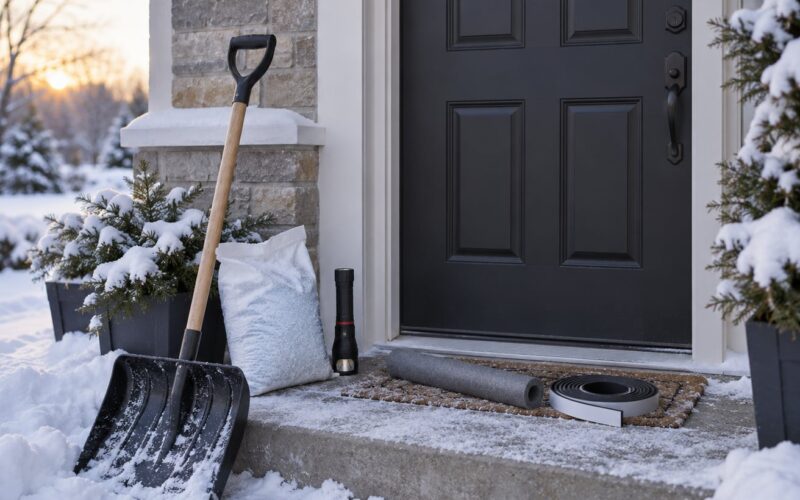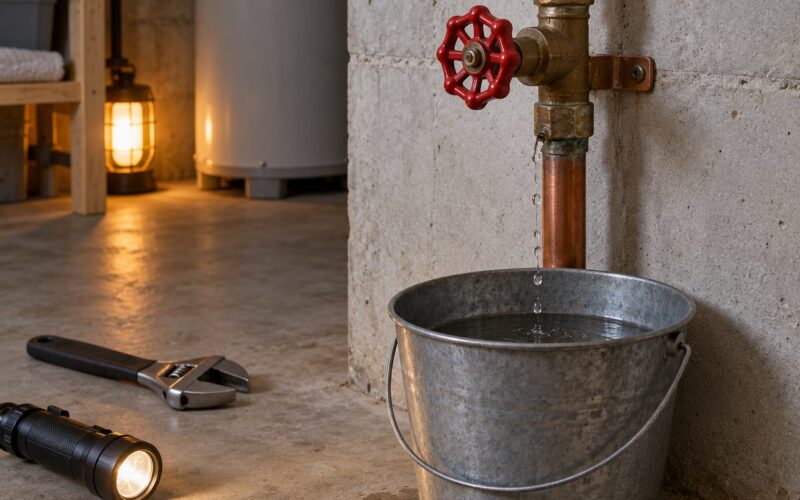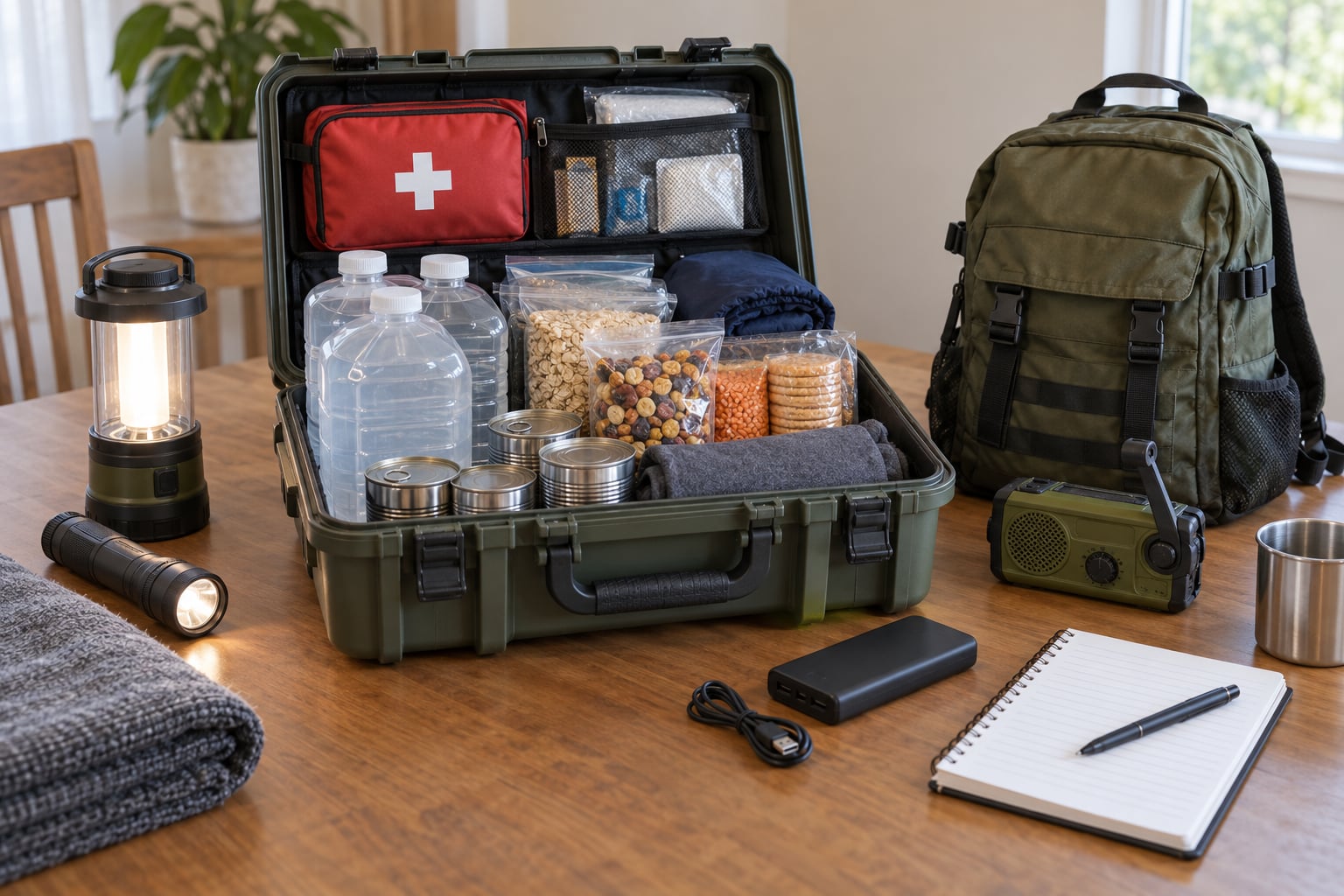
To prepare for a multi day power outage, you need three days of water, shelf-stable food, light sources and charged batteries on hand, plus a written plan for food safety, medical devices and communication. Most households can assemble that in one afternoon, and the work is far easier done before the lights go out than in the dark at 2 a.m. on the second night.
A multi-day outage is any interruption lasting 24 hours or longer, usually caused by storms, ice, wildfire, extreme heat or grid overload. Long ones are rare but they are the ones that turn an inconvenience into a real problem: the refrigerator holds food safely for roughly four hours, a full freezer for about two days, and the water heater and garbage disposal stop working the moment power does. Here is how to get ready, what to do while the outage runs, and when staying home stops being the right call.
Table of Contents
- What You Need
- Water
- Food that needs no power
- Light and power
- Communication and information
- Medical, safety and household
- Step-by-Step: How to Prepare for a Multi Day Power Outage
- 1. Estimate How Long You May Be Without Power
- 2. Protect Food and Drinking Water
- 3. Set Up Lighting and Backup Power Safely
- 4. Plan for Medical and Accessibility Needs
- 5. Prepare Communication and Home Safety Systems
- 6. Pack a Go-Bag and Document the Plan
- 7. Check In Safely During and After the Outage
- Common Mistakes
- Frequently Asked Questions
- How long should I prepare for a multi day power outage?
- How long will food stay safe in the refrigerator during a power outage?
- How much water should I have for a three-day power outage?
- Can I use a generator safely during a power outage?
- What should I do if I have medical equipment that requires electricity?
- Should I leave my home if the power outage lasts several days?
- Conclusion
What You Need
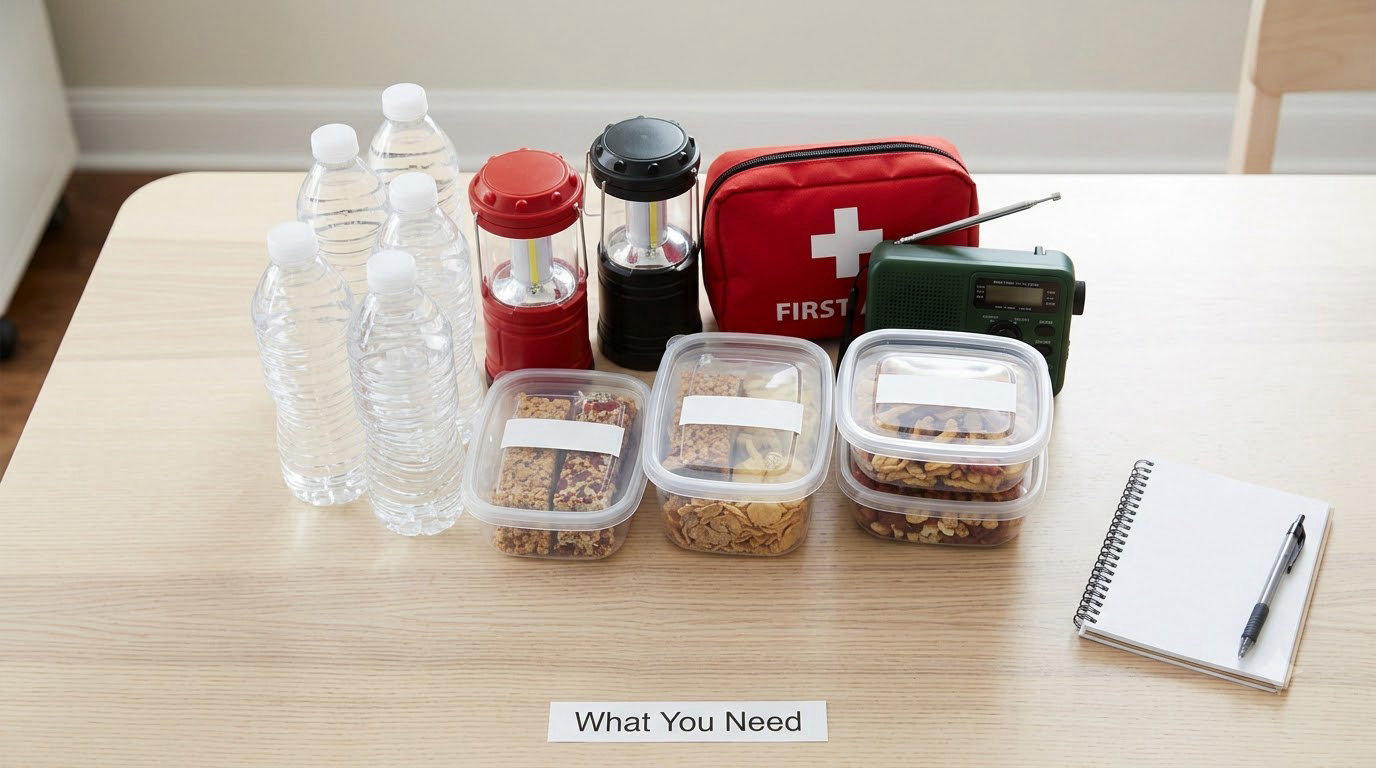
Build for 72 hours per person, then add 24 hours of margin. People who weathered long outages say the things they most regretted not having were water and paper, in that order.
Water
Plan on one gallon per person per day for drinking and cooking, which means 3 gallons for a family of four for three days. Add more if anyone in the house needs bottled water for medical reasons, or if you have pets. Store it in sealed jugs you can actually lift, because a full gallon weighs about 8.5 pounds.
Food that needs no power
Choose foods that survive unrefrigerated and need no cooking: canned soups, tuna, peanut butter, crackers, dried fruit, cereal, powdered milk, protein bars, nuts and shelf-stable milk. Add a manual can opener, since a can you cannot open is worthless. Plan three meals a day from this list so you can build a menu before the outage rather than during it.
Light and power
One battery lantern per room beats a small flashlight, which gives you a pool of light instead of a beam. Keep two flashlights as backup, spare batteries for both, and at least two fully charged power banks. Candles burn for a few hours and start fires on curtains and tablecloths, so treat them as a last resort.
Communication and information
A battery-powered or hand-crank NOAA weather radio keeps you on local broadcasts when cell towers are overloaded. Charge every phone and power bank before the storm, put the radio and a spare set of batteries with them, and write down your utility outage number plus the reporting line for your local emergency office on paper.
Medical, safety and household
- A stocked first-aid kit and any prescription medications, with several days of refills
- A food thermometer and a refrigerator thermometer, both inexpensive and hard to replace
- Battery-backed smoke alarms and at least one working carbon monoxide detector
- Hand-washing supplies: soap, sanitizer, paper towels, a bucket and a small camping stove
- Fire extinguisher, work gloves, a wrench, duct tape and plastic sheeting
- Copies of insurance policies, medication lists, IDs and contact details, stored on paper and in the cloud
Step-by-Step: How to Prepare for a Multi Day Power Outage
1. Estimate How Long You May Be Without Power
Nobody can predict restoration time, and utilities say so for a reason. As a planning baseline, assume 72 hours for any severe-weather event and a week or more if you rely on electric medical equipment, live in a remote area, or an ice event is forecast.
Check your utility’s outage map and priority restoration list online now, while you have power, and save the number in your phone. If a household member uses a powered medical device, register with the utility’s priority service so crews know before they arrive. You are done with this step when your target duration is written down and matches your household’s real needs.
2. Protect Food and Drinking Water
Turn the refrigerator and freezer to their coldest setting the day before a forecast outage. A full freezer keeps food safe far longer than a half-full one, and filling empty space with water jugs acts as thermal ballast, holding the cold when the compressor stops.
Keep the doors shut. Every opening lets cold air out, and the temperature in a closed refrigerator climbs about 4 degrees an hour in a room of 75°F or warmer. Put a refrigerator thermometer in the cold zone and use the times below.
| Food and storage | Safe without power | What to do |
|---|---|---|
| Refrigerator, door closed | About 4 hours | Discard perishables above 40°F for more than 2 hours |
| Full freezer, door closed | About 48 hours | Keep a thermometer in; keep items tight together |
| Half-full freezer | About 24 hours | Fill empty space with frozen jugs beforehand |
| Cooler with ice, kept closed | About 2 to 3 days as ice lasts | Drain meltwater; restock ice as early as you can |
| Whole blocks of ice in a cooler | 3 to 4 days | Best option for a known multi-day event |
Use the refrigerator first. Cook and eat the most perishable items early while you still have a working stove, then move sealed food into coolers with ice. In winter, an unopened refrigerator holds cold noticeably longer than in summer, since the surrounding air is cooler, but the 40°F rule still governs the decision.
For drinking water, hold back your reserve for cooking and drinking and treat any tap water as unknown after the outage begins. Boil water for one minute, add an eighth of a teaspoon of unscented bleach per gallon and let it stand 30 minutes, or use a filter rated for the contaminants you expect. Your water company can tell you whether tap water is still safe to drink.
3. Set Up Lighting and Backup Power Safely
Light first, power second. Lanterns, flashlights and headlamps cover the whole house; a portable power station or generator covers the refrigerator and a few lights.
A portable power station is quiet, produces no exhaust and stores indoors, which makes it the safer choice for apartments. It runs out faster than people expect, so size it for what matters rather than the whole house. A portable generator runs longer but produces carbon monoxide, a colorless and odorless gas that kills people in enclosed spaces.
Run any generator outdoors, at least 20 feet from the house, with the exhaust pointing away from doors, windows and vents. Never run one in a garage, basement, shed, carport or enclosed porch, and never use it inside to heat a room, even with the door open. Keep it on a dry, level surface, use the correct fuel and extension cords rated for outdoor use, and let it cool before refueling or storing it. Have a working carbon monoxide detector with a backup battery, and sleep with a door cracked open if you must run a generator near the home.
Check that a utility worker or electrician handles anything touching your panel or wiring. Renters usually cannot run a generator on a balcony or in a shared courtyard, and apartment buildings lose power to a single breaker or lift.
4. Plan for Medical and Accessibility Needs
Ask your doctor or pharmacist how to store refrigerated medications and devices, including insulin, biologics and some liquid antibiotics, and get written guidance on how long they hold outside a refrigerator.
List every powered device in your home and its power source: oxygen concentrator, CPAP with heated humidifier, powered wheelchair, hospital bed, glucose monitor or refrigerated insulin. Unplug nonessential electronics before the outage so a surge on restoration does not damage them, and note each device’s wattage so you know what a backup power source can actually run.
For someone who cannot easily move, decide now who checks on them, register with police or fire in advance if your area offers that service, and choose a backup location if your home loses heat or power to a medical device. Build the plan around a written personal emergency plan you leave in a visible spot. The step is complete when you can say out loud who does what if the power runs three days.
5. Prepare Communication and Home Safety Systems
Sign up for your state and county emergency alerts before a storm and keep your phone set to receive wireless emergency alerts. Charge every device to full, switch on low-power mode and low-brightness, and use text messages instead of calls, which drain battery faster and congest the network.
Agree on one out-of-town contact who everyone outside the area can call, and pick an alternate meeting point in case you cannot return home. Test battery smoke alarms once a year and keep a fire extinguisher near the kitchen, since people resort to candles and camp stoves.
Watch for hazards nobody plans for: a burst pipe when pressure returns, a freezer thawing into a puddle that reaches a light socket, and a pet carrier moved in the dark. For aquariums or livestock, a small battery air pump matters within hours, not days. Keep carriers and leashes by the door.
6. Pack a Go-Bag and Document the Plan
Put one change of clothes, medications, a small first-aid kit, a flashlight, spare batteries, a power bank, copies of IDs and insurance documents, cash in small bills, a written list of contacts and a bag of pet supplies into a duffel by the door.
Write down who to call, where to meet, where the go-bag is and what to take, and give a copy to someone outside the area. Include your utility account number and any details a paramedic or neighbor would need if they have to enter your home. Check the bag every six months and replace expired batteries and prescriptions.
7. Check In Safely During and After the Outage
Monitor temperature, food supplies, water and battery levels at set times, and check the utility outage map for restoration estimates rather than refreshing it hourly. Text outside the area with a timestamp so family knows where you are and when you last had information.
Stay away from downed power lines and anything touching water. Assume any line on the ground is live, keep well clear, and report it to the utility or emergency services. If you smell gas, leave the building, avoid switches, flames and phones inside, and call the gas company from outside.
Run the water for a minute when service returns and discard the first glass if the water looks cloudy or has an odor. Let food thaw in the refrigerator rather than in warm water, and never taste food to test it. When the power comes back, restore power in stages: whole-home surge protectors first, then the refrigerator and freezer, then microwaves and other high-draw appliances. Give a generator 15 to 30 minutes with the engine off before refueling or moving it indoors.
Common Mistakes
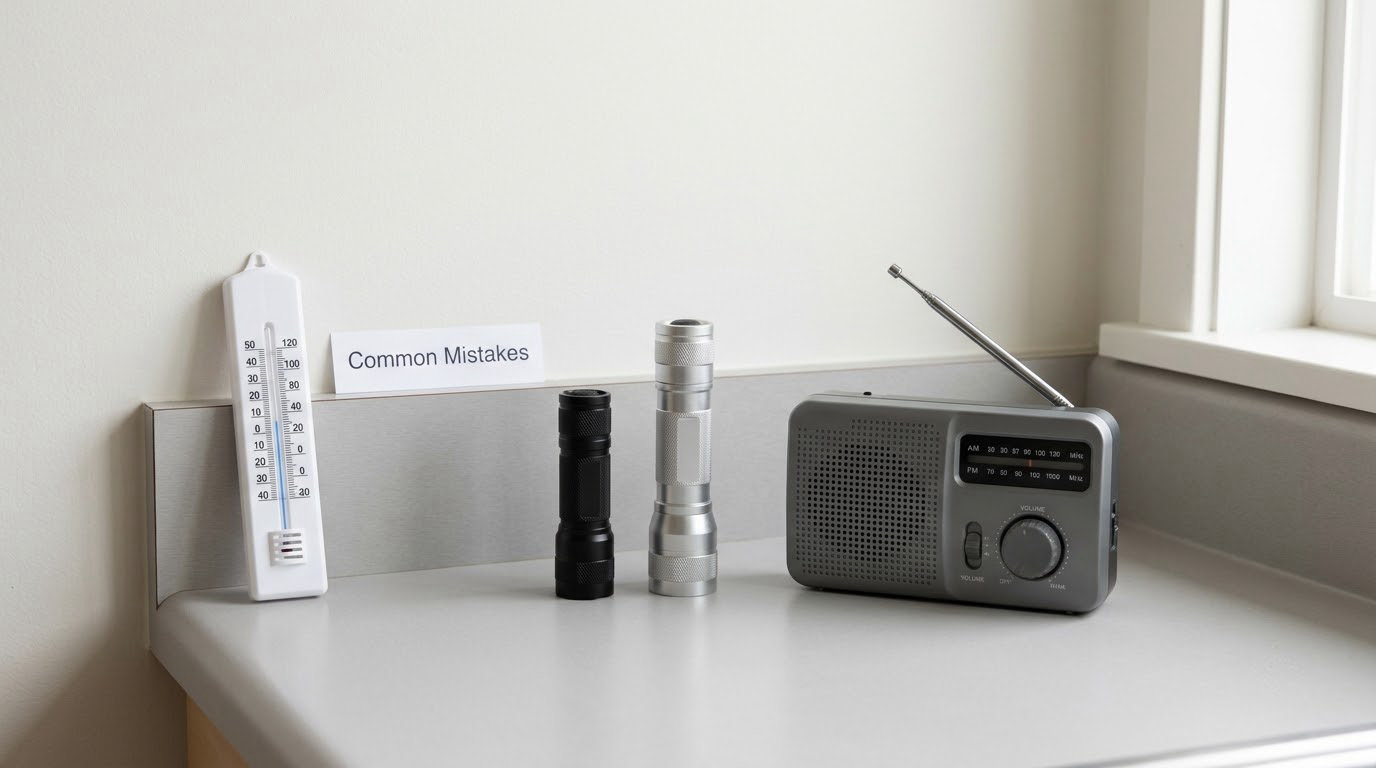
Most problems in a long outage come from a handful of mistakes that are easy to fix beforehand.
One power bank for the whole house. Two or three, kept off until phones drop below 20 percent, stretch much further than one. A single bank is usually depleted by the end of the first night.
Medications sitting in the fridge with no plan. Ask your pharmacist for guidance before the event, move anything needing refrigeration into a cooler with ice, and know in advance whether your pharmacy can transfer a prescription.
Opening the refrigerator to check. Each opening lets cold air escape and shortens safe storage time. Put a thermometer in there and stop guessing; open it once a day at the same time, take out what you will eat first, and shut it again.
Candles left burning near curtains. Switch to lanterns and flashlights. If you must burn a candle, put it in a metal holder on a hard surface, never on a tablecloth, and put it out before you go to sleep.
Underestimating water. One gallon per person per day is a floor, not a target, and it covers drinking and cooking only. Add a gallon per pet per day and extra for hygiene once running water stops.
Returning to a home that is not safe. Wait until the utility confirms service is restored before re-entering after a fire, flood or structural event, and never walk into a flooded basement to check a breaker.
One more habit pays off repeatedly: refill and rotate supplies on a monthly calendar. Batteries lose charge sitting in a drawer, water jugs go stale, and medication expires quietly. A 20-minute monthly check means you never face a supply run with empty shelves.
Frequently Asked Questions
How long should I prepare for a multi day power outage?
Prepare for 72 hours for most households, and add days when your situation warrants it. Anyone using powered medical equipment, refrigerated medication, living in a remote area or facing an ice event should plan for a week or more. Since restoration estimates are unreliable, treat 72 hours as a minimum rather than a ceiling, and rotate supplies so nothing expires before you need it.
How long will food stay safe in the refrigerator during a power outage?
An unopened refrigerator keeps food safe for about 4 hours at room temperature. A full freezer holds safe temperatures for roughly 48 hours and a half-full freezer for about 24 hours. Keep doors shut, use a refrigerator thermometer, and discard perishables that sat above 40°F for more than two hours. Cook and eat the most perishable items first.
How much water should I have for a three-day power outage?
Store one gallon of water per person per day, so a family of four needs 12 gallons for three days. That covers drinking and cooking only. Add a gallon per pet per day and extra for hygiene, since toilets and showers stop working with the power. Store it in sealed containers you can carry, and keep a smaller amount separate for drinking so you do not waste it on dishes.
Can I use a generator safely during a power outage?
Yes, but only outdoors. Run a portable generator at least 20 feet from your home, with exhaust pointing away from doors, windows and vents, and never in a garage, basement, shed or carport. Never use it indoors for heat. Keep a working carbon monoxide detector with a backup battery nearby, use outdoor-rated extension cords, and let the engine cool before refueling or storing it.
What should I do if I have medical equipment that requires electricity?
Register with your utility’s priority restoration list now, keep every powered device plugged in until the outage begins, and list the devices with their wattage so you know what a backup power source can run. Ask your doctor or pharmacist in advance how to store refrigerated medications. Tell neighbors, family or local police that your household depends on powered equipment, and keep an emergency contact sheet by the device.
Should I leave my home if the power outage lasts several days?
Leave if your home cannot keep you safe, not simply because the power is still off. Warning signs include indoor temperatures you cannot hold at a safe level, no water after 48 hours, a medical device you cannot power, structural damage or a smell of gas. Ask a neighbor to watch the house, take your go-bag and leave early rather than at night. If a warming or cooling center is open, it is a safer option than pushing to day four at home.
Conclusion
Start today, in this order: sign up for local emergency alerts and save your utility outage number, charge every phone and power bank and pack a hand-crank radio, move refrigerated medication into a cooler plan and check on anyone who depends on powered medical equipment, then assemble 72 hours of water, shelf-stable food, lighting and sanitation supplies. Once a week, walk everyone in the household through the written plan, including where the go-bag is, who to call and when the decision to leave would be made.