You can avoid checked bag fees in three ways: travel with cabin bags only, use an airline co-branded credit card or elite status that covers your first bag, or fly a carrier whose fare still bundles luggage. Everything else mostly shrinks the charge rather than removing it. Fee schedules last checked in October 2026.
A checked bag is a suitcase that goes into the cargo hold rather than the cabin. Airlines charge for it, and the charge is applied per bag, per passenger, and per direction of travel, which is why a family of four can pay several hundred dollars for a single trip nobody planned.
The Bureau of Transportation Statistics puts annual US passenger baggage and carry-on fees at roughly 6.8 billion dollars, about 17 percent above pre-pandemic levels. That figure is the clearest argument for treating the fee as a decision rather than an accident.
Here is the system I use when a trip is going to cost me a bag. It takes about fifteen minutes before I press the pay button, and most of the time the fee simply never appears.
Table of Contents
- What You Need
- Step-by-Step
- How to avoid checked bag fees by checking the airline’s rules first
- How to avoid checked bag fees by choosing the right fare
- How to avoid checked bag fees by packing for a carry-on
- How to avoid checked bag fees with card, status and employer benefits
- How to avoid checked bag fees before you pay
- Common Mistakes
- Frequently Asked Questions
- Do you pay the checked bag fee twice on a round trip?
- Do you pay baggage fees for connecting flights?
- Is it cheaper to pay for your checked bag online?
- Do any airlines still include a free checked bag?
- Does basic economy include a carry-on bag?
- What happens if my luggage is a few kilos overweight?
- Conclusion
What You Need
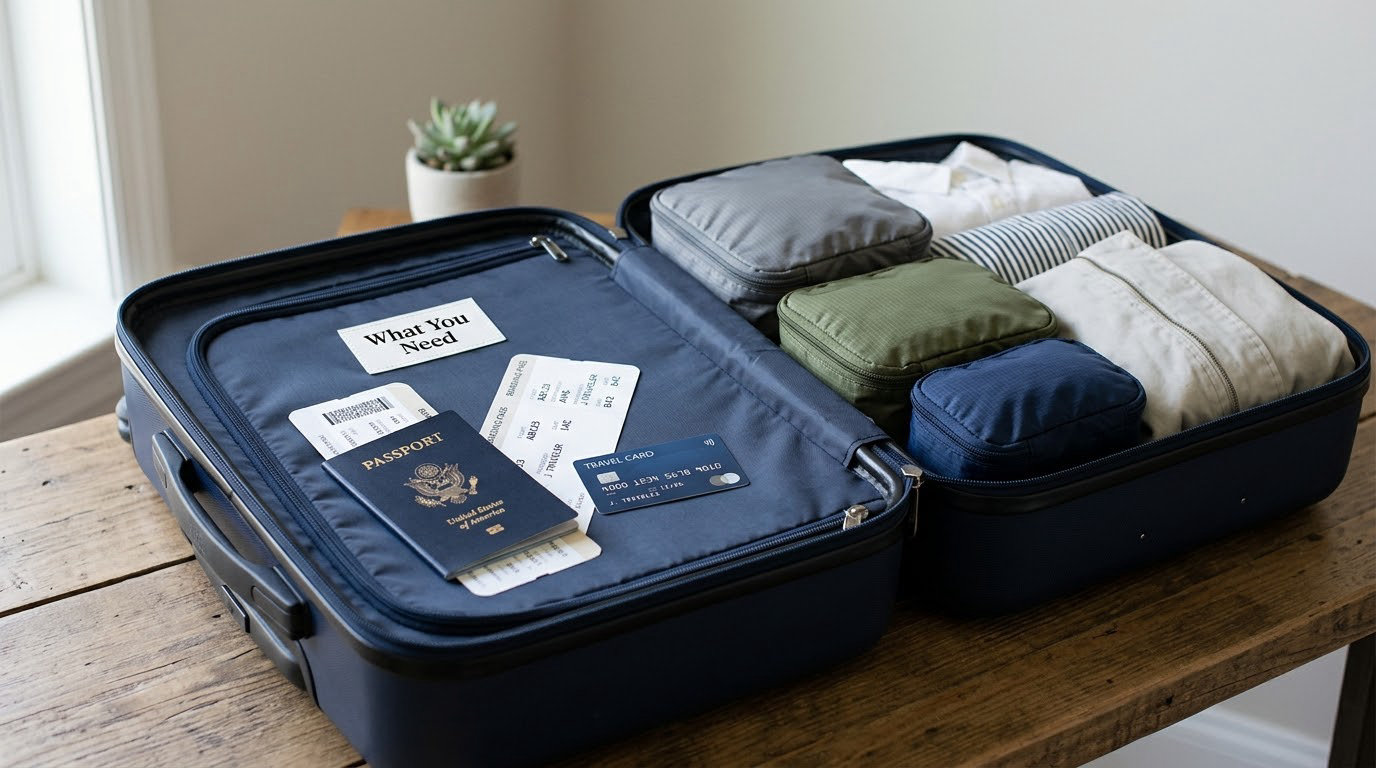
You do not need special equipment. You need the information the airline already publishes, plus a way to check your own bag before you get to the airport.
- Your full itinerary, including every flight number and every operating carrier. A codeshare can put you on a partner airline with a different allowance.
- The fare rules for that itinerary: which fare family you are buying, whether a carry-on is included, and the weight and size limits.
- Your airline account logins, including any frequent flyer numbers and the credit cards already in your wallet.
- Travel documents (passport or ID, boarding pass) and any employer or membership benefits that might reimburse a travel cost.
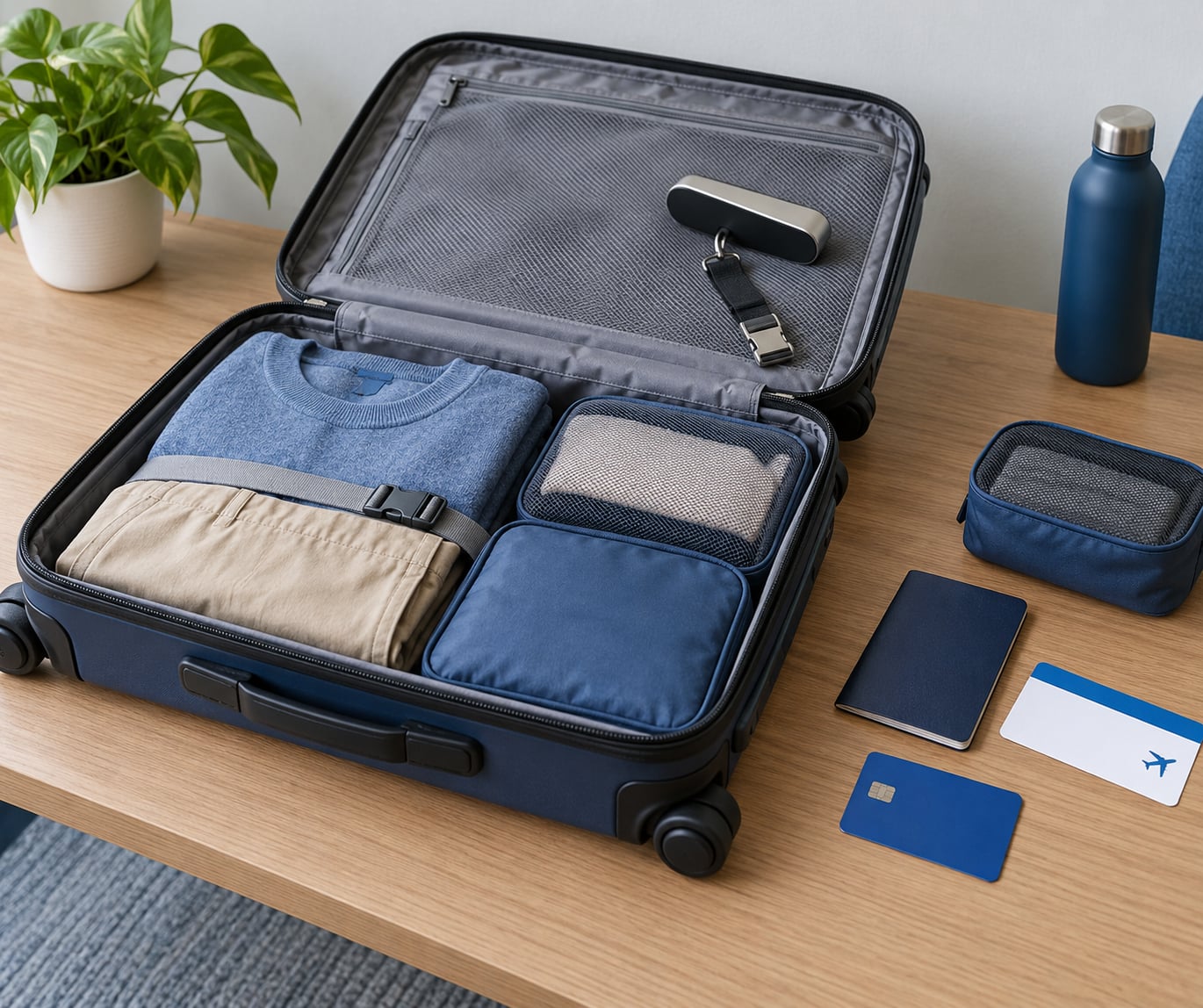
- A luggage scale, a cheap handheld one is enough.
- A carry-on and a personal item, ideally soft-sided, plus packing cubes and a compression bag.
- A clear liquids bag that complies with the TSA 3-1-1 rule: 3.4 ounce containers, one quart-size bag, one per passenger.
Step-by-Step
How to avoid checked bag fees by checking the airline’s rules first
Open the airline’s baggage page before you open the fare list. Most carriers publish the standard allowance, the weight limit, the oversize threshold, and the exceptions by fare, and the exceptions are where the money goes.
Four things to read closely:
- The allowance by fare family. Basic economy on most US carriers excludes the carry-on itself, so “I am only bringing cabin luggage” does not mean free. If the base fare on offer is basic economy, budget for a carry-on fee on top of the ticket.
- Weight and size limits. A common checked limit is 50 pounds (23 kg) per bag. Anything over that is an overweight charge, and it is a separate fee from the base bag price.
- Which carrier actually flies the segment. On a codeshare, the operating carrier’s rules are the ones that apply at the counter, and they can differ from the airline you searched.
- International and partner differences. Many Gulf carriers and some Asian carriers include checked baggage in the fare, while codeshares onto regional partners often add it back. Verify the allowance for every flight in the chain, not just the first.
You have it right when you can state, without looking, how many bags are free, how many pounds each bag can weigh, and who operates each flight.
How to avoid checked bag fees by choosing the right fare
The cheapest fare displayed is rarely the cheapest trip. Once you add bags, seat assignments, and a change fee you will never use, a fare that bundles a bag often wins outright.
| Fare level | What it usually includes | When it makes sense |
|---|---|---|
| Basic economy | Seat at back of cabin, carry-on often excluded | Short trip, one cabin bag, no changes |
| Main cabin | Carry-on plus personal item, one free checked bag on some carriers or routes | Most travelers, most trips |
| Premium economy or flexible main | Checked bag included, better seats, free changes | Two or more bags, or a fare where bag fees would repeat each direction |
Do the arithmetic rather than trusting the label. If a bag fee is charged each way, two checked bags on a round trip is four charges. A fare upgrade that covers bags can be cheaper than paying each of them separately, and it also removes the second-guessing.
On budget carriers such as Spirit or Frontier, a bare fare can look cheaper than a full-service ticket and end up dearer once a seat, a carry-on, and a checked bag are added. Compare the total trip cost, not the fare.
How to avoid checked bag fees by packing for a carry-on
The standard carry-on box is 22 by 14 by 9 inches, and most carriers also allow a personal item that fits under the seat in front of you. Experienced travelers treat the two together as roughly 78 liters of free cabin space, which is genuinely enough for a week.
A packing method that works:
- Build around three or four neutral pieces that mix with everything, plus one pair of shoes and a light jacket.
- Wear the bulkiest clothing in the airport rather than putting it in the bag.
- Roll clothes, use packing cubes to segment them, and add a compression bag for the softest layers.
- Move liquids into the clear quart bag so nothing has to be unpacked at the sizer.
- Keep medication, documents, one change of clothes and valuables in the personal item, so a forced gate check does not take everything with it.
Test it before you fly. Put the packed bag into a carry-on sizer at home, or tape the airline’s dimension limit to the floor and check the bag against it, then weigh it on the scale. A bag that is too large at the gate is charged, and no amount of good intentions fixes that at the counter.
A soft-sided bag helps you squeeze into the sizer when the frame is tight. It does not reduce the fee if you are already over the allowance.
How to avoid checked bag fees with card, status and employer benefits
Several benefits can cover the first bag, and they are not all the same thing. A free checked bag means the fee disappears. A discounted bag means you still pay, just less. Read the benefit terms before you count on either one.
- Airline co-branded credit cards. Most major carriers offer a card that covers the first checked bag each way for the primary cardholder, sometimes for a reservation-wide number of travelers. The catch is the annual fee, so do the break-even math: divide the annual fee by what one round trip of bags would otherwise cost you, and compare that to the number of trips a year.
- Elite status. Top-tier frequent flyer tiers usually include a free checked bag, sometimes for a traveling companion as well. If you fly one alliance constantly, check whether a hotel program’s status can be matched to the airline.
- Military and official travel. Active-duty members traveling under orders, and some other official categories, generally get a baggage allowance instead of a fee. Carry documentation.
- Employer, membership and association perks. Some employers, credit unions and associations reimburse travel expenses including baggage. If your employer books your travel, ask who pays the bag before you pay it yourself.
One honest warning on cards: a card that waives bags for the people on your reservation can pay for itself fast for a family, and not at all for a solo traveler taking two flights a year. Do the division before applying.
How to avoid checked bag fees before you pay
The last five minutes of booking decide whether the fee is small or large. Add bags during the booking flow, in the airline’s own site or app, and the price is usually lower than anything you will be quoted later.
| Where you pay | What to expect | Best move |
|---|---|---|
| During booking | Lowest price for that carrier | Add bags here for every passenger on the reservation |
| Airline app or manage-trip page later | Often the same online price | Use it if you forgot, before the day of travel |
| Airport bag drop counter | Higher | Last resort, and know the number before you reach it |
| Gate | Highest | Only a forced gate check situation |
Two checks before you pay. First, confirm the number of bags is right for every traveler; a second bag for one person is not the same as a second bag for the whole party. Second, read the final total rather than the fare total, and watch for a bag option that got selected for you during checkout, which some travelers report happening without them noticing.
Save the confirmation number and take a screenshot of the paid itinerary. If the counter disagrees with what you booked, that screenshot is your argument.
Common Mistakes
Treating a credit card as a guarantee. A card waiver usually covers the first bag and only applies when the bag is paid for on that card and the reservation includes you. A second bag, a codeshare partner, or a reservation booked by someone else can break all three. Fix: read the benefit terms once and note the bag number, the traveler count, and any excluded fares.
Buying the cheapest displayed fare. That fare is priced for a traveler with no bag and no seat choice. Fix: add the bags first, compare the full trip total, then decide between carriers and fare families.
Checking a bag at the airport without knowing the cost. The counter price is higher and there is no negotiation. Fix: prepay online, or at minimum screenshot the online price before you leave home.
Expecting a free gate check on demand. A gate check is an operational decision when the overhead bins fill, not a service you can request. Travelers on forums describe being asked to gate check with empty seats on board, which says everything about the reliability. Fix: treat it as a possible outcome, keep essentials in your personal item, and never plan to need it.
Ignoring the operating airline on a codeshare. You searched one carrier and land under another’s rules. Fix: check the allowance for each operating carrier before you book.
Forgetting overweight and oversize fees. A 50-pound limit plus a fee for a bag over the size limit is a separate charge people meet for the first time at the counter. Fix: weigh at home, measure the sizer, and remember that sports equipment and some instruments are priced as their own category, not as normal bags.
My last booking tip: if a connection or a separate ticket is involved, check whether the bag fee repeats. On a single ticket the bag is usually checked through to the final destination, but on two separate tickets you pay again on the second one, because a new reservation means a new fee. That single check saves more money than any packing trick.
Frequently Asked Questions
Do you pay the checked bag fee twice on a round trip?
Usually yes, because most carriers charge per bag, per passenger, per direction. One bag on a return trip is two charges, and two bags for a family of four is eight. Single tickets check the bag through to the final destination. On two separate tickets, though, you pay again on the second reservation. Buy one itinerary where you can, and check the fee line for every segment.
Do you pay baggage fees for connecting flights?
On a single ticket, normally no. The bag is tagged to your final destination and the fee is charged once, even across several connections. Where it changes is separate tickets, which are really two bookings: the second airline treats it as a new trip and charges again. Codeshares can also complicate things if the operating carrier uses a different allowance. Check the operating carrier for every segment.
Is it cheaper to pay for your checked bag online?
Yes, in almost every case. The price during booking is the carrier’s lowest, the same or close price applies in the app or manage-trip page, and the counter and gate prices are both higher. Some carriers even let you add a bag for a lower rate in the first hours after booking, before you check in. Add bags during the booking flow and check the total before paying.
Do any airlines still include a free checked bag?
A few do. Southwest includes two free checked bags per passenger, and several Gulf carriers and some Asian carriers include checked baggage in the standard fare. Most US network carriers charge for the first bag on the lowest fares but include it on higher fare families or with certain cards and status levels. Policies change, so confirm the allowance on the airline’s own page before booking.
Does basic economy include a carry-on bag?
On most US carriers, no. Basic economy is sold as a seat and a set of wings, and the carry-on itself is an add-on, so a trip booked at the lowest displayed fare can still carry a cabin bag charge. Basic economy seats are also usually at the back of the plane and non-reassignable. If you want a cabin bag included, compare the total with the next fare family up rather than assuming the base fare is free.
What happens if my luggage is a few kilos overweight?
It is charged as an overweight bag, which is a different fee from the normal bag price and is often per bag beyond the limit, commonly 23 kg on a 50-pound allowance. Airlines are stricter than they used to be, so a few extra kilos are rarely ignored. Weigh at home with a luggage scale, move items into a jacket pocket, or move items to a second bag only if that second bag has its own allowance.
Conclusion
Start by opening the airline’s baggage page and the fare rules for every operating carrier on your itinerary. Then compare the full trip cost with bags added, and confirm the baggage total on screen before you pay. If you remember nothing else, remember that fees and allowances change several times a year, so check the current rules each time you book rather than trusting a list you read months ago.