The first thing to do if a pipe bursts is shut off the main water supply, then cut power if the water is anywhere near an outlet or appliance. After that, open faucets to relieve pressure, contain the spread, and call a licensed plumber.
That sequence takes about ten minutes and it decides how much damage you are looking at. A burst pipe can push hundreds of gallons a day into a room, and the moisture that hides behind drywall or under flooring can start growing mold within a day or two. Most of the damage homeowners regret came from hesitating, not from the burst itself.
Table of Contents
- What You Need
- What to Do If a Pipe Bursts: Step-by-Step
- 1. Stay away from electrical hazards
- 2. Shut off the main water supply
- 3. Close the affected faucets and fixtures
- 4. Drain the pipe and relieve pressure
- 5. Protect the property and contain the water
- 6. Document the damage
- 7. Arrange emergency plumbing help
- 8. Prevent mold and begin cleanup
- Common Mistakes
- Stepping in water to reach the breaker
- Waiting to find the shutoff valve
- Leaving the water heater and appliances running
- Leaving wet belongings where they are
- Using heat to dry things out
- Discarding damaged materials first
- Trusting a temporary patch as a repair
- When a Burst Pipe Needs Emergency Service
- Frequently Asked Questions
- Where is the main water shutoff valve in most homes?
- Can I turn off the water if the burst pipe is near the electrical panel?
- How long does it take to fix a burst pipe?
- Should I make a claim with my insurance after a pipe bursts?
- Can I use a hair dryer or space heater to dry water from a burst pipe?
- What should I do if I cannot find or turn off the main water valve?
- Conclusion
What You Need
Gather these before you touch anything, because searching for tools while water moves is how small leaks become flooded rooms. If you own a home, the core kit fits in a plastic bin next to the shutoff valve.
- A meter key or pentagon wrench. Most curb stops at the street need this long T-handle tool, and a crescent wrench is the wrong size.
- An adjustable wrench and a pipe repair clamp. For tightening fittings and holding a line steady.
- Rubber gloves and goggles. Water from a burst line can carry whatever is inside the wall.
- A flashlight or headlamp. You will be working in a crawl space, garage, or unlit cabinet.
- Buckets, towels, and absorbent pads. More than you think you need.
- A wet/dry shop vac. Far better than towels for a flooded floor.
- A dehumidifier and box fans. For drying, and they earn their keep next time.
If you do not own a meter key, ask your plumber to show you where the curb valve is while they are there. Homeowners who know exactly where their valve sits handle an emergency in minutes; homeowners who do not lose hours.
What to Do If a Pipe Bursts: Step-by-Step
Work in this order. The first three steps stop the bleeding, physically and electrically, and the rest limit damage while help arrives.
1. Stay away from electrical hazards
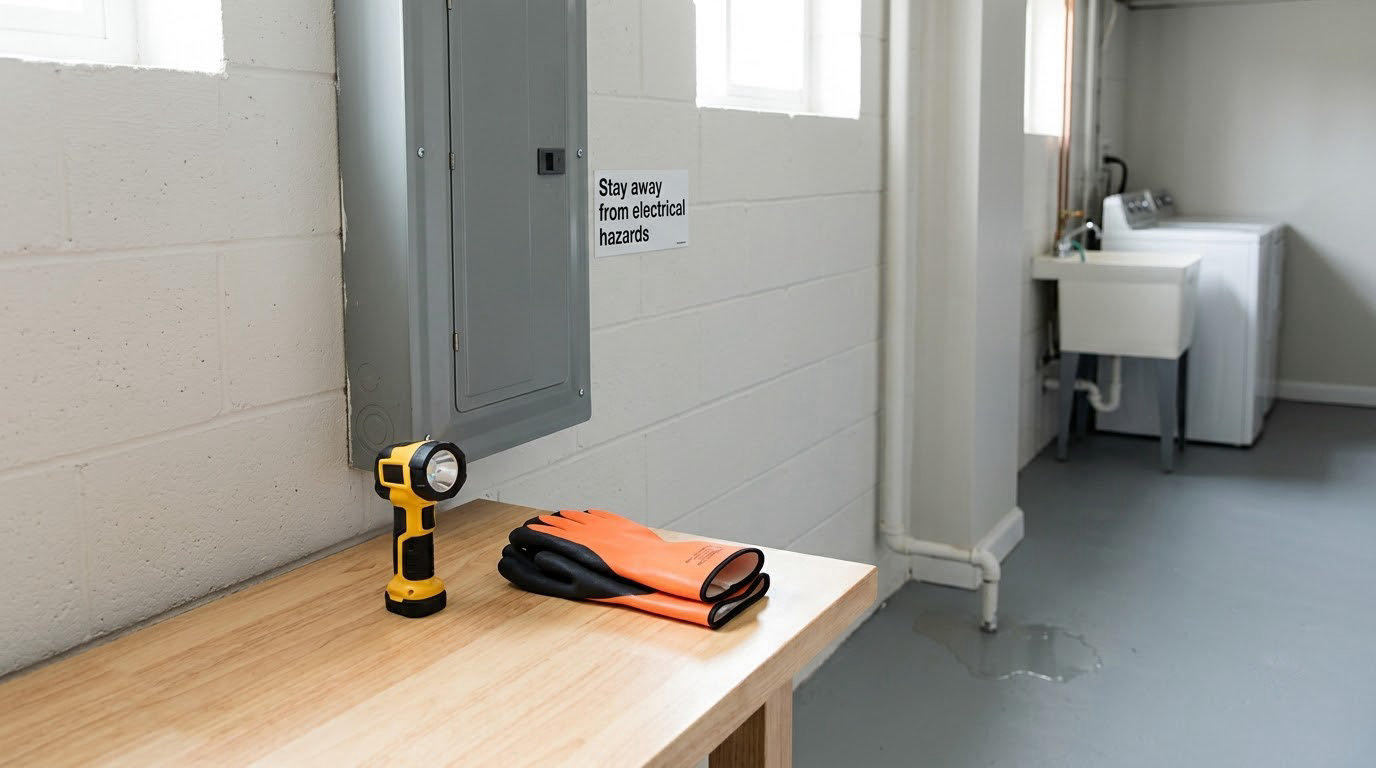
Look at where the water is going before you move anything. If it is running near a wall outlet, a light fixture, a baseboard heater, an appliance, or the breaker panel itself, treat the area as live until you know better.
Get everyone, including pets, out of the room. Then shut off power at the breaker only if you can reach the panel without standing in water, and only by using a dry hand on a dry panel. Never step into water to reach a breaker, and never assume a wet outlet is dead because it is off at the switch. A licensed electrician handles anything you have to approach through standing water.
The same rule applies to anything electrical you want to save. Do not try to move a wet television, dehumidifier, or space heater while the water is still running.
2. Shut off the main water supply
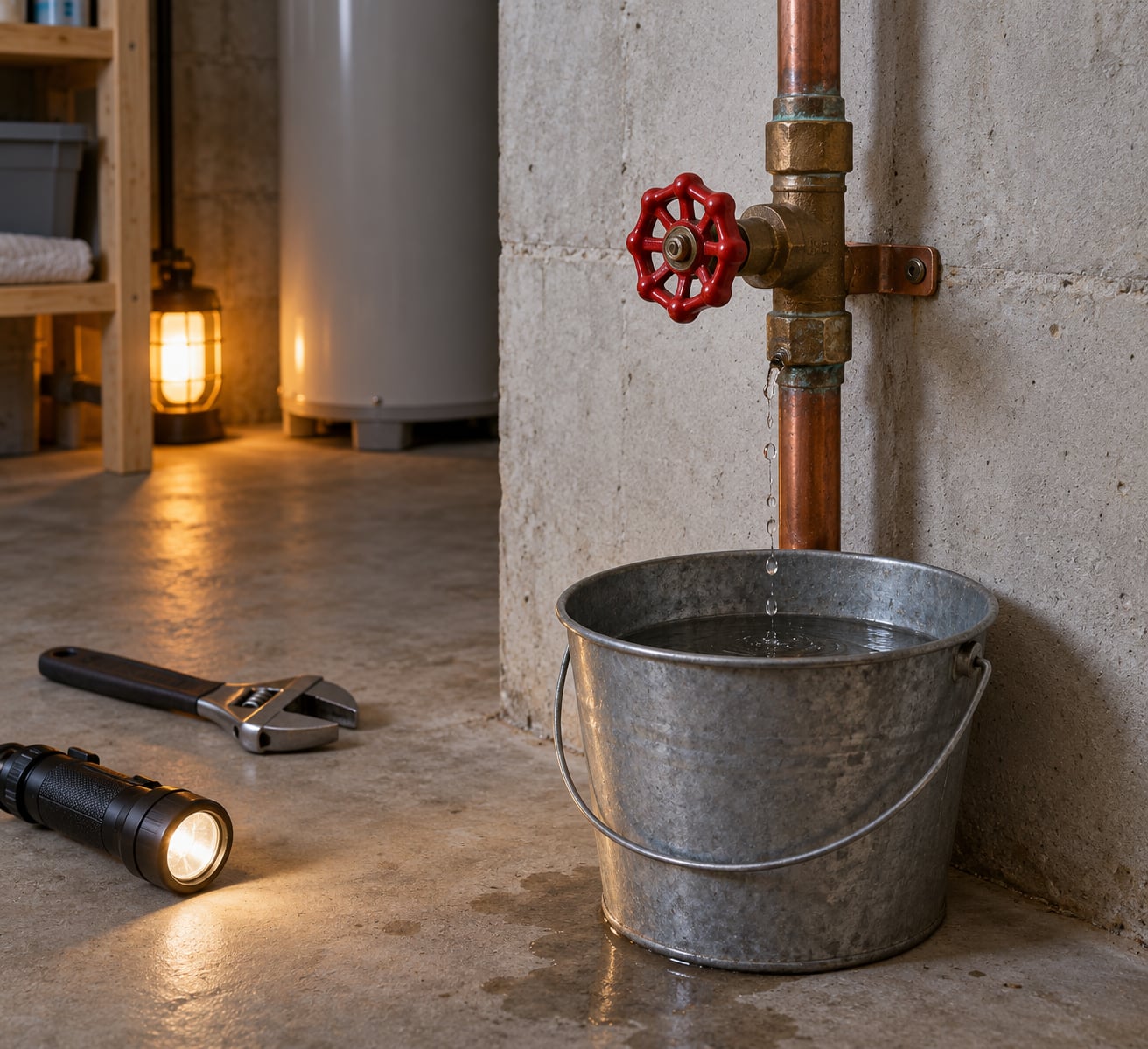
The main shut-off valve is usually a round gate handle or a lever on the incoming line, and it turns clockwise to close. Common locations, checked in roughly this order:
- On an interior basement or crawl space wall, about waist height, often near the front foundation wall
- Inside a utility closet or mechanical room, close to the water heater
- In the garage, on a wall or overhead near where the service line enters
- Under the kitchen sink or in a bathroom cabinet, for a secondary whole-house valve
- In an outside box at the curb or property line, usually behind a small metal lid, opened with a meter key
If the valve sticks, do not force it with pliers. That is how a minor leak turns into a flood in the wall. A plumber with the right wrench can usually free it in a minute, and a seized valve is a reason to call sooner rather than later.
If the break is between the curb valve and the house, or on the utility’s side of the meter, call the water utility. That part of the line is theirs to repair, and they will usually close the curb stop for you.
3. Close the affected faucets and fixtures
With the main closed, water still sitting in the lines keeps pressure up and keeps dripping from the break. Close the cold tap nearest the burst, then the hot, then the faucets in the bathrooms and kitchen.
Toilets take a shut-off valve behind the bowl, usually a small oval handle on the supply line. Close those too. Once they stop running, open them briefly to flush the line and confirm the pressure has dropped.
4. Drain the pipe and relieve pressure
Open a faucet or several once the main is off. With air allowed in at the fixtures, the water between the valve and the break can drain out instead of pushing against the split. That is the single most recommended move on plumbing forums: no pressure means no spray and no ongoing flood.
If a water heater is involved, close its supply valve and open a hot faucet upstairs until the flow goes cold. Homeowners regularly forget this and keep wondering where the water is still coming from.
While you are at it, disconnect the washing machine, dishwasher, and ice maker supply hoses if you can do so from the wall valves. Those braided lines are the most common source of indoor flooding, and a closed wall valve is far better than hoping.
Leave caps, valves, and fittings on the leaking section alone. Removing a cap from a pressurized line is how a controlled leak becomes an uncontrolled one.
5. Protect the property and contain the water
Work outward from the break. Bucket the active flow first, then put towels and absorbent pads down to stop it traveling.
Move what you can. Rugs, cardboard boxes, paper, clothing, books, laptops, and anything else that absorbs water go upstairs or into dry rooms. Then lift the edges of baseboards and pull back the toe kick under cabinets to let air move into the wall cavity. Wet carpet underlay holds far more water than the carpet itself, so pull it up if it is soaked.
Be honest with yourself about what is salvageable. A soaked, heavy, musty-smelling panel or subfloor usually goes; trying to save it just delays the drying you need.
6. Document the damage
Before you throw anything out, take photos and video. Wide shots of the room, then close-ups of the break, the water meter, the shutoff valve position, and every damaged item before you move it.
Write down when you found it, when you shut the water off, and when the plumber arrived. Start a list of damaged property with a value and a rough purchase date, and keep every receipt from the plumber, restoration company, dehumidifier rental, and any storage unit. Those receipts are what turn a claim into a payment.
Notify your insurer early, before repairs begin, and ask whether they want to send an adjuster before the plumber starts cutting drywall.
7. Arrange emergency plumbing help
Call a licensed plumber, and tell them the things they will ask anyway: is the water shut off, where is the break, is it copper, PEX, or a braided supply line, is it inside a wall or visible, is there standing water, and is the electricity off. That description usually saves an hour on site and gets you the right parts.
While you wait, keep bailing. An emergency plumber handles one house at a time, and arrival times in a storm can be long. If a wall or ceiling is bulging, the water is coming from a neighbour, or you smell gas, call emergency services rather than a plumber.
8. Prevent mold and begin cleanup
Mold can begin growing in wet building material within 24 to 48 hours. Run a dehumidifier and close up the affected space, then run box fans moving air across wet surfaces, especially out of wall cavities and under floors.
Open windows only when the outdoor air is dry enough to help. In humid weather you are adding moisture to the room rather than removing it. If you are without power, a dehumidifier does nothing, which is one more reason the water and electricity come first.
Keep the dehumidifier running until a moisture meter reading in the affected area matches a dry reference area of the house, not just until the floor feels dry. For soaked carpet, drywall, or insulation, a water-restoration company with commercial drying equipment is worth it, and most insurers will pay for it when the damage is documented properly.
Common Mistakes
Almost every expensive burst pipe story involves one of these, and each has a simple correction.
Stepping in water to reach the breaker
Standing water plus a damaged appliance is a lethal combination. Keep out of the water, and cut power from a dry position or wait for the electrician.
Waiting to find the shutoff valve
Ten minutes of water can soak an entire floor. If you cannot find the valve within a couple of minutes, call the water utility or a plumber and keep mopping in the meantime.
Leaving the water heater and appliances running
With the main closed, residual pressure in appliance lines still pushes water out. Close the heater valve and the wall valves for the washer, dishwasher, and ice maker.
Leaving wet belongings where they are
Wet furniture and mattresses rarely recover. Move them out now, not after the plumber arrives.
Using heat to dry things out
Hair dryers, space heaters, and heat guns drive moisture into drywall and framing where it does not dry. Air movement and dehumidification do the work safely. Keep any heater away from wet material and never run one unattended.
Discarding damaged materials first
Insurers routinely dispute claims where the evidence was thrown away. Photograph, bag, and store the material until the claim is settled.
Trusting a temporary patch as a repair
Clamps, epoxy, and tape hold for days or weeks often enough to be a genuine stopgap. But a patched line is a line that will fail again, usually behind a wall. Plumbers should replace the failed section rather than tape over it.
When a Burst Pipe Needs Emergency Service
Some situations need a licensed pro or an emergency crew on the way before you touch anything at all.
- The water keeps flowing after the main is off. That means a break below the shutoff, on the utility side, or a second rupture.
- Water is coming from a ceiling or a wall you cannot access. A bulge in plaster or a sagging ceiling can drop without warning, so keep people out of the room below it.
- There is sewage in the water. Stop, clear the area, and call a plumber. Do not run a wet/dry vac through contaminated water.
- You smell gas or a heating fuel. Leave the building and call emergency services or the gas utility from outside.
- The shutoff valve is seized, missing, or behind the break. Plumbers carry the specialty wrenches for this, and curbside valves need a meter key.
- You live in an apartment, condo, or multi-family building. The whole-building riser or building shutoff has to be closed, and that is your property manager’s job. Call them now, and document your unit. Liability between tenant, owner, and association is a legal question that depends on the lease and local law, so state your position and let the adjuster sort it out.
- The pipe burst while you were away. Turn the water off at the main if you can reach it safely, call an emergency plumber to do a shutdown and inspection, and tell your insurer. Ask about an automatic shutoff valve so the next trip is cheaper.
Frequently Asked Questions
Where is the main water shutoff valve in most homes?
Look first on an interior basement or crawl space wall near where the water service enters the house, then check a utility closet near the water heater, a garage wall, or a cabinet under a sink. The outdoor curb stop sits in a small box at the property line and needs a meter key. If your home is on a well, the equivalent valve is usually within a few feet of the pressure tank.
Can I turn off the water if the burst pipe is near the electrical panel?
Yes, but only from a dry position. If water is spreading toward the panel, keep everyone out of the room, cut power at the breaker using a dry hand on a dry panel, and then approach the shutoff valve. Never stand in water to reach a breaker or a valve. If you cannot reach either safely, get out of the house and call a plumber or emergency services.
How long does it take to fix a burst pipe?
A visible supply line or fixture often takes one to three hours once a plumber has the parts. A break inside a wall or ceiling needs a drywall cut, a longer repair, and patching, so allow a day or two. If the water has to be shut off at the curb, that adds time before work can even start. Call an emergency plumber early, because most of the delay is getting to you, not the repair.
Should I make a claim with my insurance after a pipe bursts?
Notify your insurer before repairs begin and ask how they want the damage handled. Most policies cover the resulting water damage, though sudden leaks may carry a deductible and damage from gradual or long-term seepage is often excluded. Photograph everything, keep an itemized list, and save every receipt. If the loss is large, a public adjuster can handle the paperwork for a share of the settlement.
Can I use a hair dryer or space heater to dry water from a burst pipe?
No. Heat drives moisture deeper into drywall, insulation, and framing where it will not dry, and it raises the risk of fire when used near wet material. Use a dehumidifier and fans that move air, and open windows only when the outdoor air is drier than the room. Keep heaters and hair dryers unplugged around standing water entirely.
What should I do if I cannot find or turn off the main water valve?
Keep mopping and containing the water, and call a licensed plumber or your water utility right away. Tell them the valve cannot be located or is seized so they bring the right wrench or a meter key. Outdoors, the curb stop at the property line can often be closed by the utility. Knowing where the valve sits beforehand is worth ten minutes of your time.
Conclusion
The order matters more than anything else. Get people away from water and electricity, shut the main water off if you can reach it safely, open fixtures to drop the pressure, contain what is already out, and get a licensed plumber on the phone while you keep bailing.
Then document the damage before it gets cleaned up and start drying the same day. Knowing where your shutoff valve is, and practising the ten minutes before this happens, is the single most useful thing a homeowner can do in 2026.