Oil prices are the single biggest slice of your fuel bill, but they do not set the whole thing. Crude oil makes up roughly 47% of a gallon of gasoline, and the rest comes from refining, distribution and marketing, and taxes. So the honest answer to how oil prices affect what you pay at the pump is this: they push prices up and down, they do it with a delay, and they never move one-for-one.
A barrel of oil that jumps ten dollars does not add ten dollars to your local pump. In practice, the market usually passes through about 23 to 26 cents a gallon for each ten-dollar move in crude, and it takes a couple of weeks to show up on the sign outside.
Table of Contents
- What Changes When Oil Prices Rise or Fall?
- How oil prices affect what you pay at the pump
- Why Pump Prices Do Not Always Match the Oil Market
- What Makes Up the Price You Pay at the Pump?
- Why Does the Same Oil Price Produce Different Gas Prices?
- How Quickly Can a Change Reach Gas Stations?
- Why Do Gas Prices Rise During Summer and Holiday Travel?
- How Can You Tell Whether a Price Increase Will Last?
- Ways to Respond to Higher Gas Prices
- Frequently Asked Questions
- Why is gas cheaper in some states or countries?
- Does a ten dollar increase in oil prices mean a ten dollar increase per gallon?
- Why do gas prices stay high after oil prices fall?
- Is premium gasoline affected by oil prices the same way as regular gasoline?
- Can I save money by buying gas early in the week?
- How do gasoline taxes affect the price at the pump?
- Conclusion: What to Check First
What Changes When Oil Prices Rise or Fall?
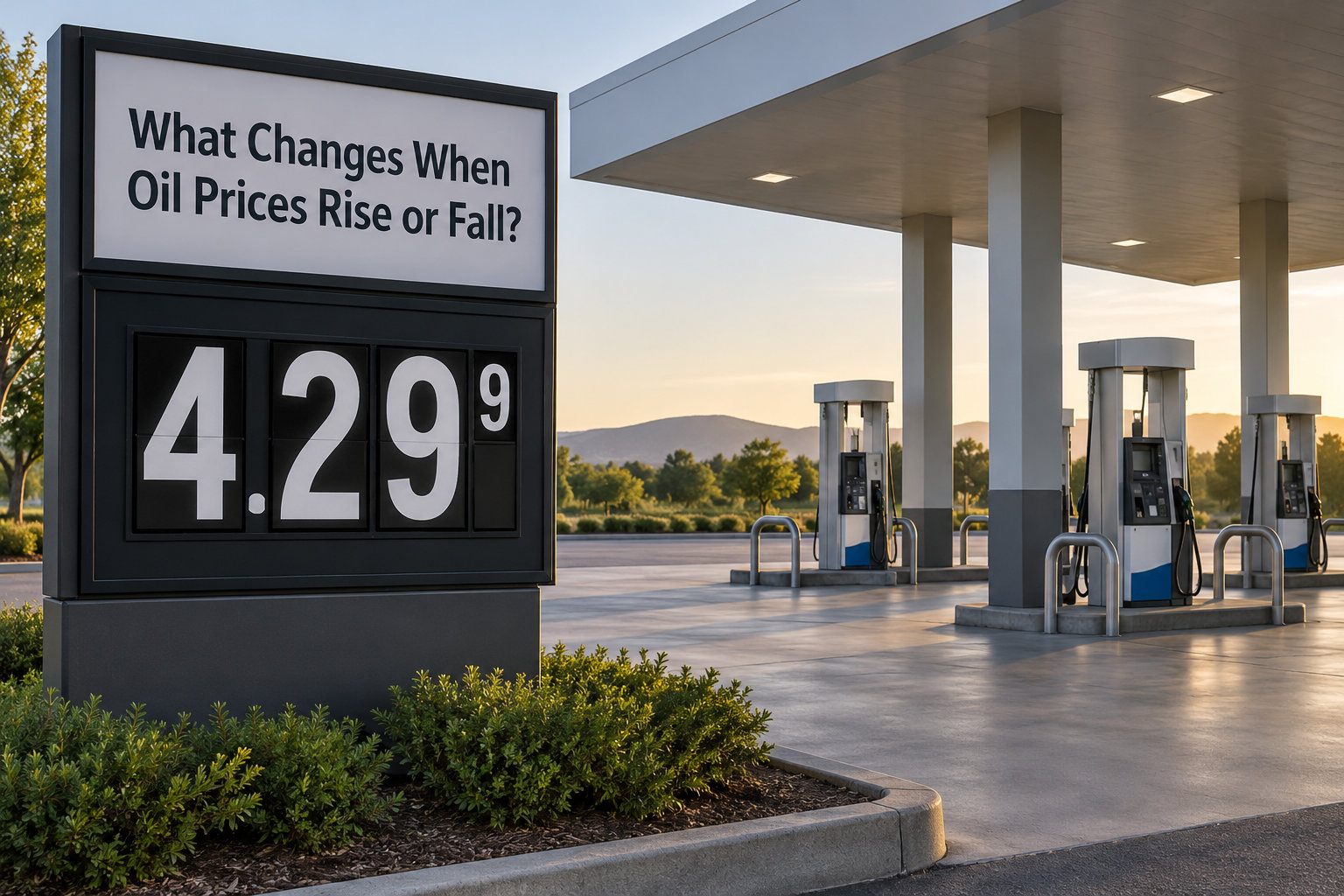
When crude gets more expensive, every firm that buys it pays more. That cost flows forward through the chain in a fairly fixed order, and knowing the order makes the whole thing much less mysterious.
How oil prices affect what you pay at the pump
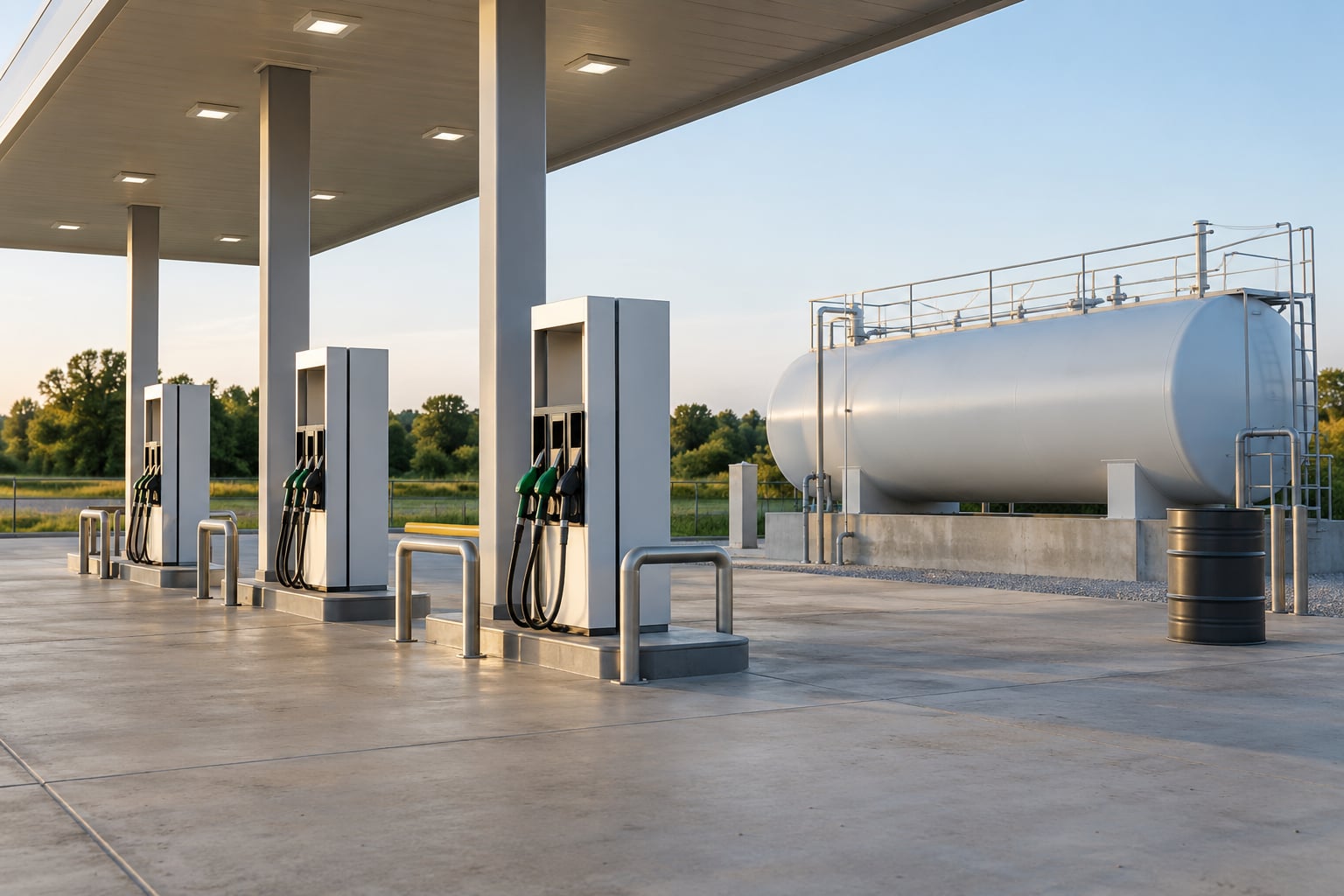
A barrel holds 42 gallons of crude. Refineries turn that crude into gasoline, diesel and other fuels, and the gasoline moves into a wholesale market where fuel is traded in bulk. From there it goes to terminals and then into tanker trucks that restock stations.
Each step adds its own cost. A station buys fuel at the wholesale price, adds a margin to cover its own expenses, and then adds taxes that are set by law and do not move when crude does.
Because crude is the biggest input, its price sets the direction of everything downstream. That is why gas prices rise when oil prices rise and fall when oil prices fall. The relationship is real and it holds over decades, which is exactly what makes gas prices such a reliable political flashpoint.
Why Pump Prices Do Not Always Match the Oil Market
Five things can push a pump price away from the crude price, in either direction.
- Fixed taxes. A fixed cents-per-gallon tax means crude moves become a smaller share of the total price when crude is low.
- Refining margins. Refiners can widen or narrow the gap between what crude costs them and what gasoline sells for, sometimes independently of crude.
- Seasonal demand. Strong driving demand lets refiners and wholesalers hold higher prices than the crude move alone would justify.
- Inventories. A large stock of cheap fuel on the ground cushions a crude spike. A thin stock does the opposite and amplifies it.
- Local supply conditions. A refinery outage, a pipeline problem or a shortage of trucks in one region can spike prices there while the national average barely moves.
None of this means crude is irrelevant. It means crude is one input with a big weight, and the rest of the gallon is decided closer to your driveway.
What Makes Up the Price You Pay at the Pump?
The U.S. Energy Information Administration splits the retail gasoline price into four parts. The percentages below are the widely cited EIA figures, and the second column is a simple illustration using a three-dollar-and-twenty-cent gallon, not a real quote for any particular day.
| Component | Share of the pump price | Illustrative dollars per gallon |
|---|---|---|
| Crude oil | About 47% | About 1.50 |
| Distribution and marketing | About 20% | About 0.64 |
| Taxes, federal and state | About 17% | About 0.55 |
| Refining | About 16% | About 0.51 |
Two things stand out. First, crude is the biggest piece but not a majority, which is why doubling the oil price does not double the pump price. Second, distribution and marketing is larger than refining, and most of that is trucking, storage and station operations rather than anything to do with crude.
Why Does the Same Oil Price Produce Different Gas Prices?
Ask two drivers on the same afternoon why their numbers differ by a dollar and you will usually get a real answer. Taxes are the biggest one.
The federal excise tax is 18.4 cents a gallon, and state taxes run from about 9 cents in Alaska to more than 70 cents in California. Combined federal and state taxes average roughly 51 cents a gallon nationally. Since taxes do not change when crude changes, a state with heavy taxes shows a smaller percentage swing than a low-tax state for the same oil move.
Beyond taxes, four more factors separate local prices.
- Fuel grade. Premium and midgrade gasoline cost more to blend, and each grade has its own demand pattern.
- Refining geography. Regions with nearby large refineries usually pay less. Where refineries have closed, the remaining ones run harder and local prices tend to stay higher.
- Transport distance. Fuel moves by pipeline, marine vessel, rail and tanker truck, and remote areas pay for that last leg.
- Competition. The United States has roughly 155,000 retail fuel stations, and more than half are single-store, family-owned businesses. Fewer than 5% are owned by major oil companies. How many stations are fighting for your block decides how much of a crude move you actually pay.
How Quickly Can a Change Reach Gas Stations?
There is a gap between the futures market and your receipt, and it can be days or weeks. A crude price move shows up in wholesale gasoline quotes first, then in what terminals charge, and finally at the station.
Stations also buy inventory in batches rather than gallon by gallon. A dealer who filled a tank on Monday may be selling that fuel at Monday’s cost for several days while the wholesale market moves underneath. That single habit explains a lot of the complaints about a station that did not drop when everything else did.
The U.S. Energy Information Administration has found that roughly half of a crude price change typically shows up in retail gasoline within about two weeks. The rest arrives later.
The other half of the puzzle is asymmetry: pump prices rise faster than they fall. Part of it is that stations holding expensive inventory compete that cost away over time, and part of it is that taxes and local margins simply do not fall with crude.
Why Do Gas Prices Rise During Summer and Holiday Travel?
Demand climbs and supply tightens at the same time, and gasoline is a seasonal product, so summer is reliably the most expensive stretch of the year.
Refineries schedule their heavy maintenance turnarounds in spring, which temporarily removes capacity right as drivers start taking longer trips. Then the summer driving season arrives, highways fill up, and refiners compete for the same crude to make gasoline.
The fuel itself changes too. Gasoline blends are formulated for the season, so switching to the summer specification raises what it costs to make a gallon. On top of that, hurricane season runs through the summer and fall on both coasts, and a single storm that takes a refinery or a shipping lane offline can add cents nationally in a matter of days.
Holiday weekends compress the same pattern into three days. That is when local stations have the least room to absorb a wholesale move.
How Can You Tell Whether a Price Increase Will Last?
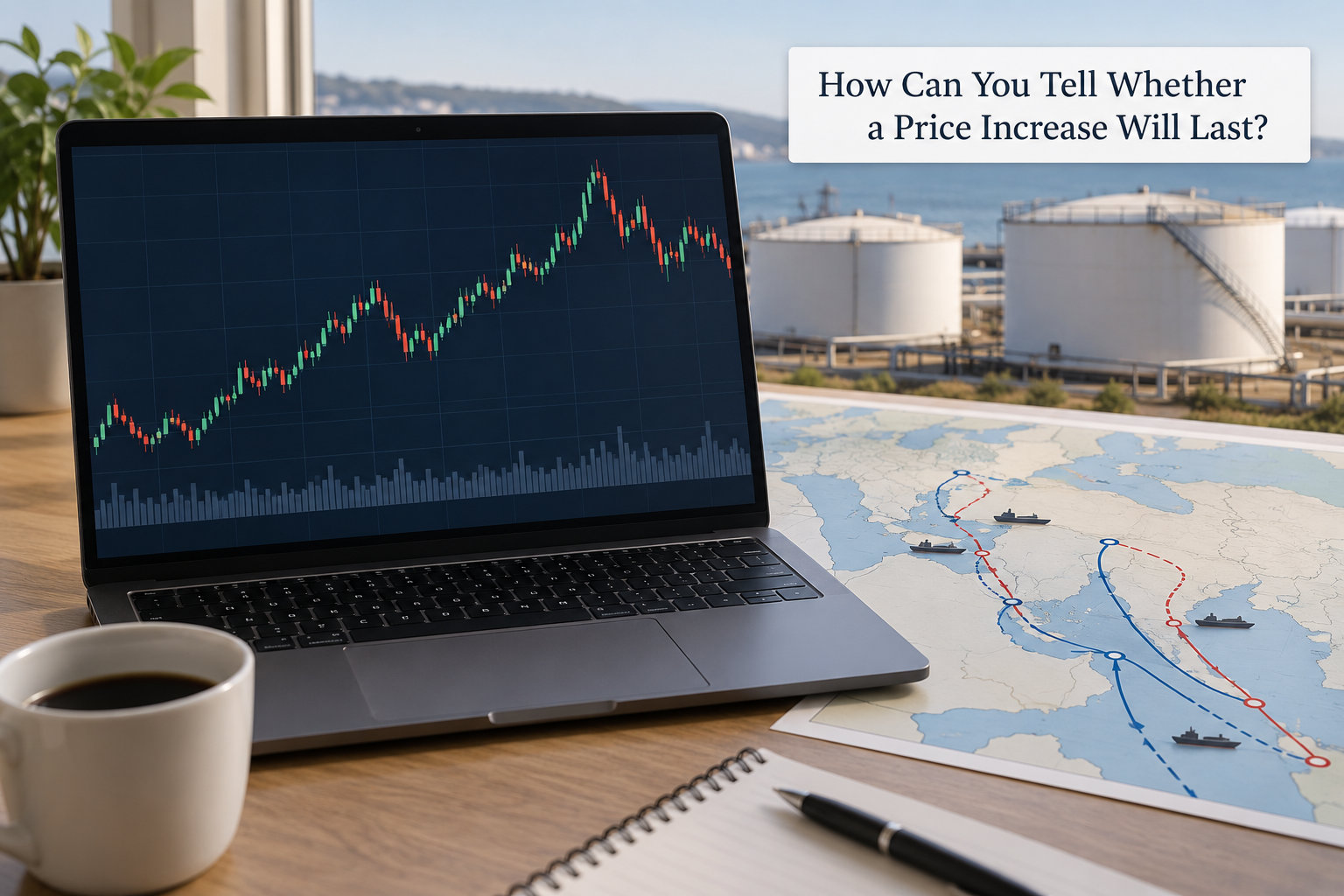
You cannot predict the next oil move, but you can tell whether the current one has legs. Six signals are worth watching.
- The futures curve. If the market is pricing higher crude months from now, traders expect the move to hold rather than fade.
- Refinery utilization. Running refiners hard keeps supply loose. Unexpected downtime tightens supply and pushes prices up fast.
- Inventory levels. Distillate and gasoline stocks tell you how much cushion exists before a crude move reaches the shelf.
- Regional disruptions. Weather, pipeline outages or strikes in one refining hub show up first in that region’s pump prices.
- The exchange rate. Oil is priced in dollars, so a stronger dollar makes imported barrels cheaper and takes some pressure off.
- The spread between your local stations. When nearby stations diverge by several cents, it usually means a local supply or inventory quirk rather than a national trend.
Watch two or three of these for a few days and you will get a decent read on whether the jump on your local sign is temporary.
Ways to Respond to Higher Gas Prices
Crude is outside your control. Your driving and your refueling habits are not, and the savings there are smaller than people expect but real.
- Compare the stations within a mile or two. Gaps of five to ten cents across a neighborhood are common in competitive areas, and price apps make the comparison a fifteen-second job.
- Skip the Friday evening rush. Stations near highways and airports reprice fastest when wholesale moves, so they are also where the widest spreads show up.
- Check your octane requirement before dropping a grade. Most drivers can run the octane on the fuel filler door. Anything else belongs in the owner’s manual, not in a savings argument.
- Look at mileage, not just fill-ups. Tire pressure, wheel alignment and steady highway speeds move fuel economy more than any timing trick ever did.
- Use fuel rewards cards if you drive enough. The savings are small per gallon but they add up across thousands of gallons a year, and they cost nothing to use.
- Do not drive further to save. A station four miles away with fifteen cents less per gallon only pays off if you were making the trip anyway.
None of this changes the crude market. It just decides how much of the market you hand to someone else.
Frequently Asked Questions
Why is gas cheaper in some states or countries?
Taxes are the biggest reason. The federal excise tax is 18.4 cents a gallon, and state taxes range from about 9 cents in Alaska to more than 70 cents in California, so two states can differ by more than 50 cents before crude is considered. Refinery capacity, transport distance and local competition explain much of the rest.
Does a ten dollar increase in oil prices mean a ten dollar increase per gallon?
No. The commonly used rule of thumb is that a ten dollar rise in crude per barrel translates to roughly 23 to 26 cents more per gallon, and only part of that arrives immediately. Crude is about 47% of the pump price, so the other 53% stays put and shrinks the percentage increase.
Why do gas prices stay high after oil prices fall?
Two reasons. Stations often sell fuel bought days earlier at a higher wholesale cost and compete that cost away over time. And taxes plus local distribution and refining costs do not fall with crude, so the fixed part of the gallon holds steady and makes the total look stubbornly high.
Is premium gasoline affected by oil prices the same way as regular gasoline?
Mostly yes. Premium uses the same crude feedstock, so it rises and falls with the oil market. The difference is that blending and octane requirements add a fixed extra cost, so the same crude move produces a slightly smaller percentage change in premium than in regular.
Can I save money by buying gas early in the week?
Occasionally, not reliably. Wholesale prices often firm up late in the week, and stations near highways reprice first, so Monday refills occasionally catch a cheaper window. The gap is usually a few cents and disappears if you drive miles to chase it.
How do gasoline taxes affect the price at the pump?
Taxes are a fixed cents-per-gallon charge, so they do not move when crude does. Federal taxes add 18.4 cents and states add their own, averaging roughly 51 cents combined. That fixed block is why high-tax states show smaller percentage swings and why pump prices in them stay high after crude falls.
Conclusion: What to Check First
Crude oil is the biggest driver of what you pay at the pump and the reason prices move when they do, but on its own it explains a bit less than half of your bill. Taxes, refining, distribution and local competition make up the rest, and they are the reason a barrel price move arrives slowly, unevenly and never in full.
So when a sign changes, check three things in order: what crude and wholesale gasoline are doing, what your state’s tax adds, and what nearby stations are charging each other. That sequence will explain most of what you are seeing, and it puts you ahead of the argument about who to blame, which has never changed a single gallon.